

Wyatt Woodsmall Interview Layouts


































































































Exclusive Reader Offers
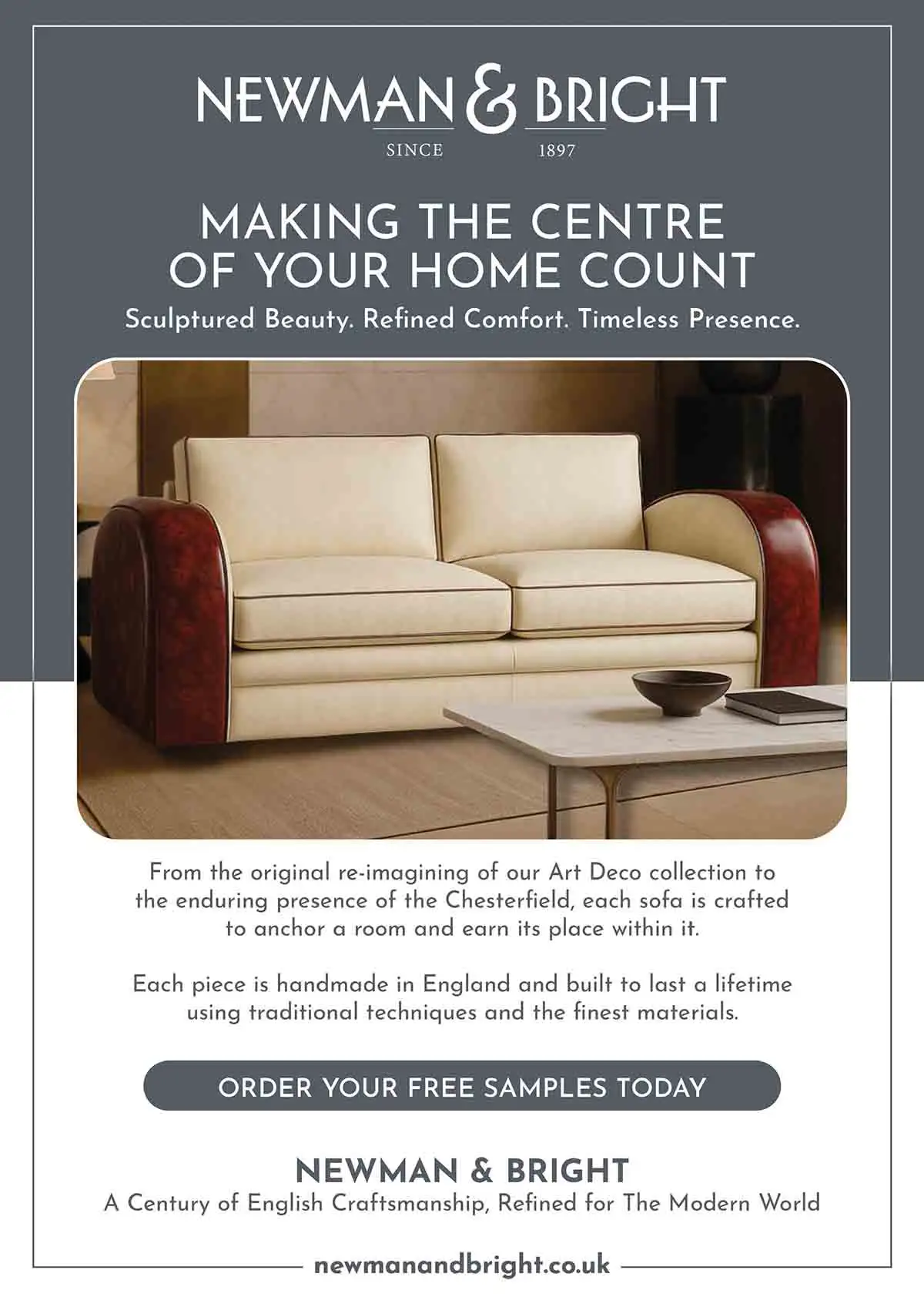
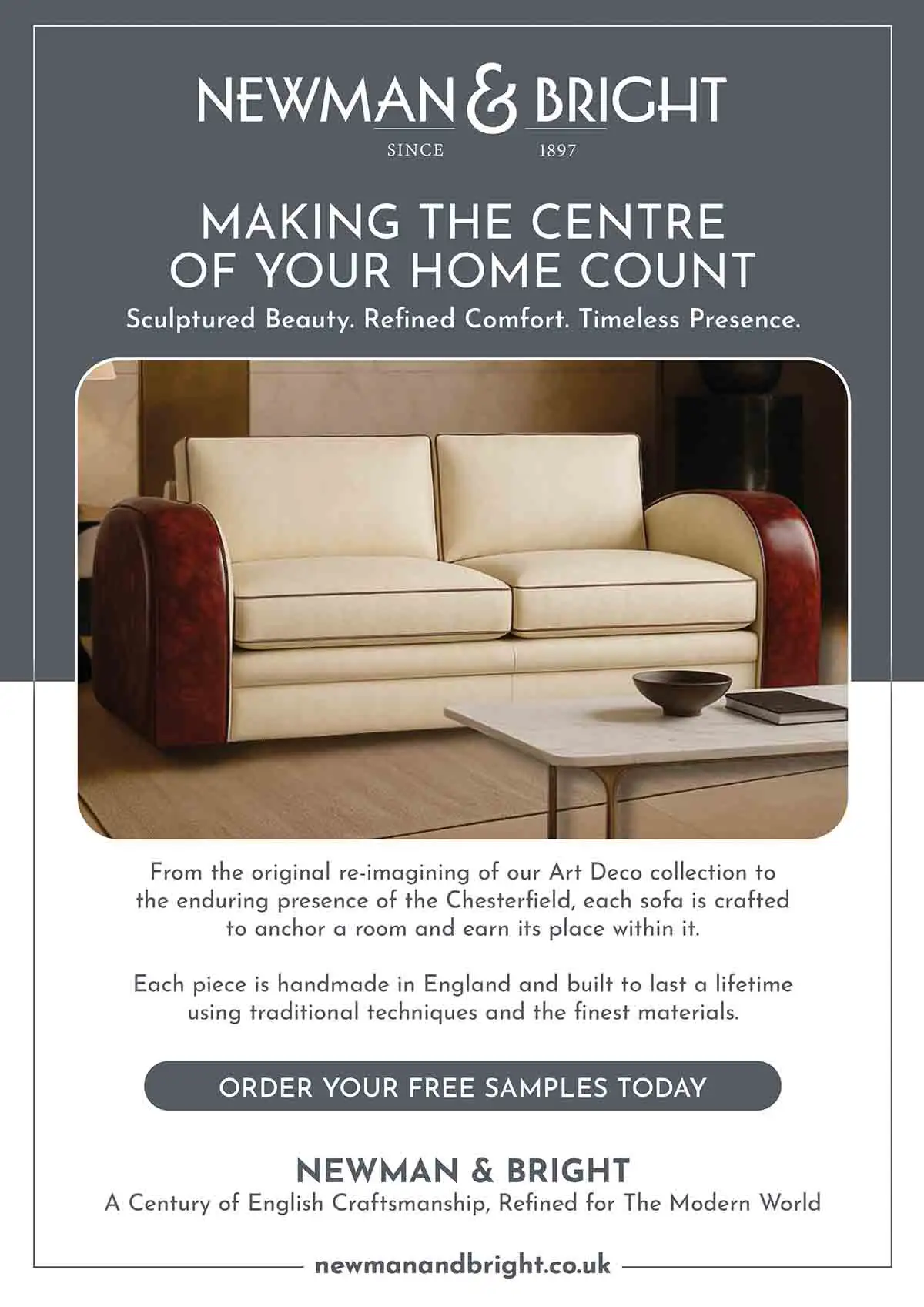
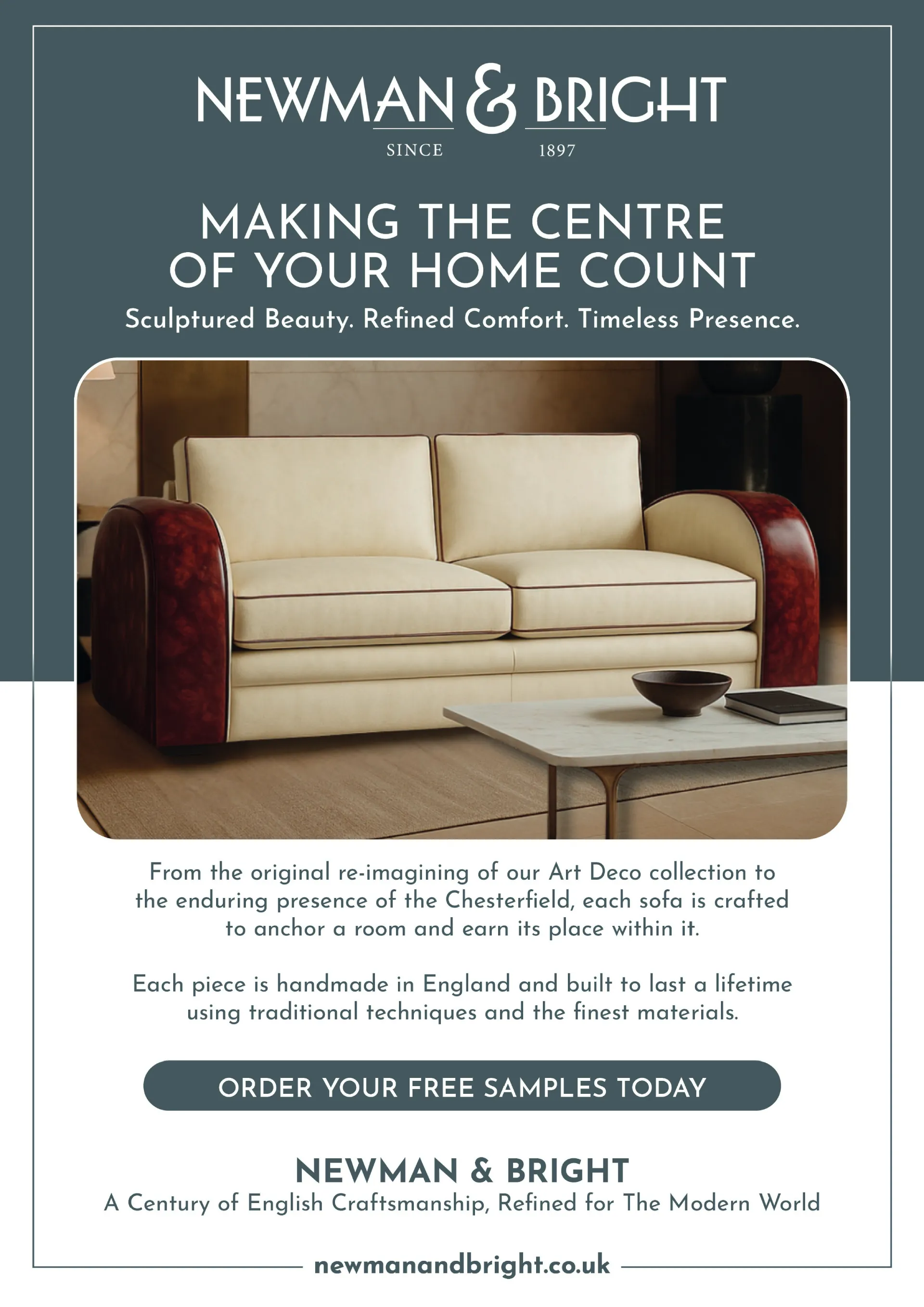
FREE Bespoke Furniture Samples
FREE Website Marketing Review
GUARANTEED B2B Lead Generation
ELEVATE Your Brand Design
FREE Brand & Trademark Risk Review
FREE Business Accounting Consultation
SELL Your Spare Business Capacity
FREE Business Growth Barrier Audit
FREE Social Selling Success Audiobook
FREE Business Financial Health Review
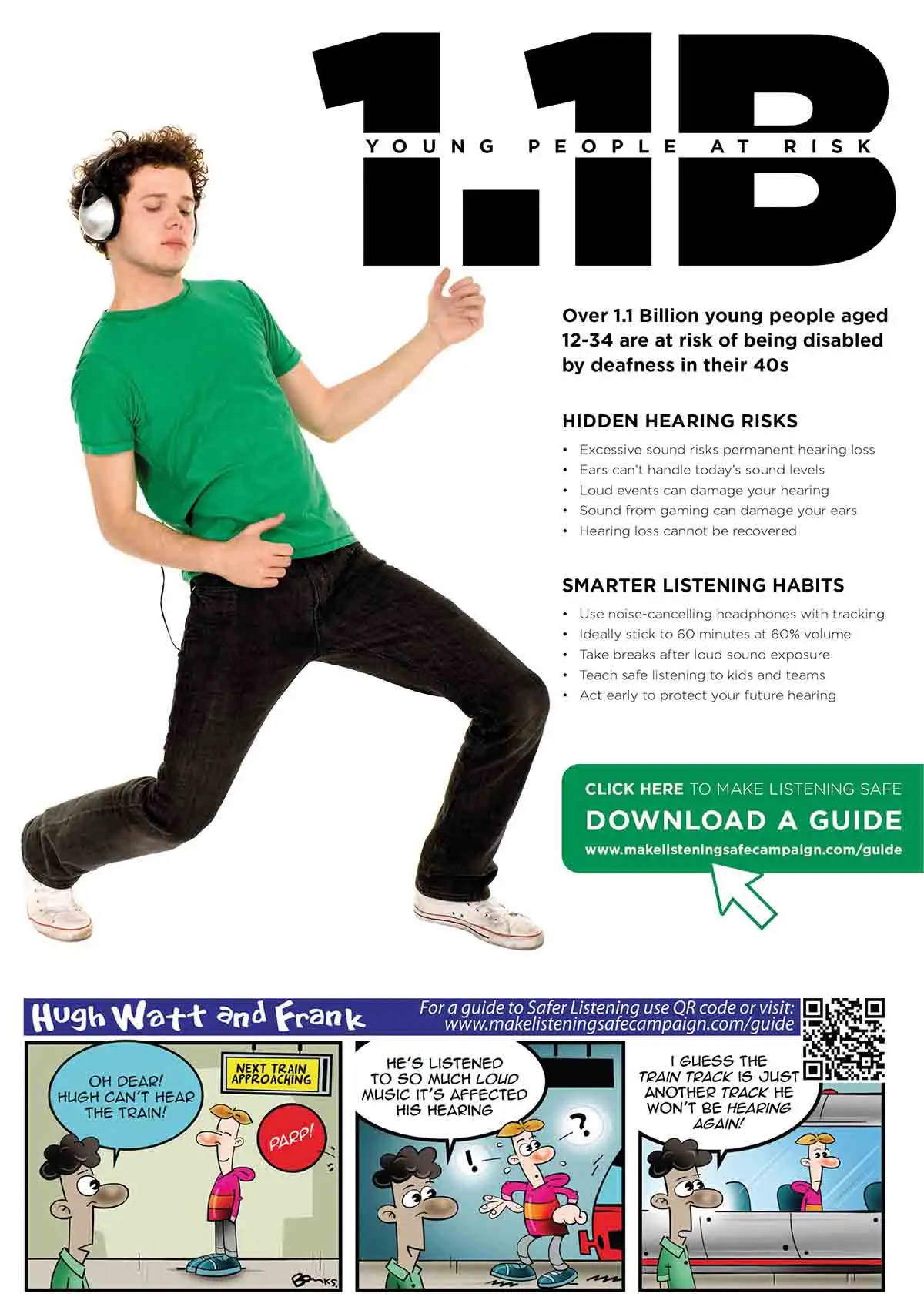
FREE Protect Your Hearing Guide
FREE AI Strategy Integration Consultation
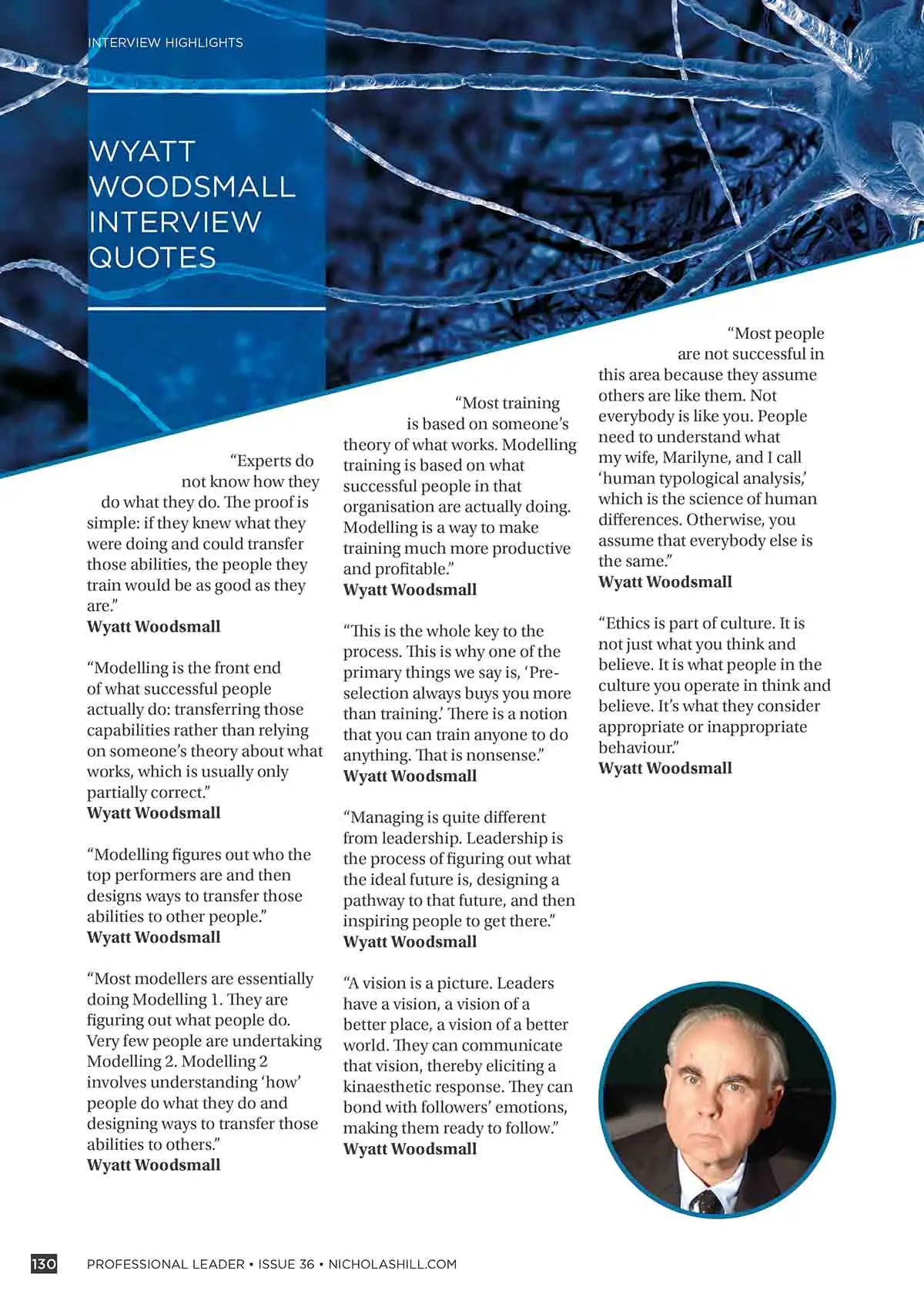
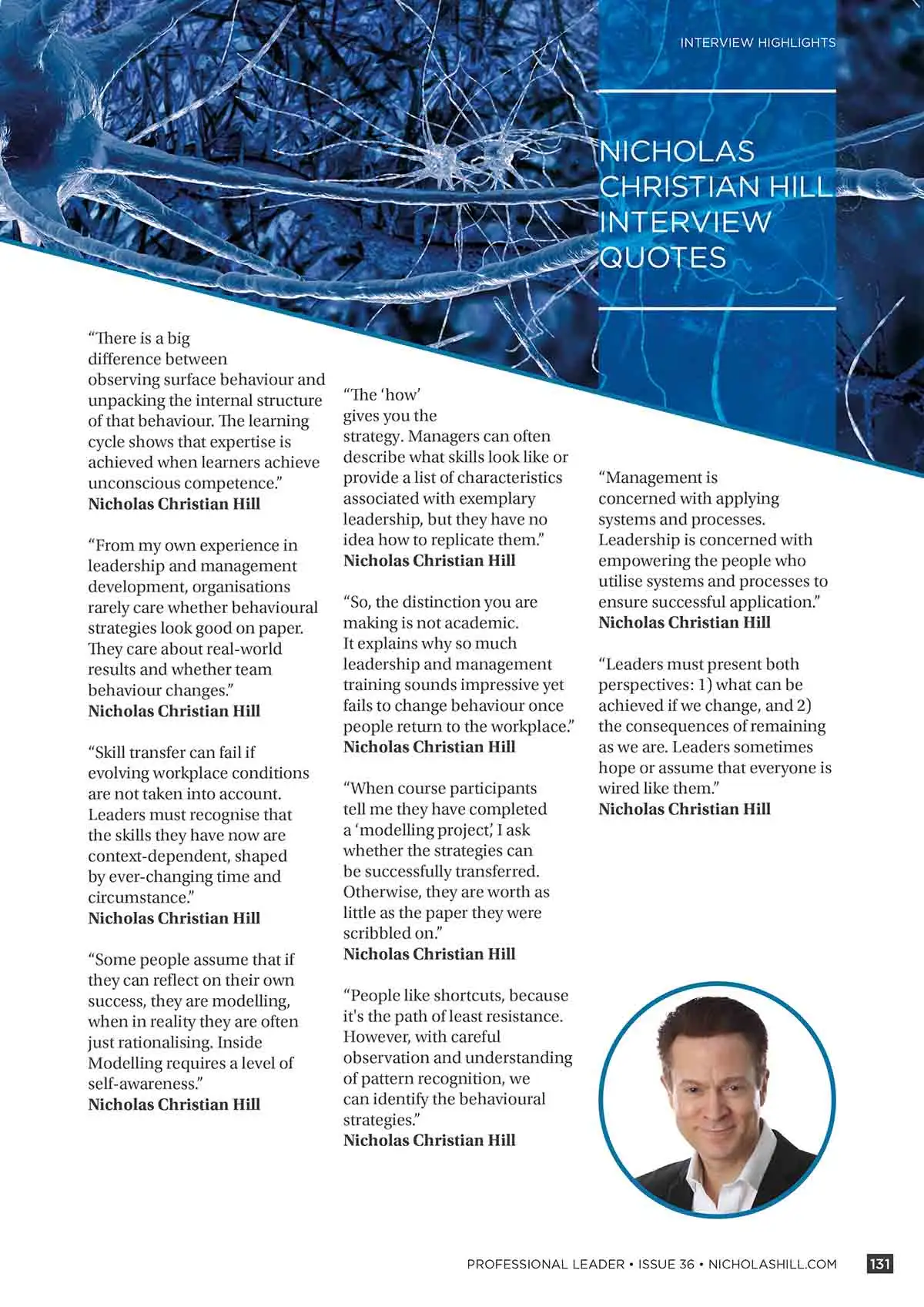
Wyatt Woodsmall Interview Page Layouts
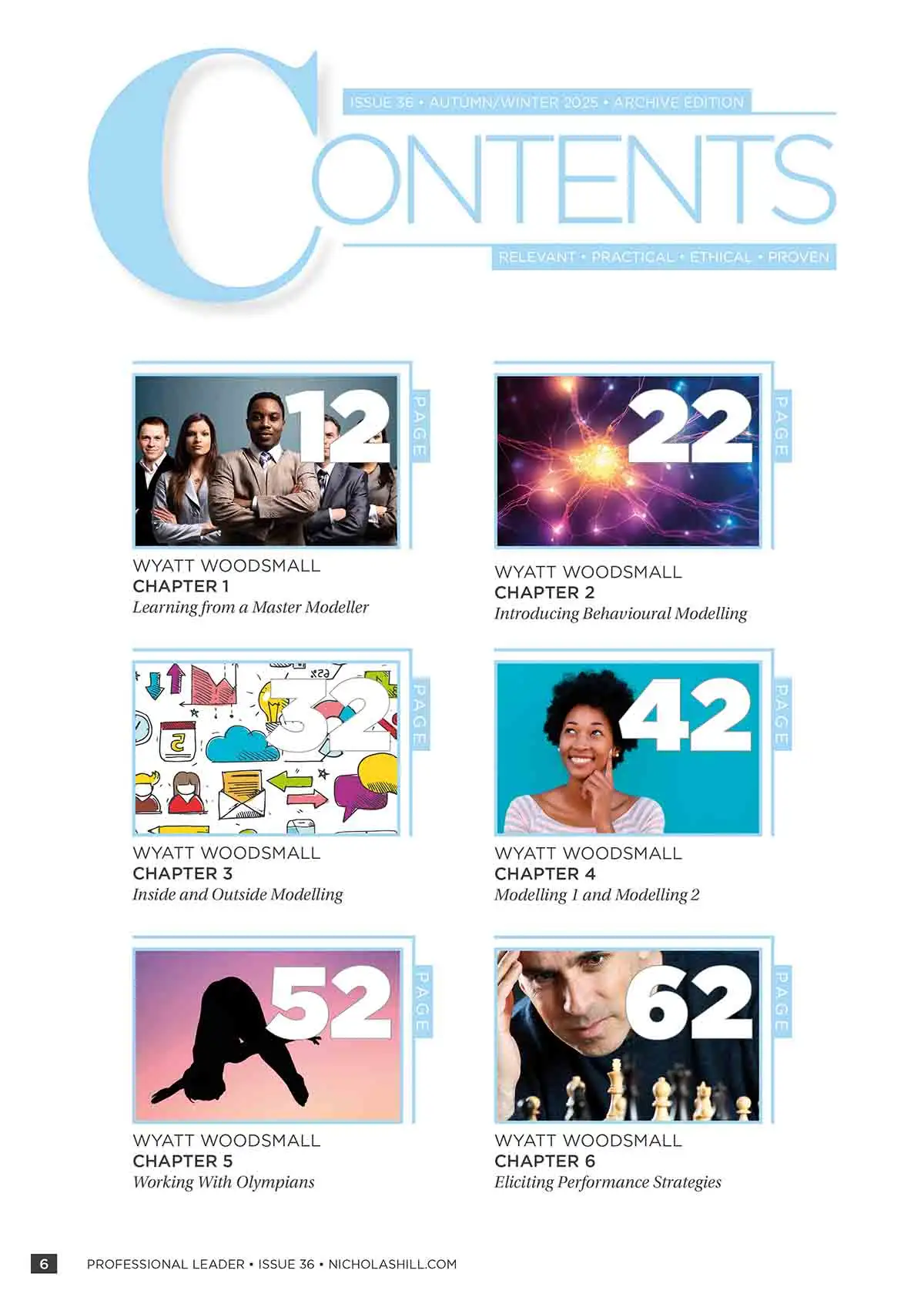
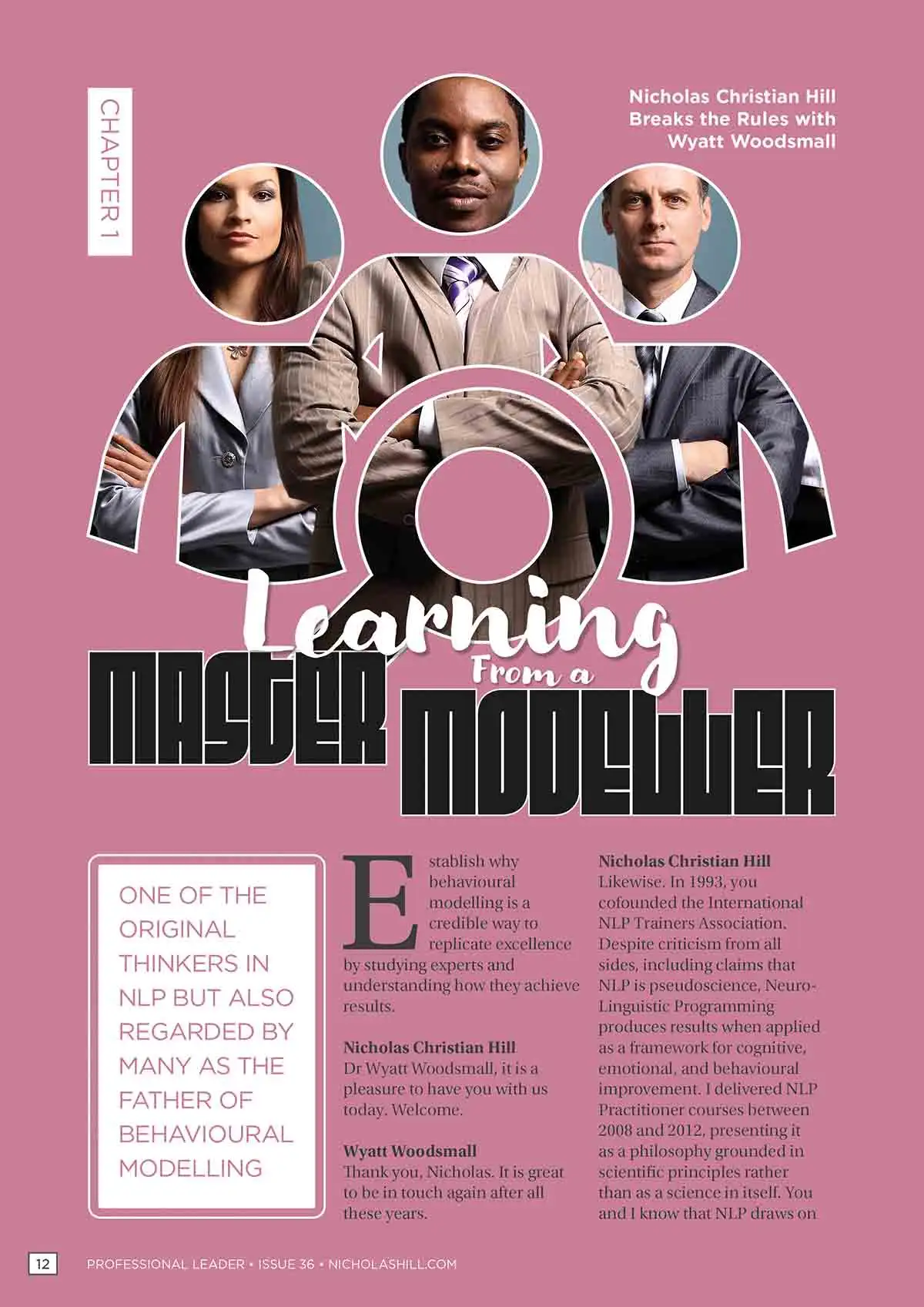
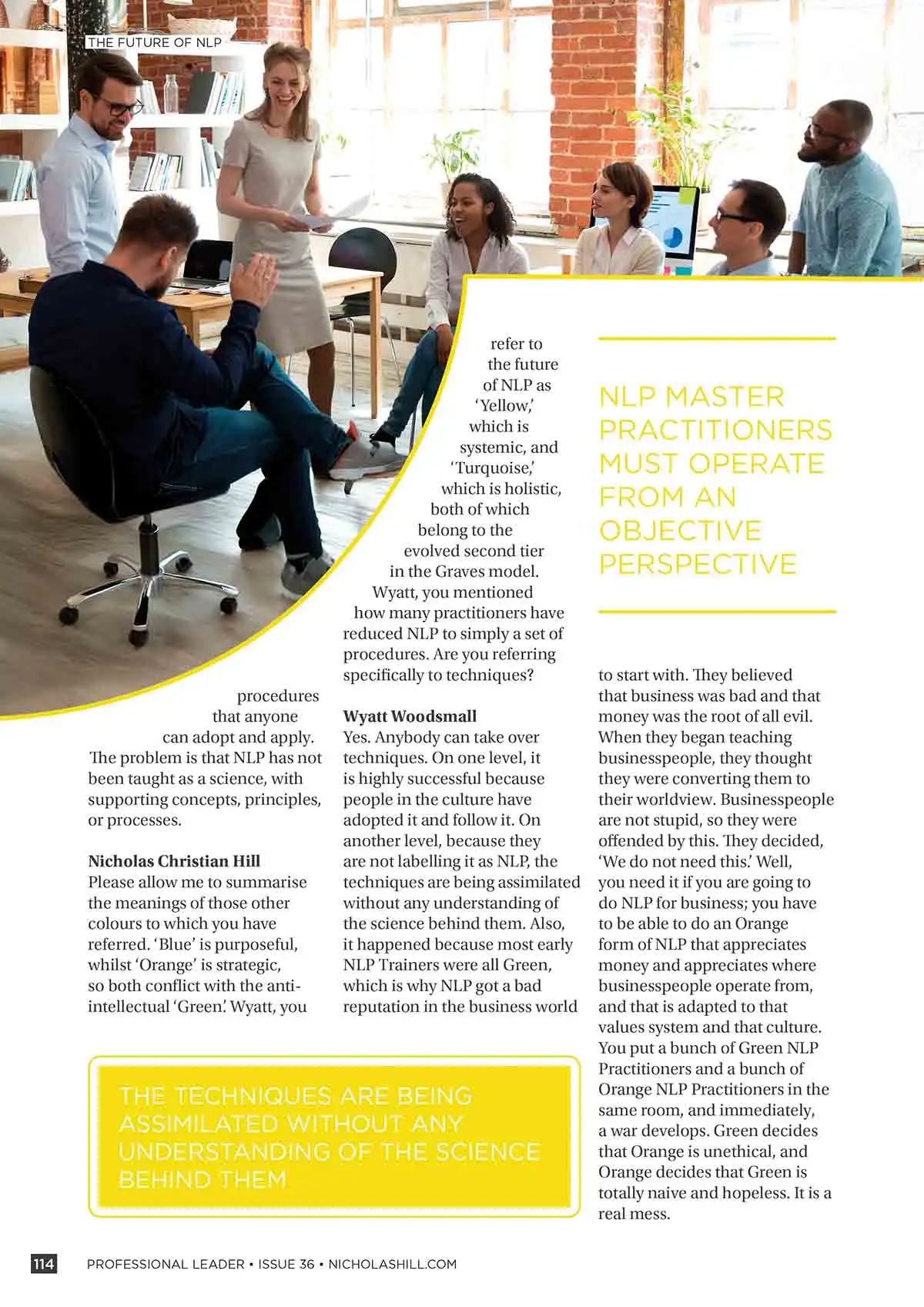
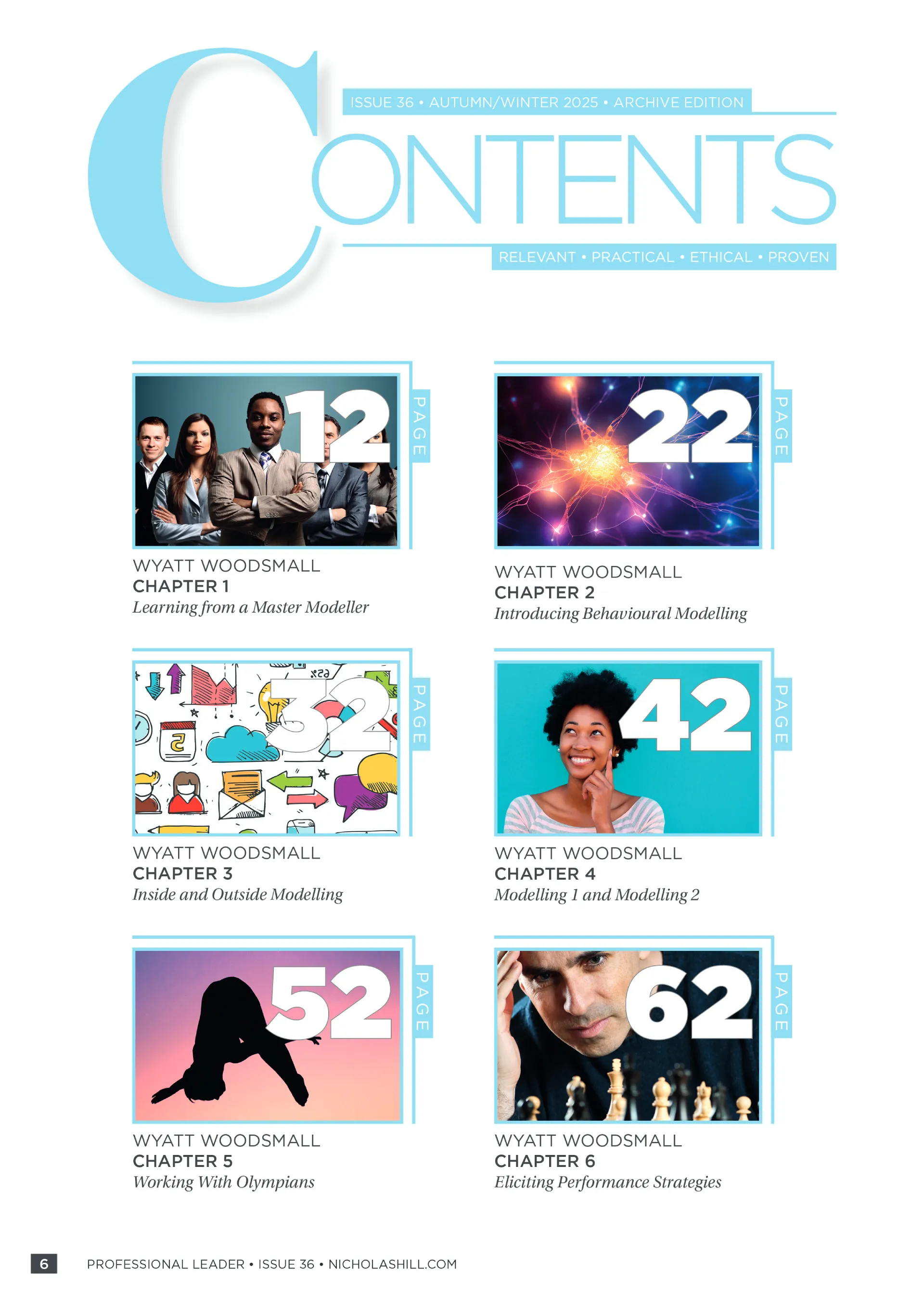
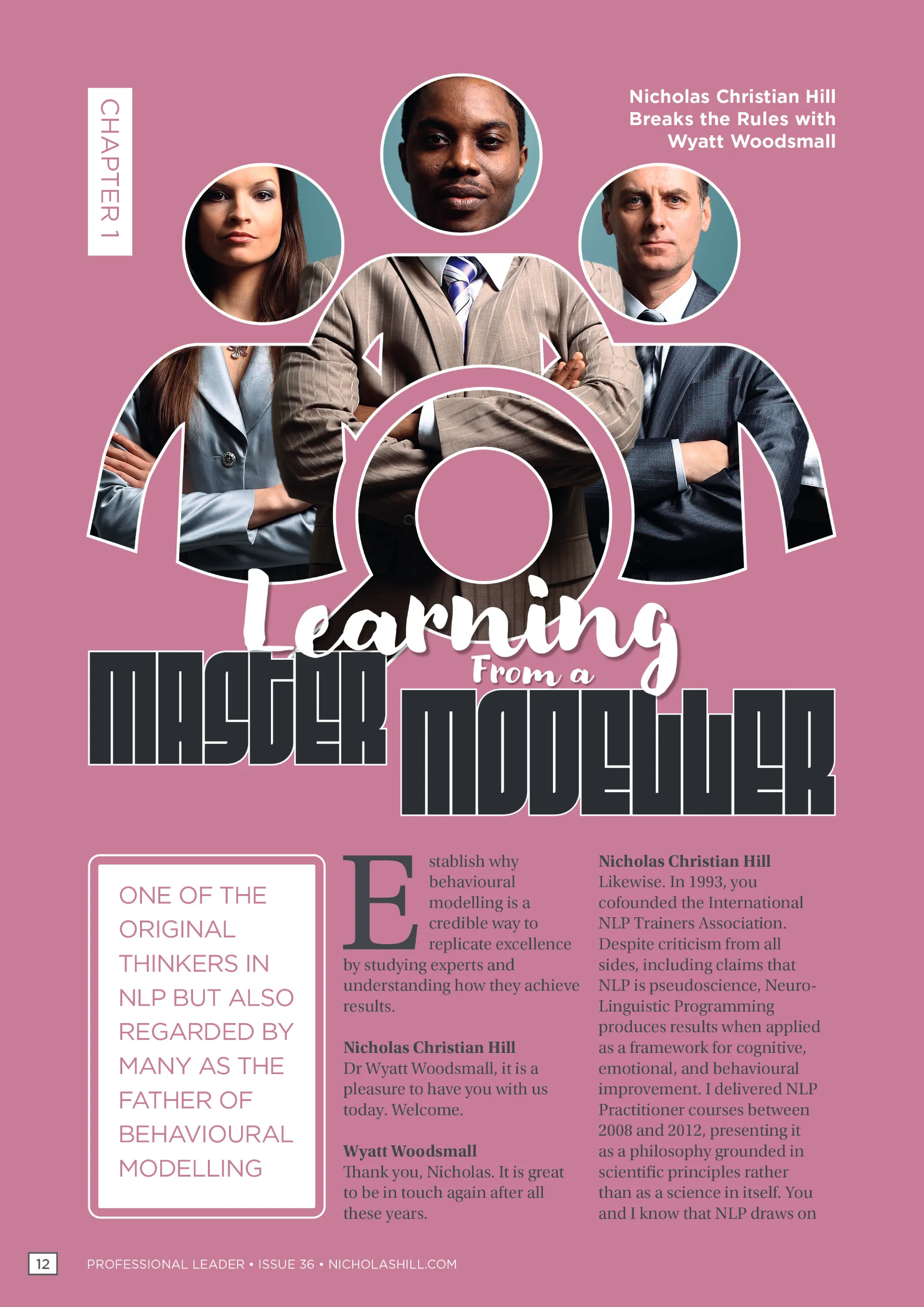
A group of professional portraits arranged around a central figure introduces modelling as the study of people who achieve exceptional results. The composition reflects the chapter’s premise that excellence can be observed, compared and ultimately translated into behaviours that others can reproduce.
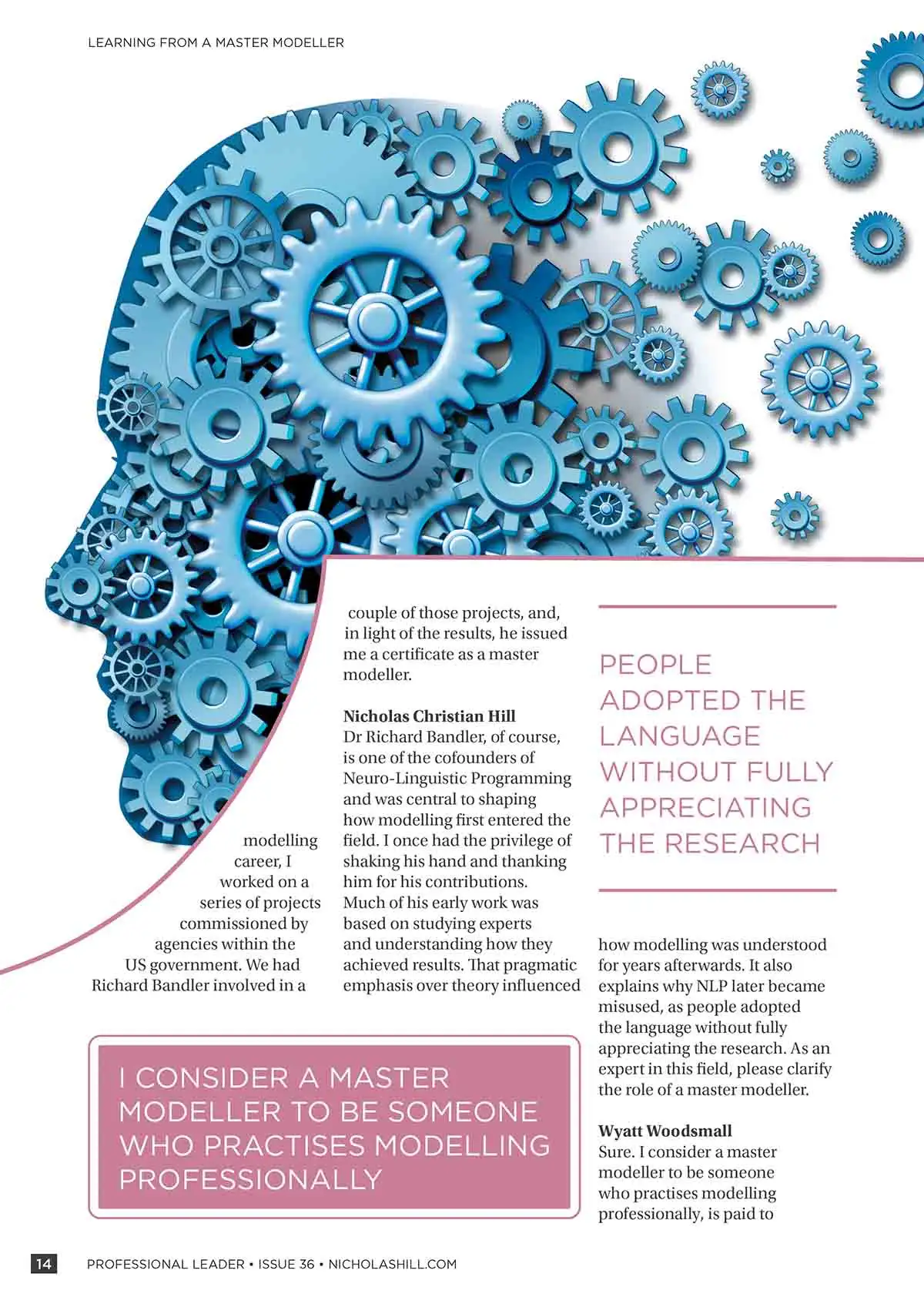
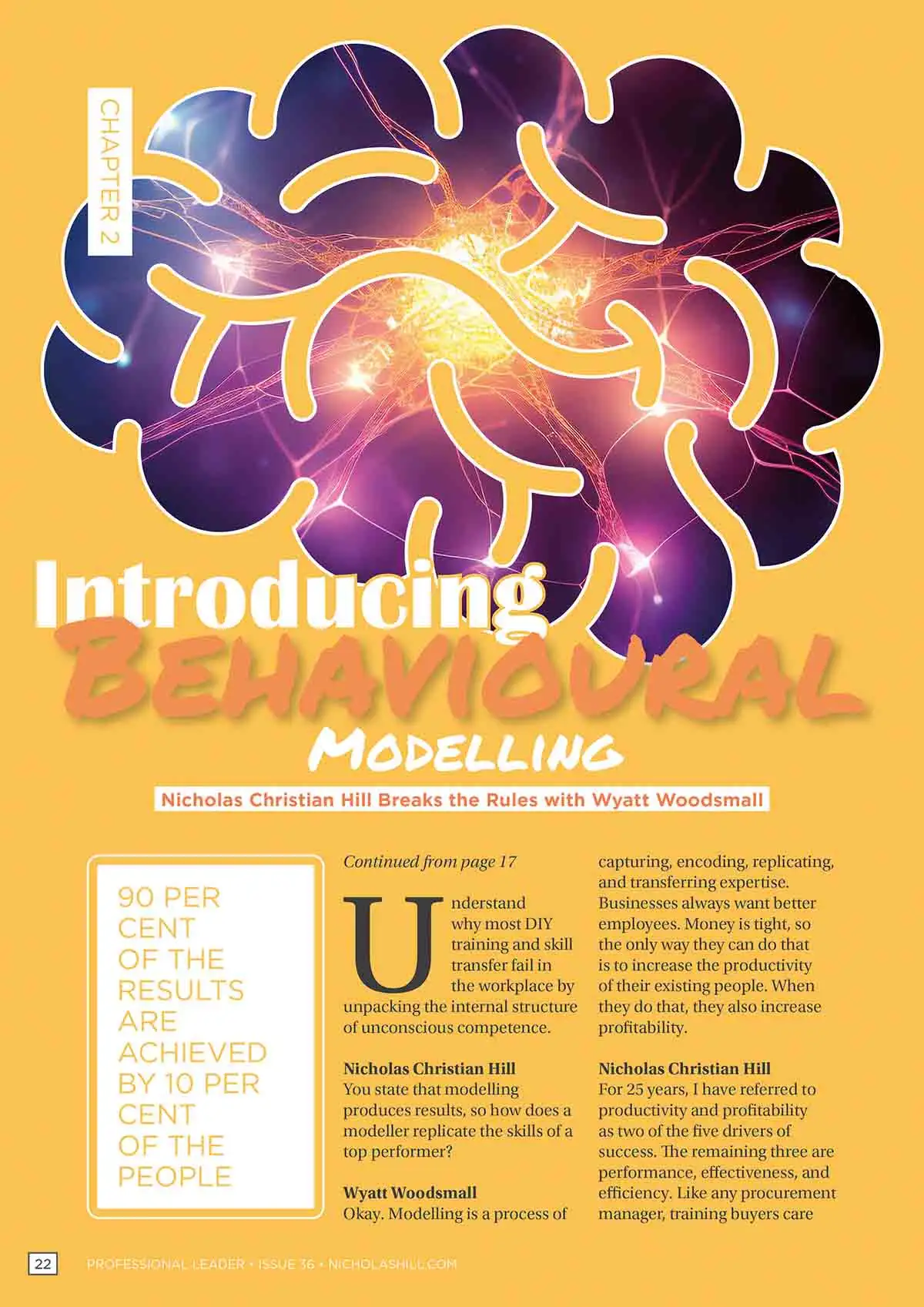
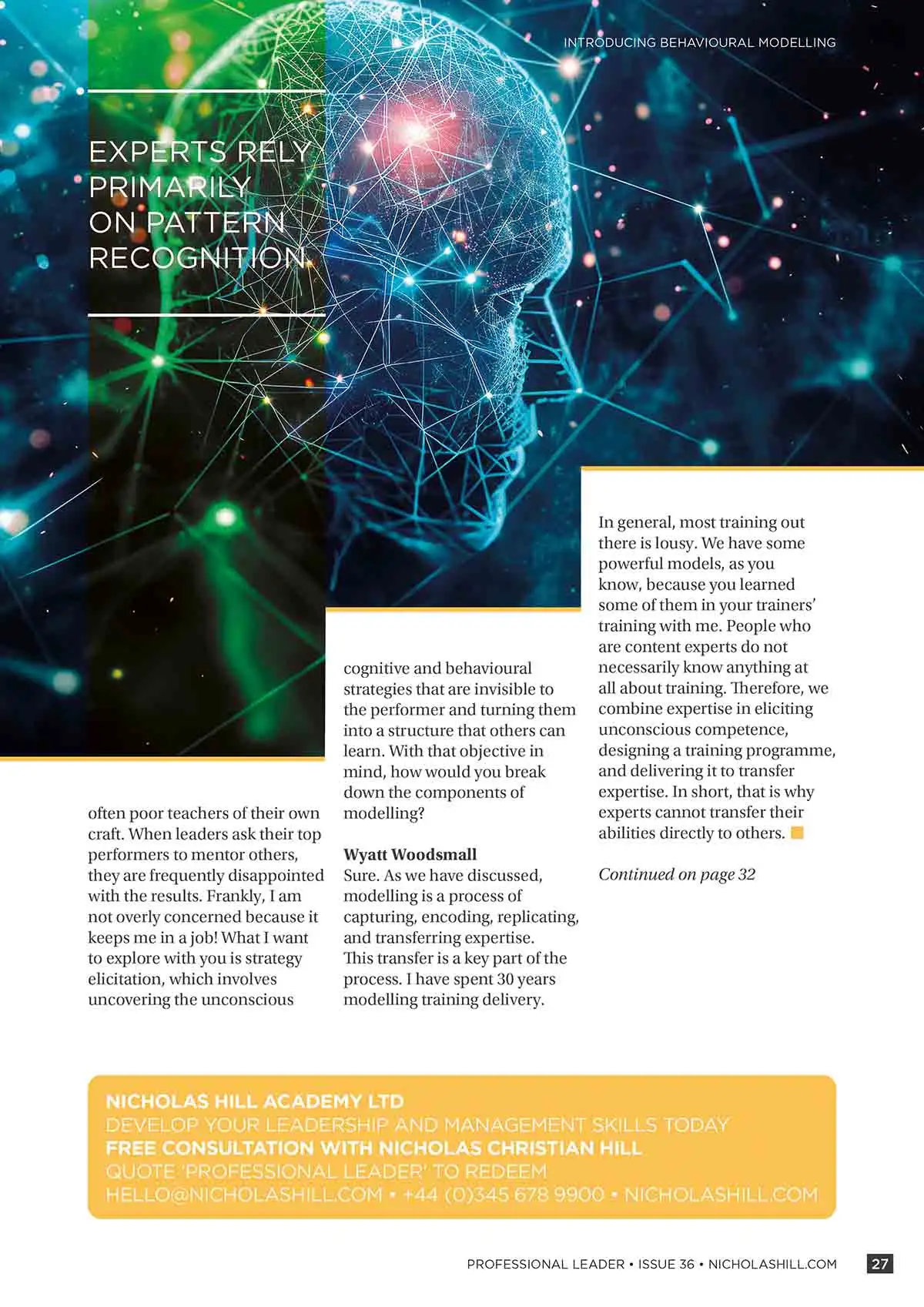
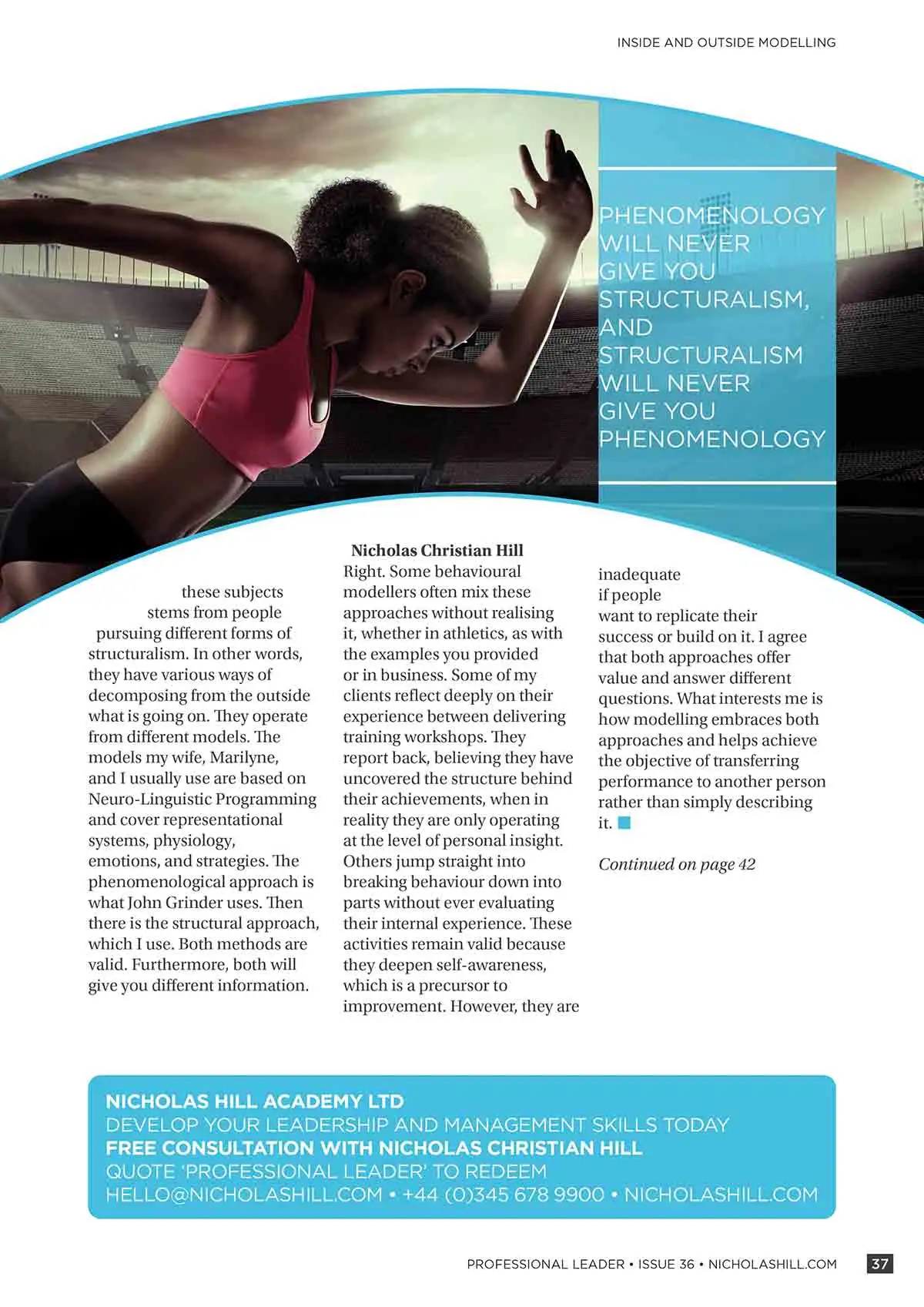
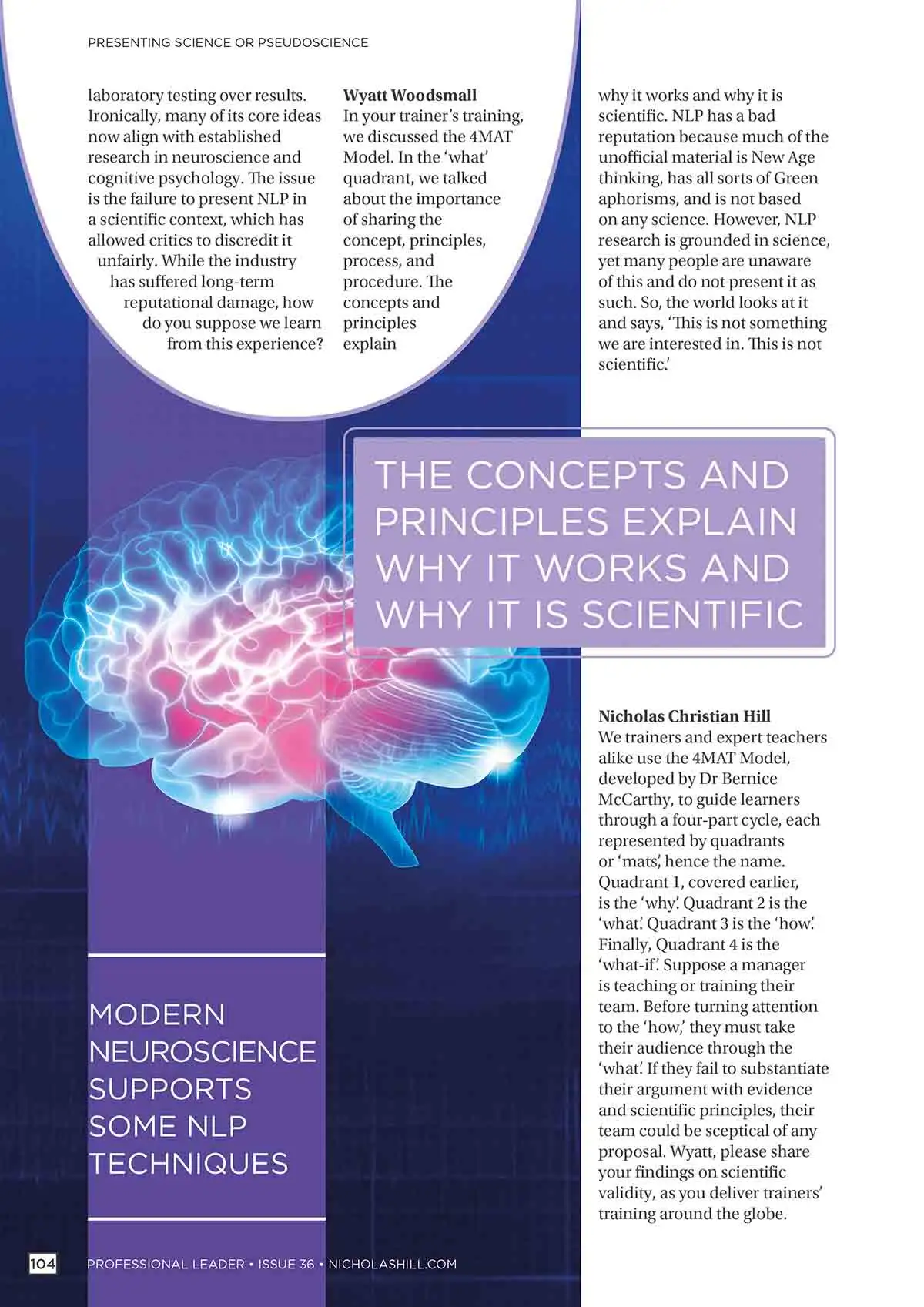
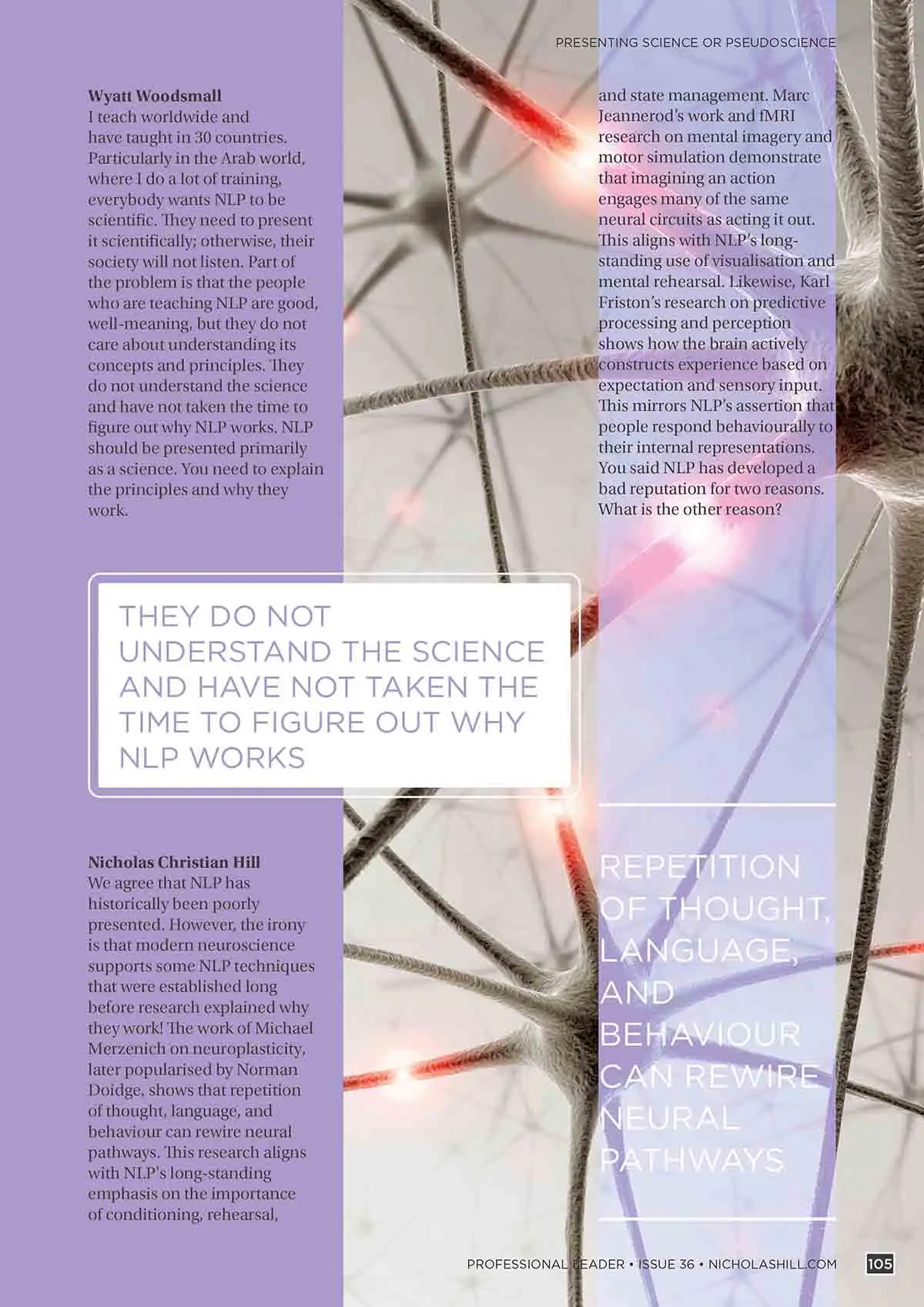
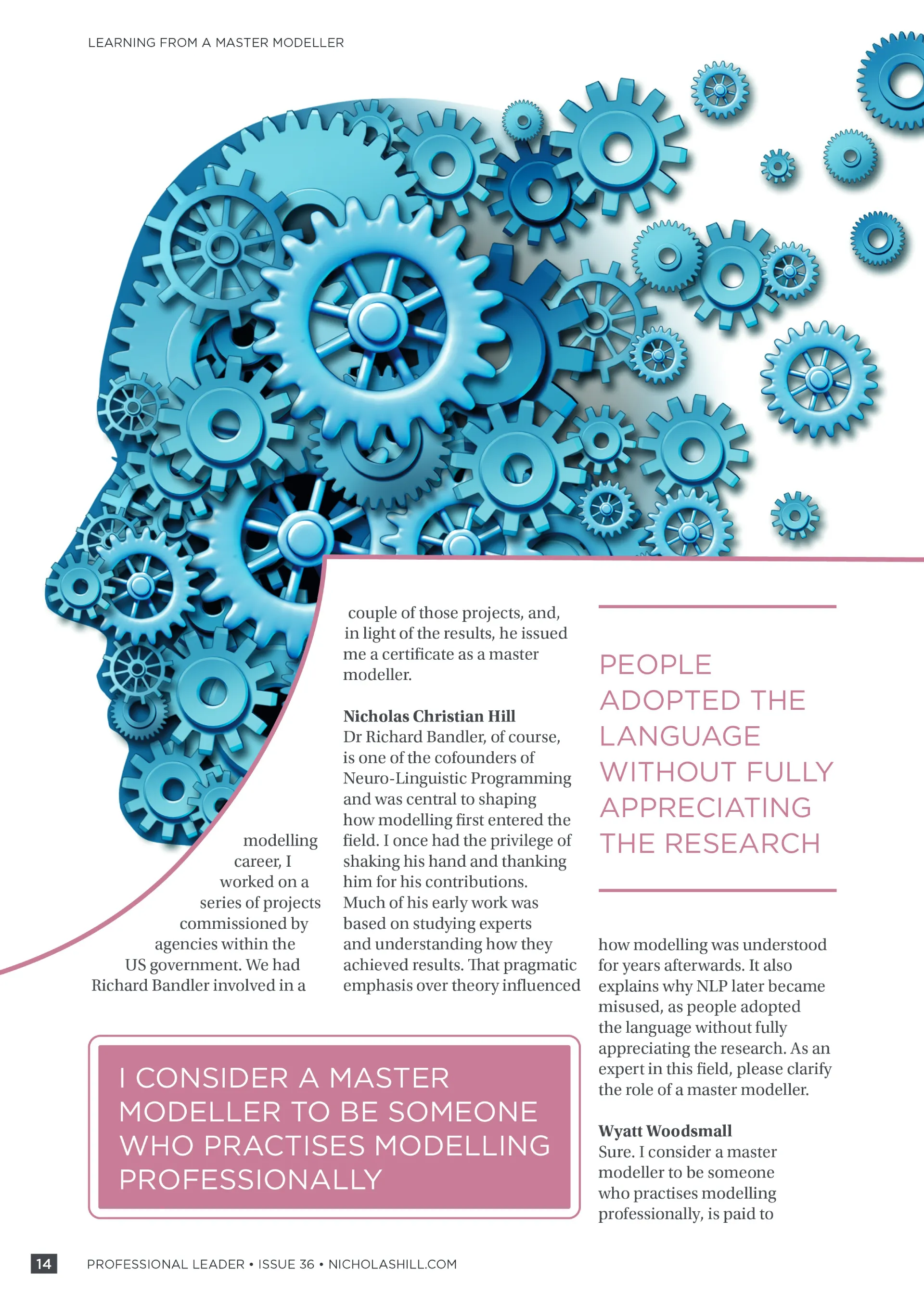
A luminous brain dominates the opener, turning unconscious competence into an immediate visual metaphor. The image directs attention beneath observable behaviour to the internal cognitive processes that behavioural modelling seeks to identify, understand and eventually transfer.
Two overlapping human profiles, filled with diagrams and centred on a prominent keyhole, visualise the distinction between examining personal experience and studying another person. The keyhole suggests gaining access to processes that normally remain concealed beneath outward performance.
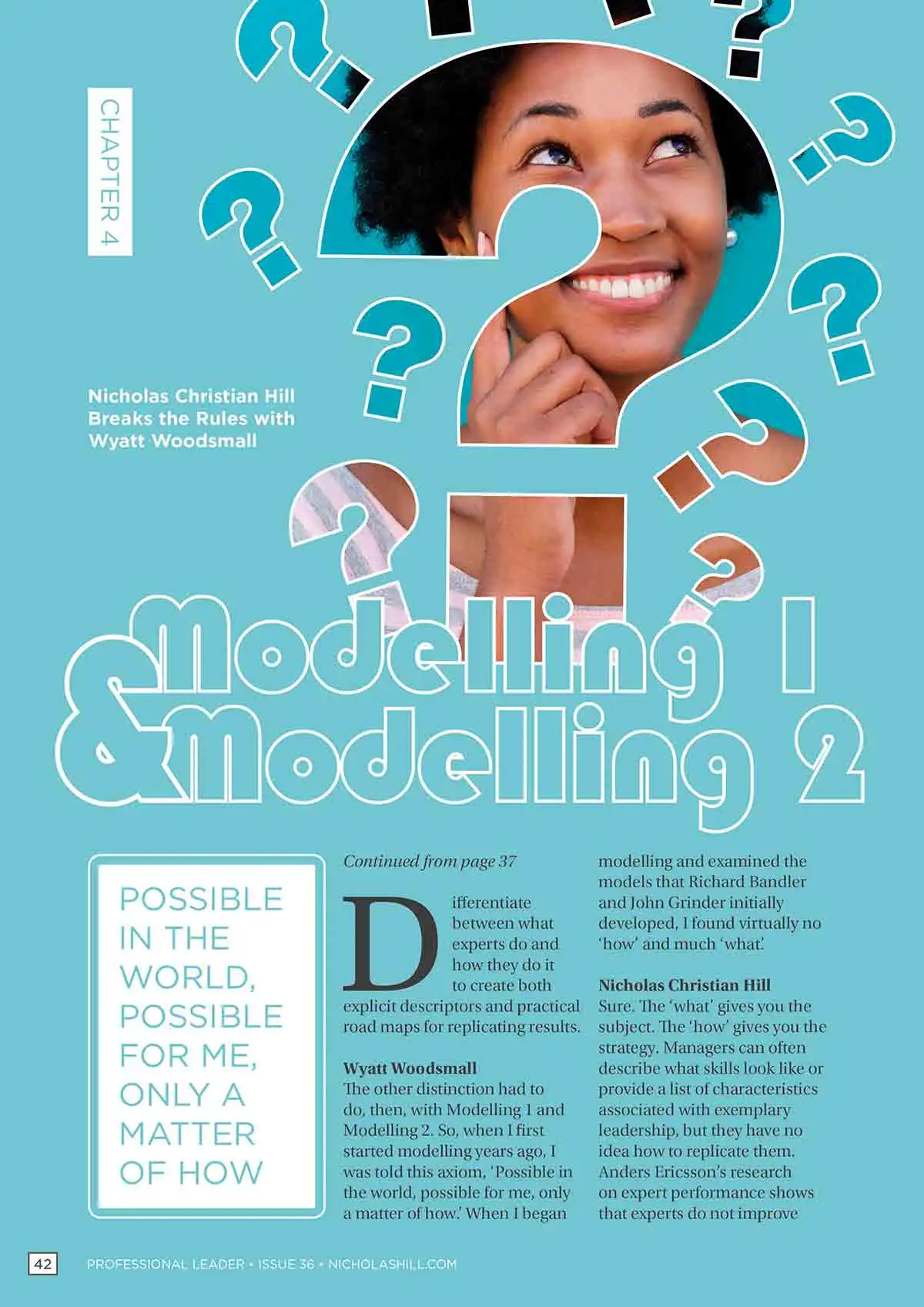
Oversized question marks surround a thoughtful portrait, making enquiry itself the visual theme. They reinforce the chapter’s distinction between identifying what experts do and discovering how they do it, echoed by the line: “Possible in the world, possible for me, only a matter of how.”
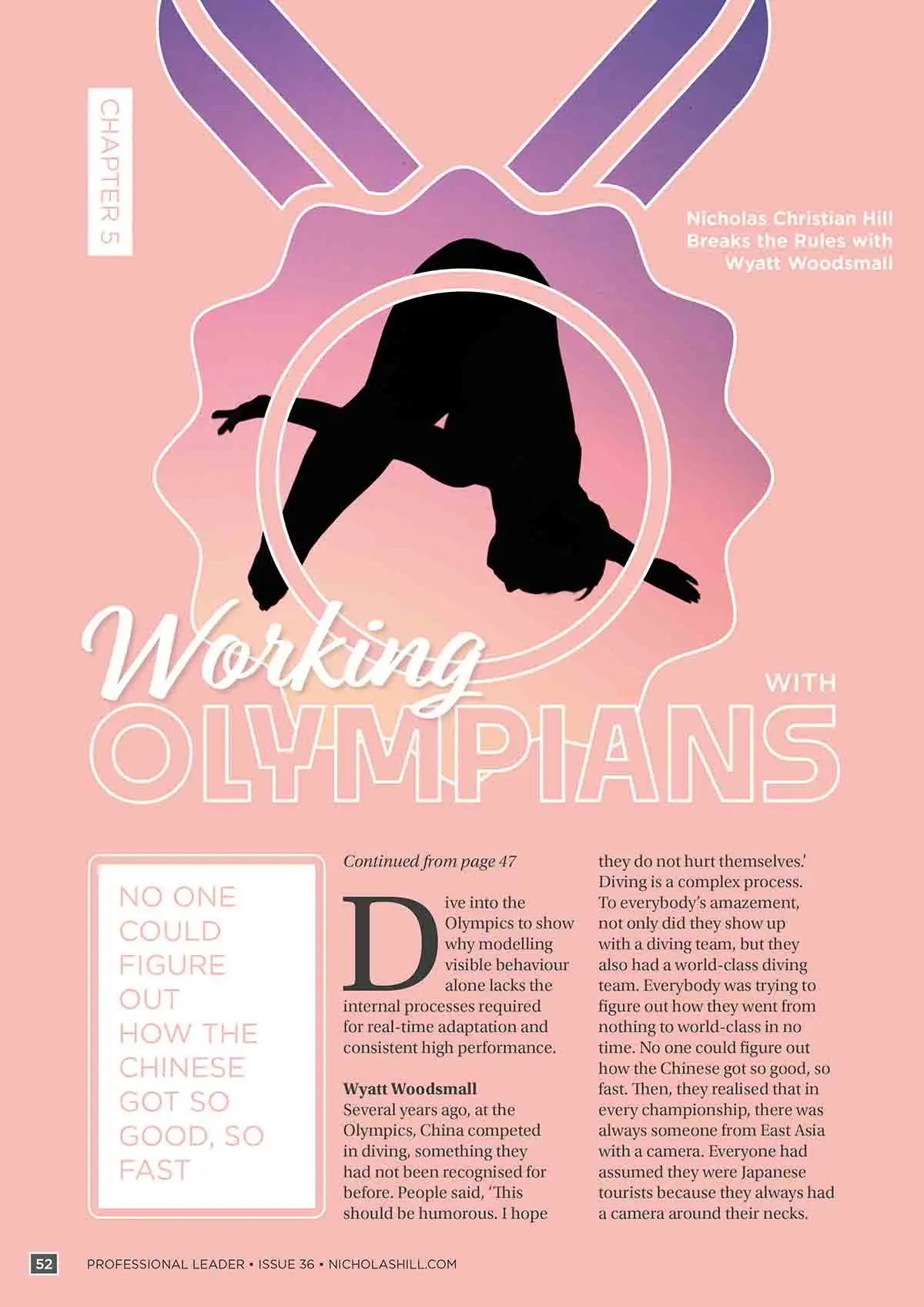
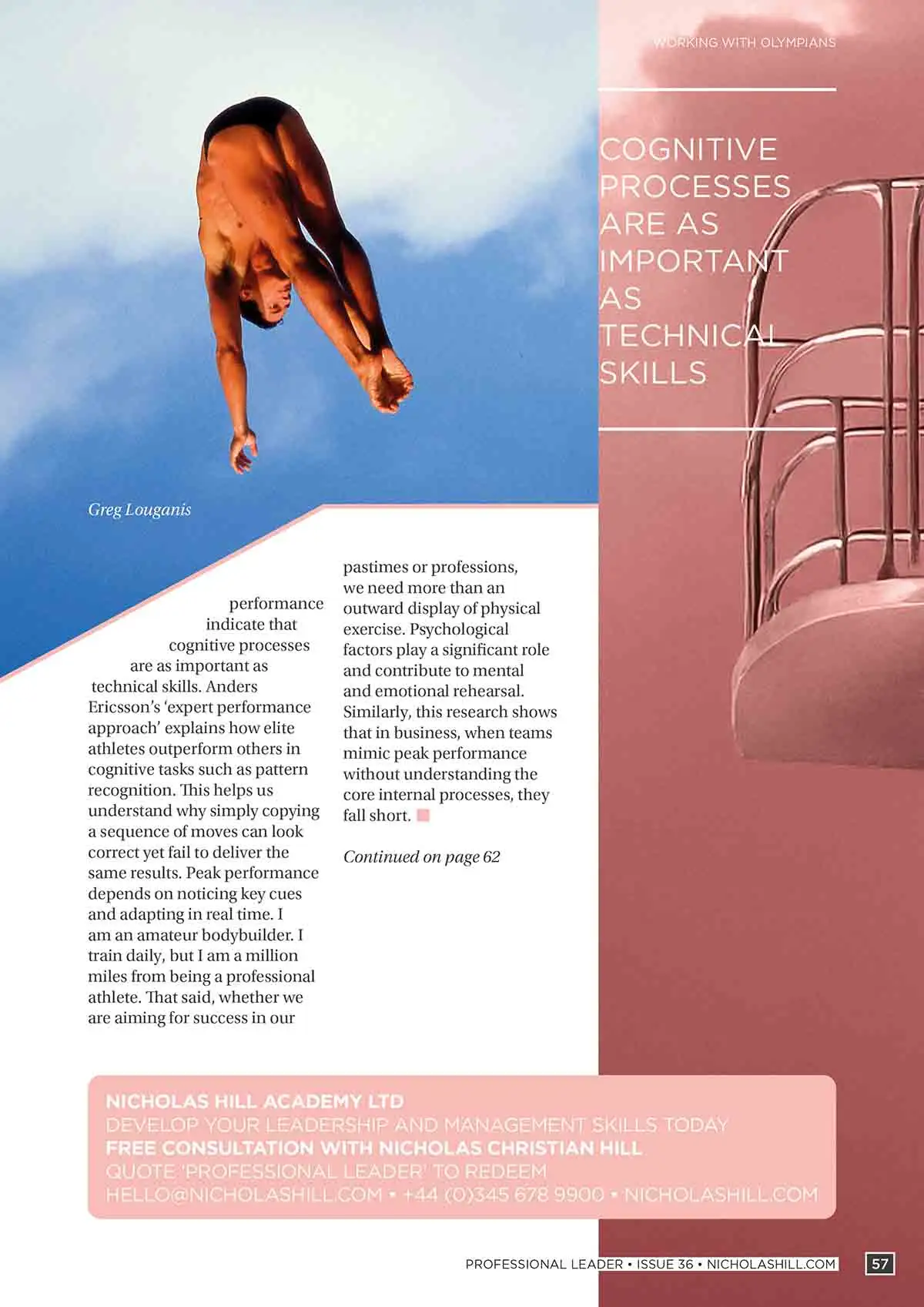
A diver’s silhouette framed within a medal introduces elite performance, while Greg Louganis later becomes the embodiment of the chapter’s argument. His image contrasts visible technique with the hidden mental processes that enable an expert to adapt when circumstances change.
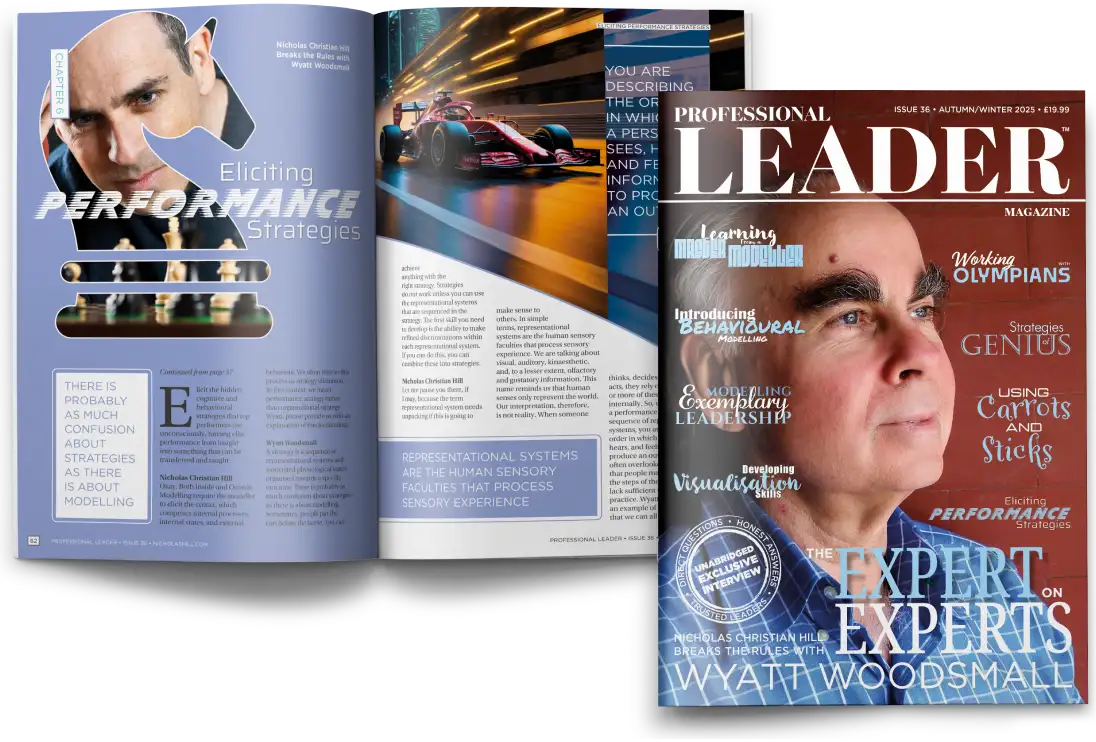
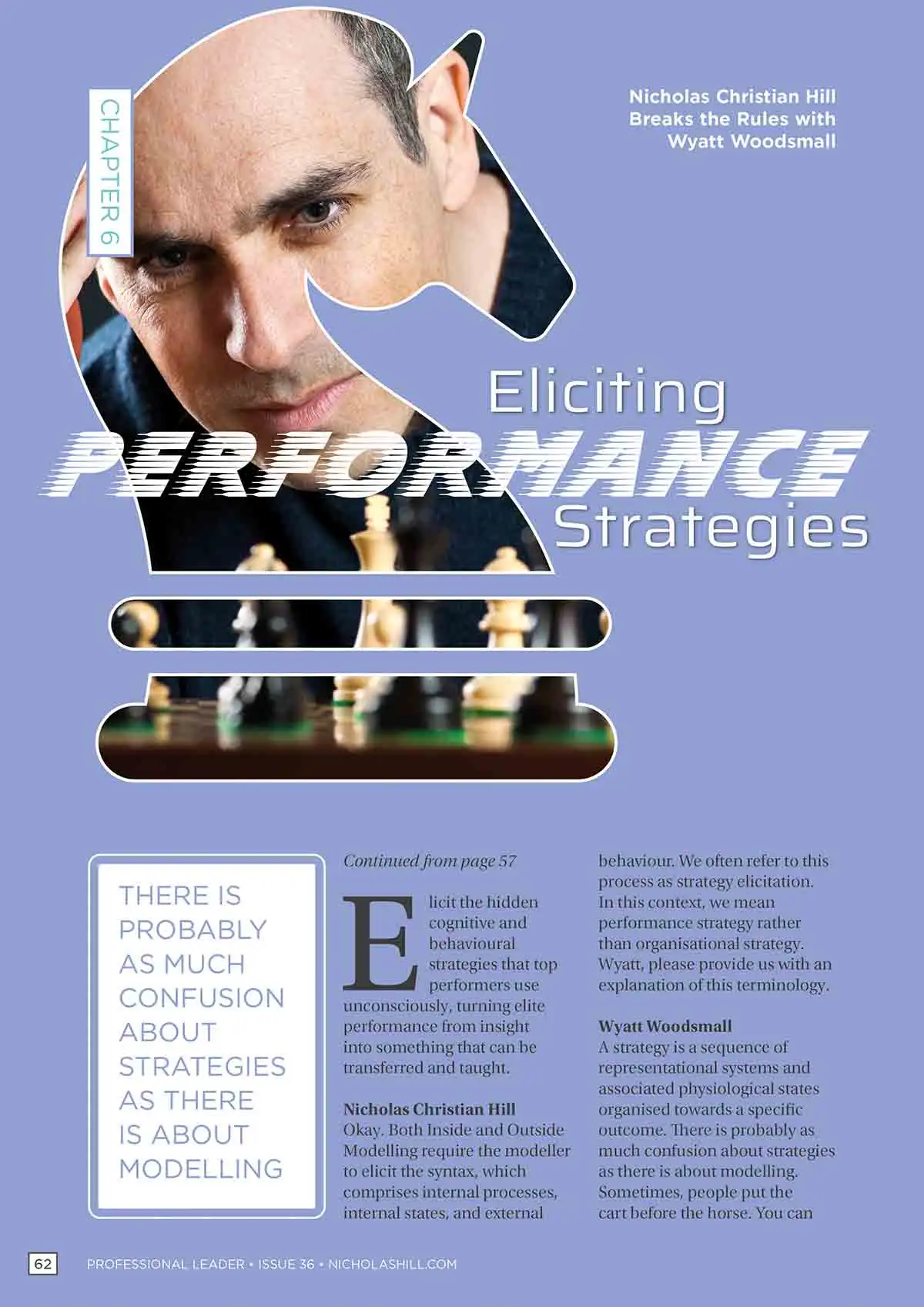
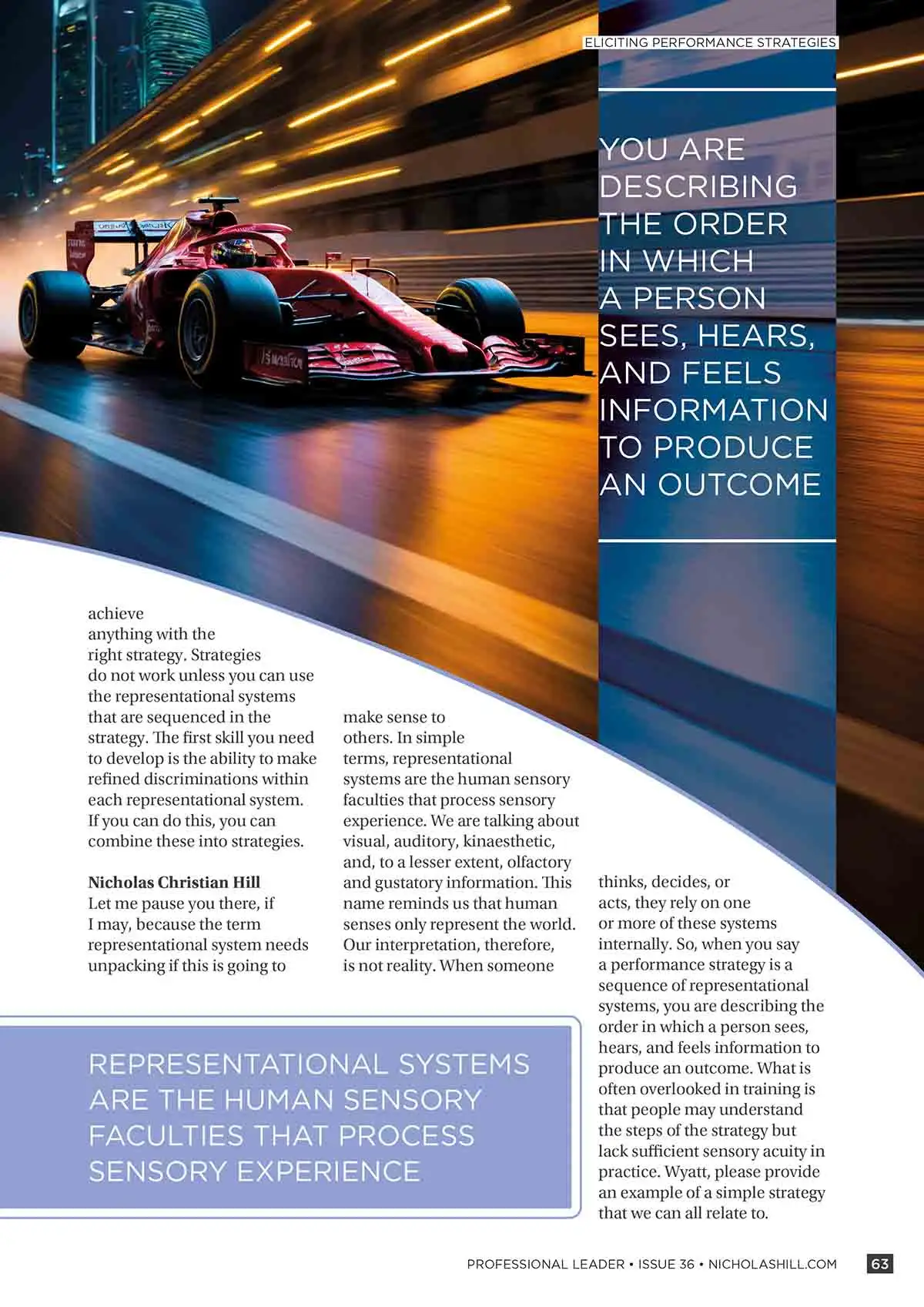
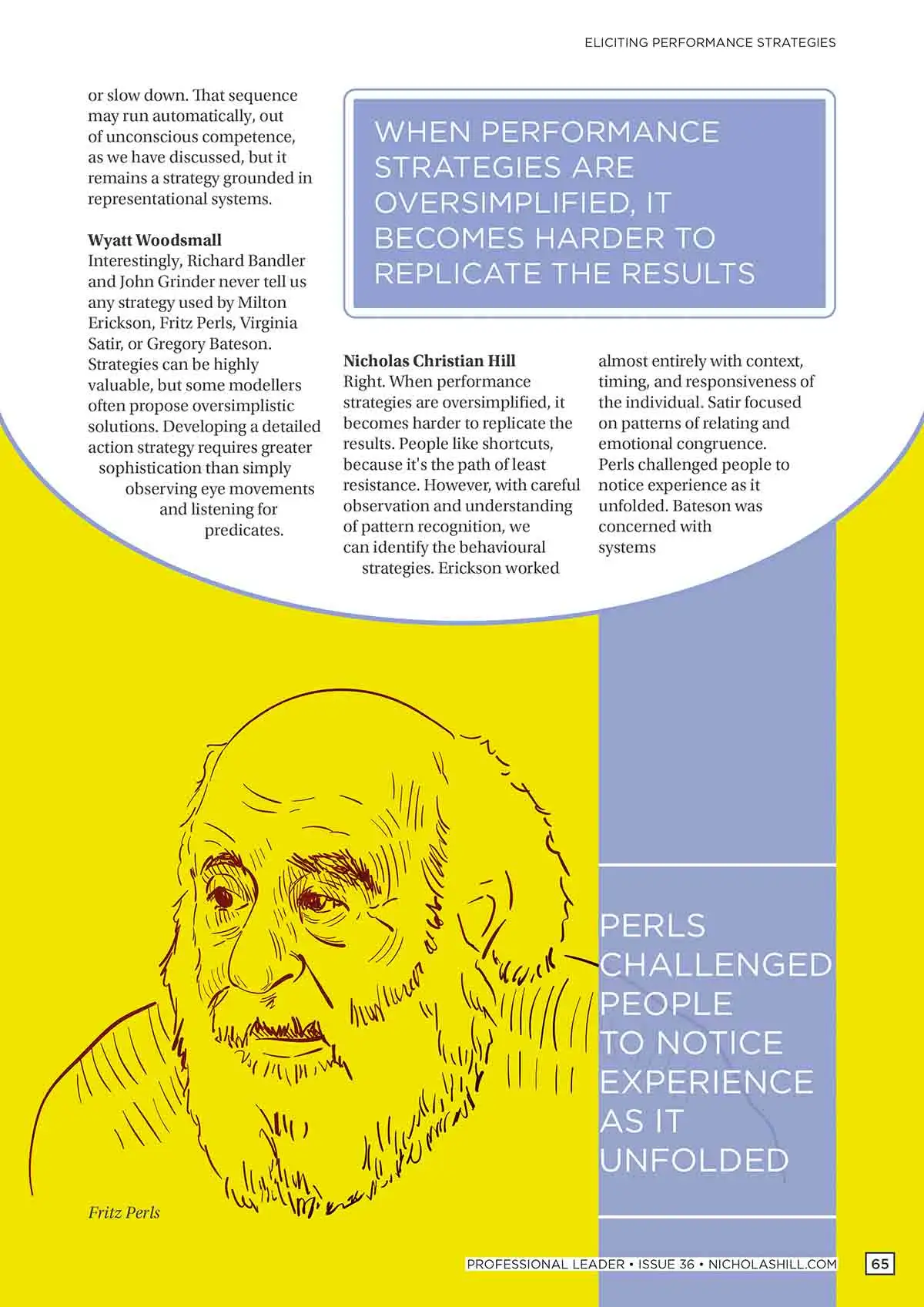
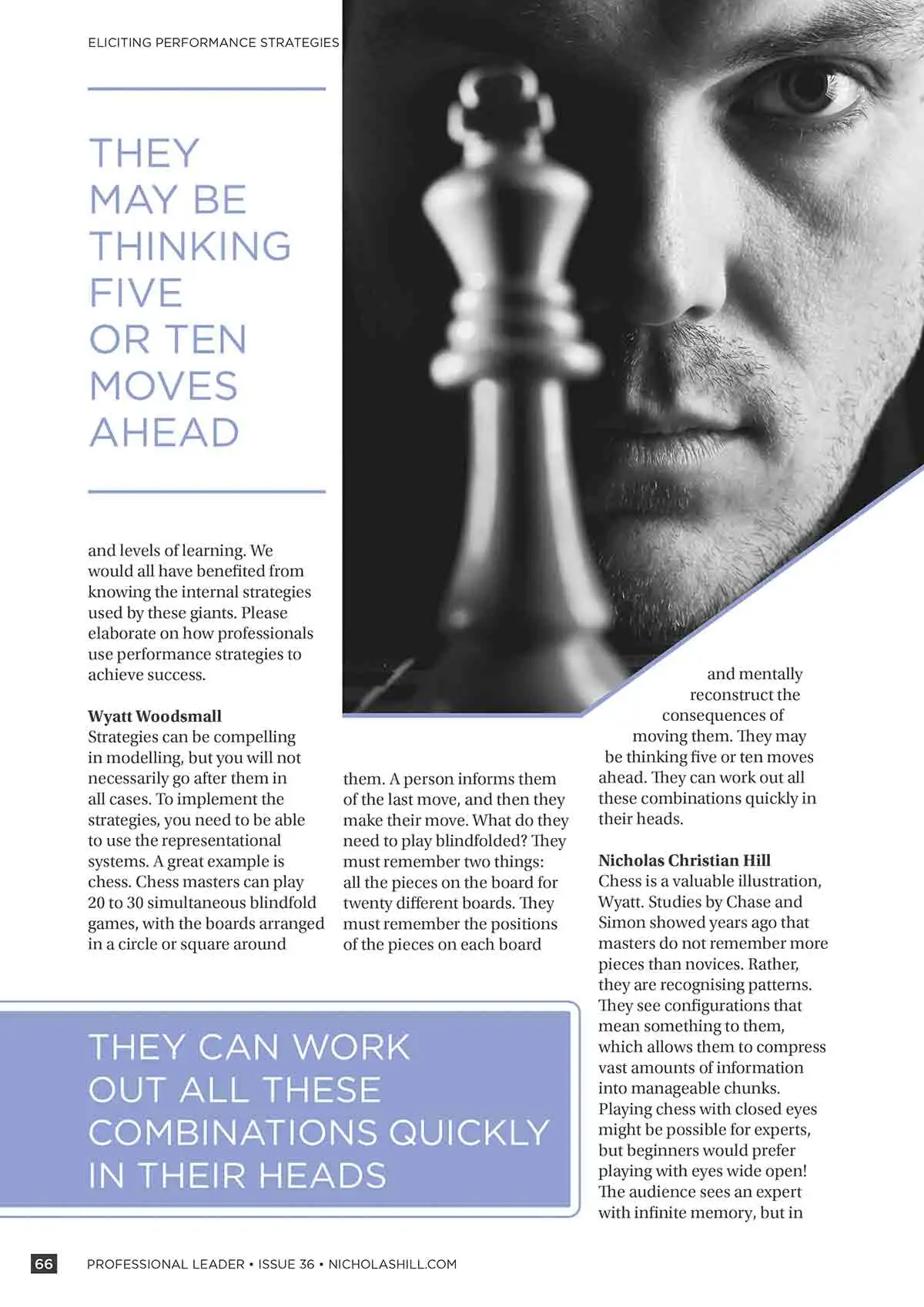
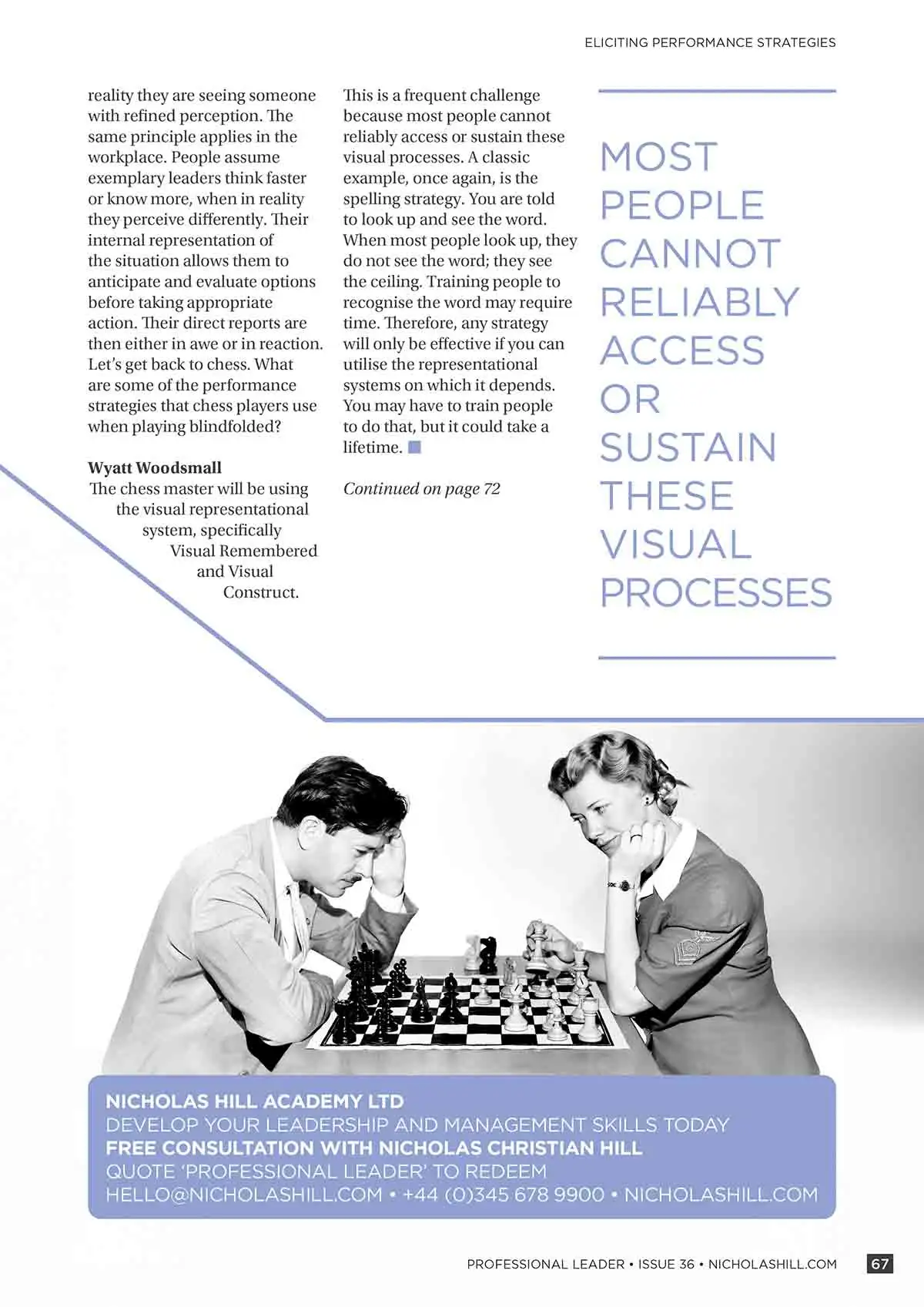
Chess imagery associates strategy with sequencing, anticipation and purposeful decision-making. Formula 1 provides a second metaphor: apparent speed and fluency depend upon rapid perception and precisely ordered responses, reflecting the chapter’s examination of how performers see, hear, feel and act.
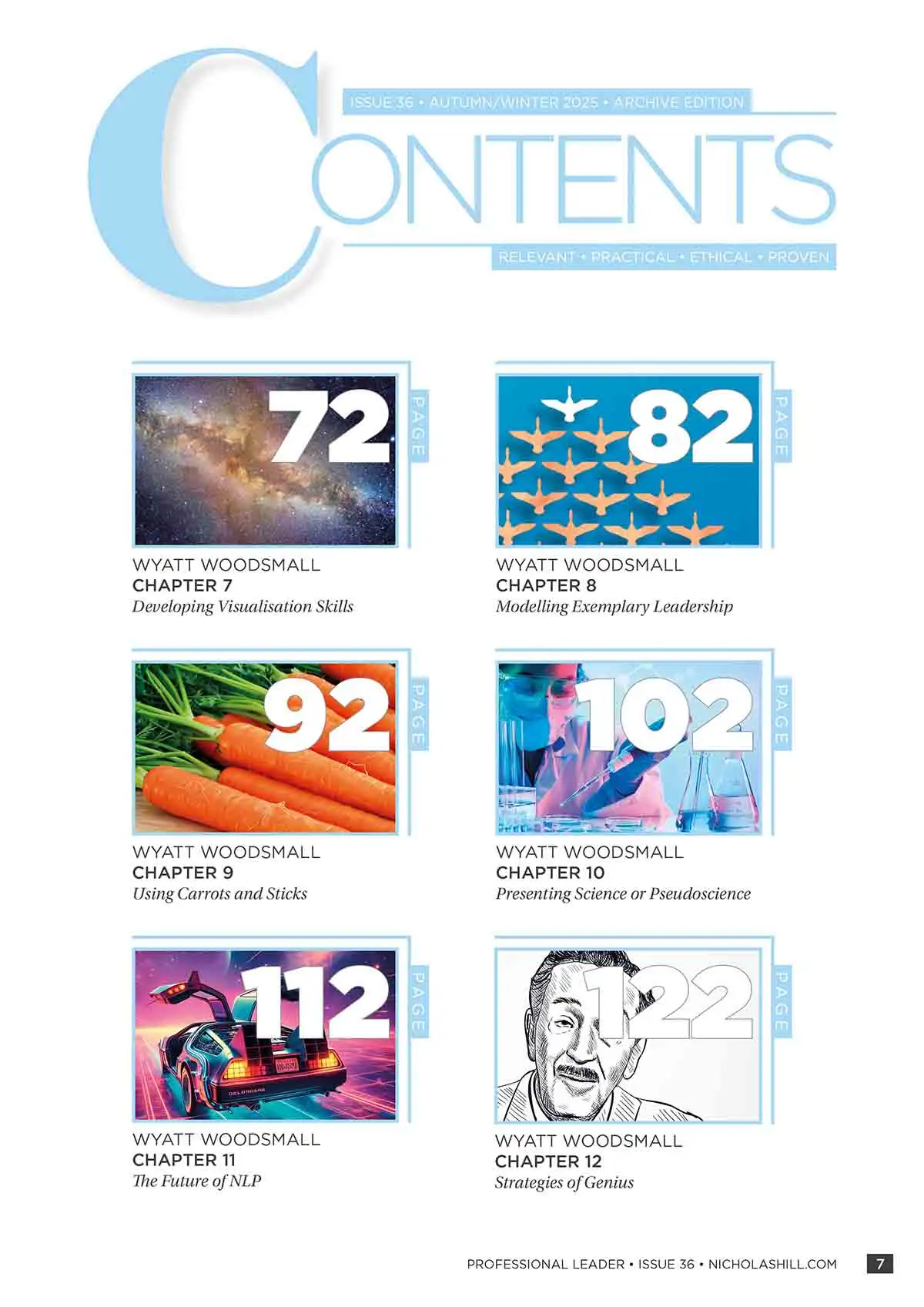
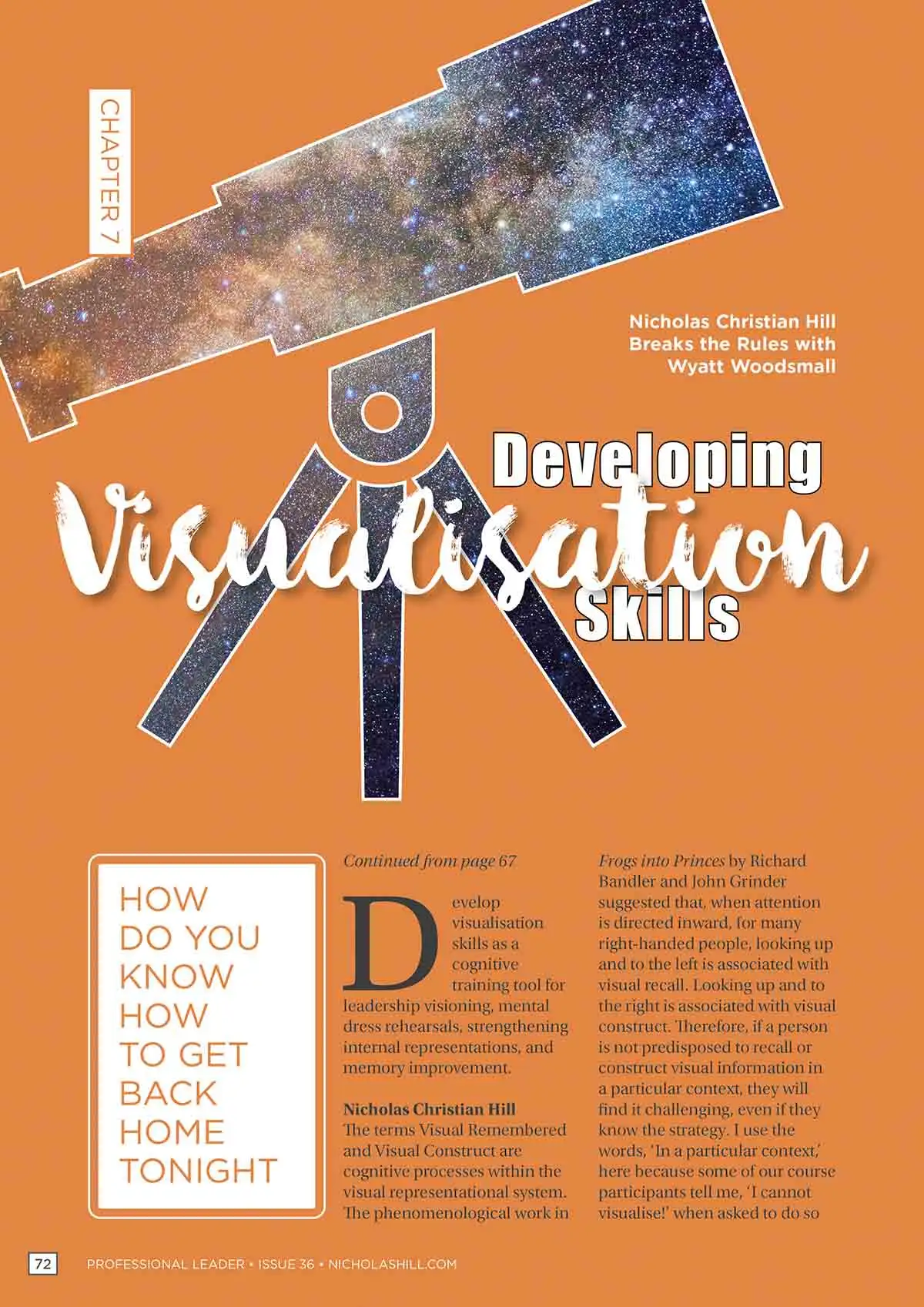
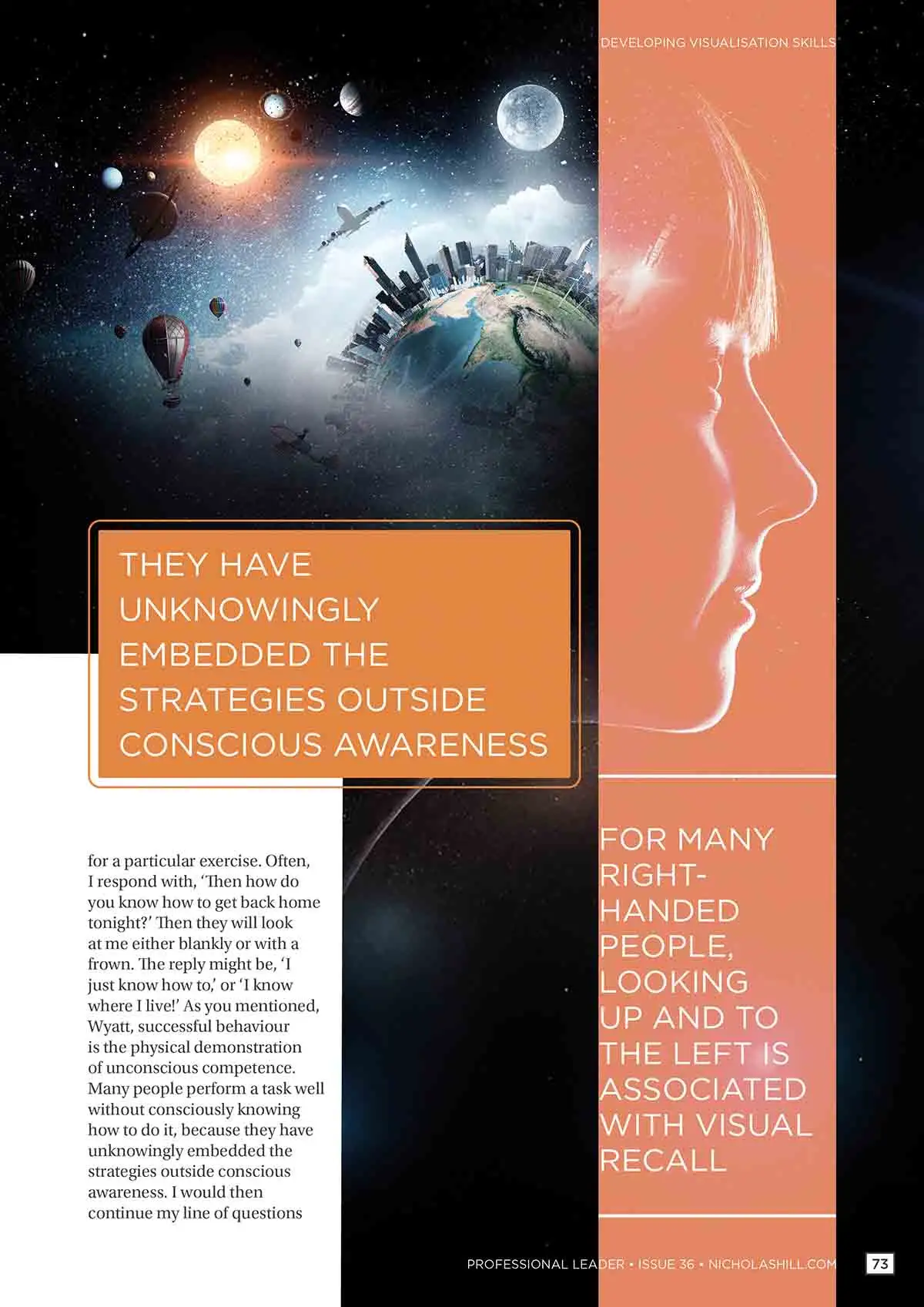
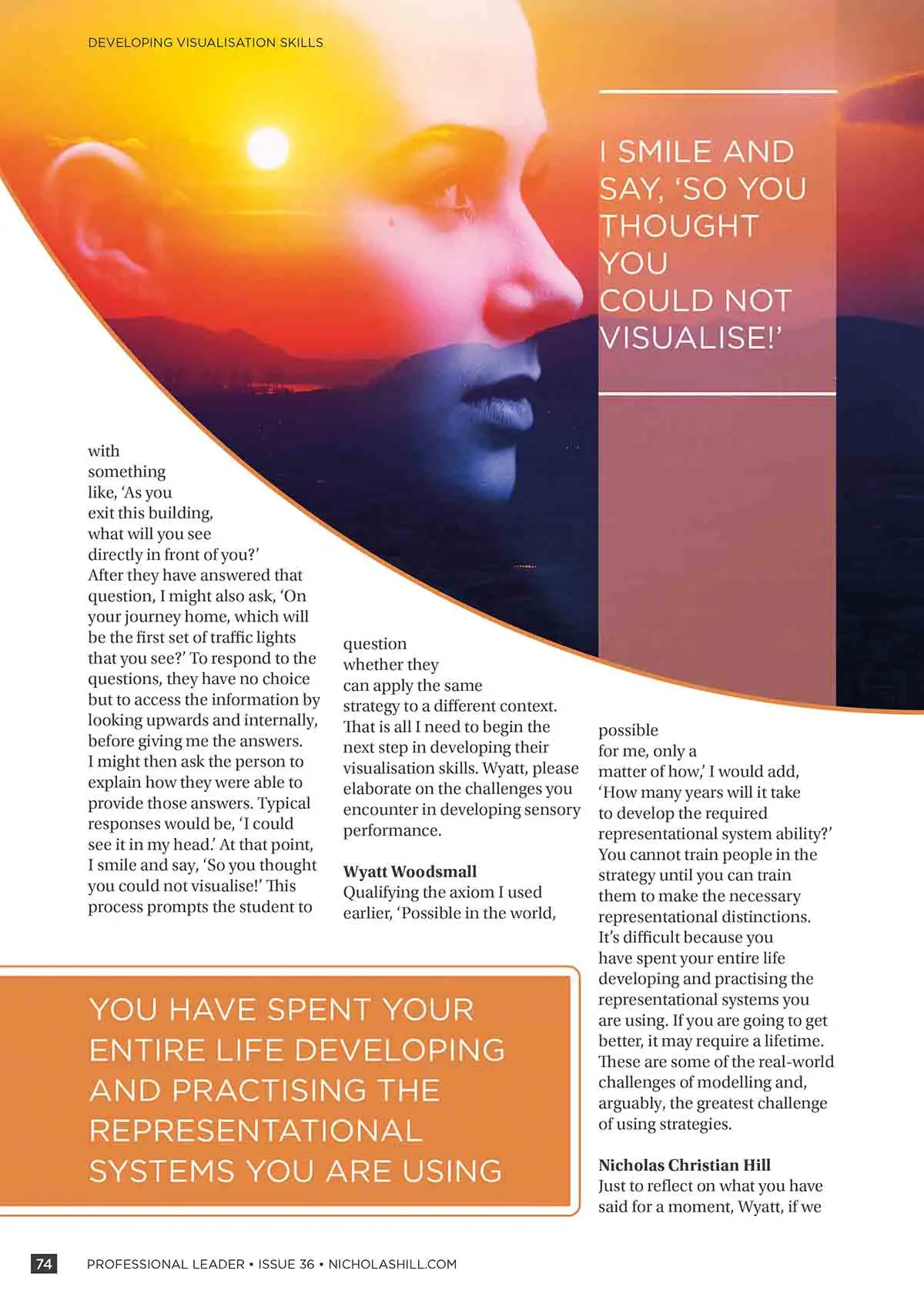
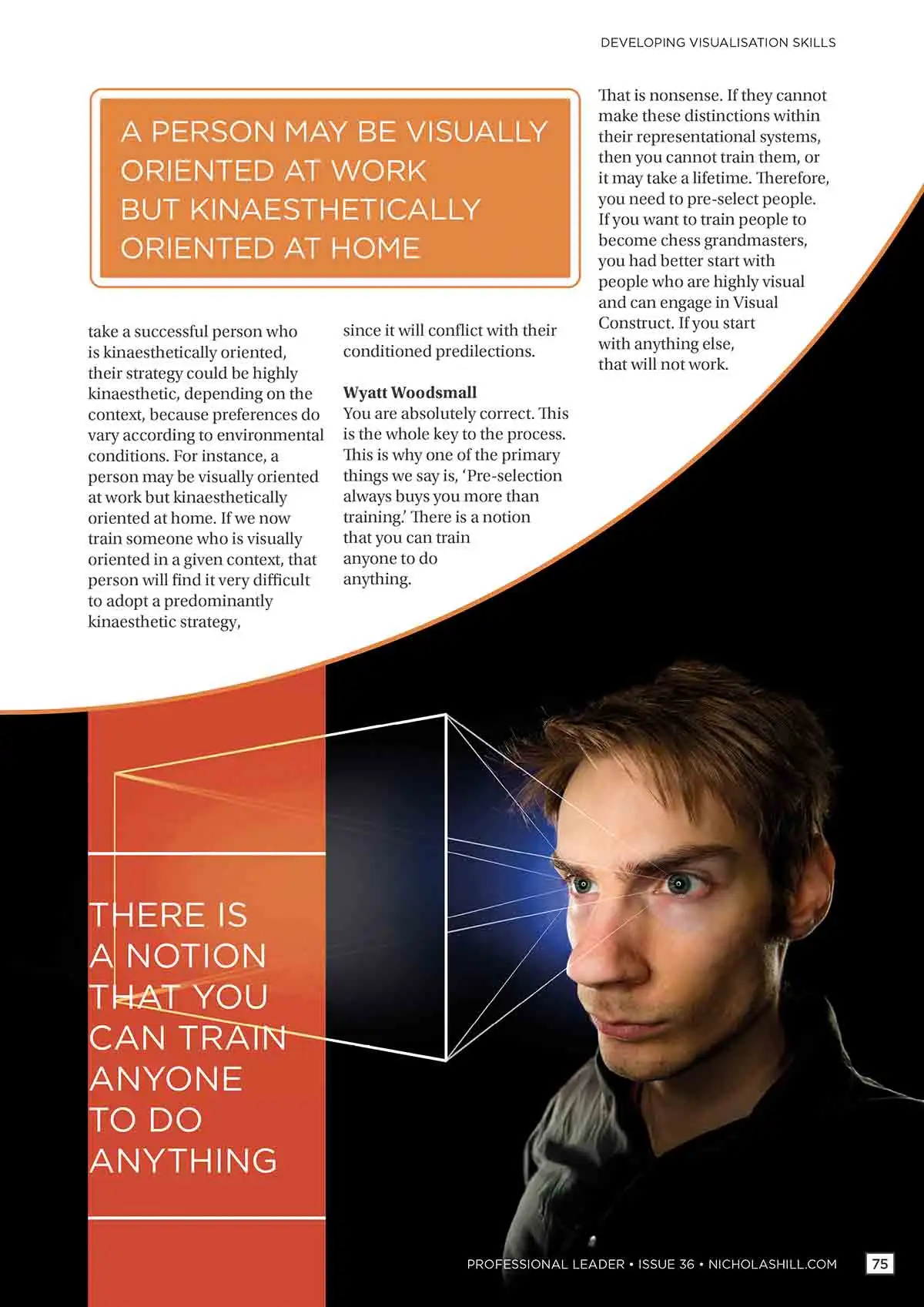
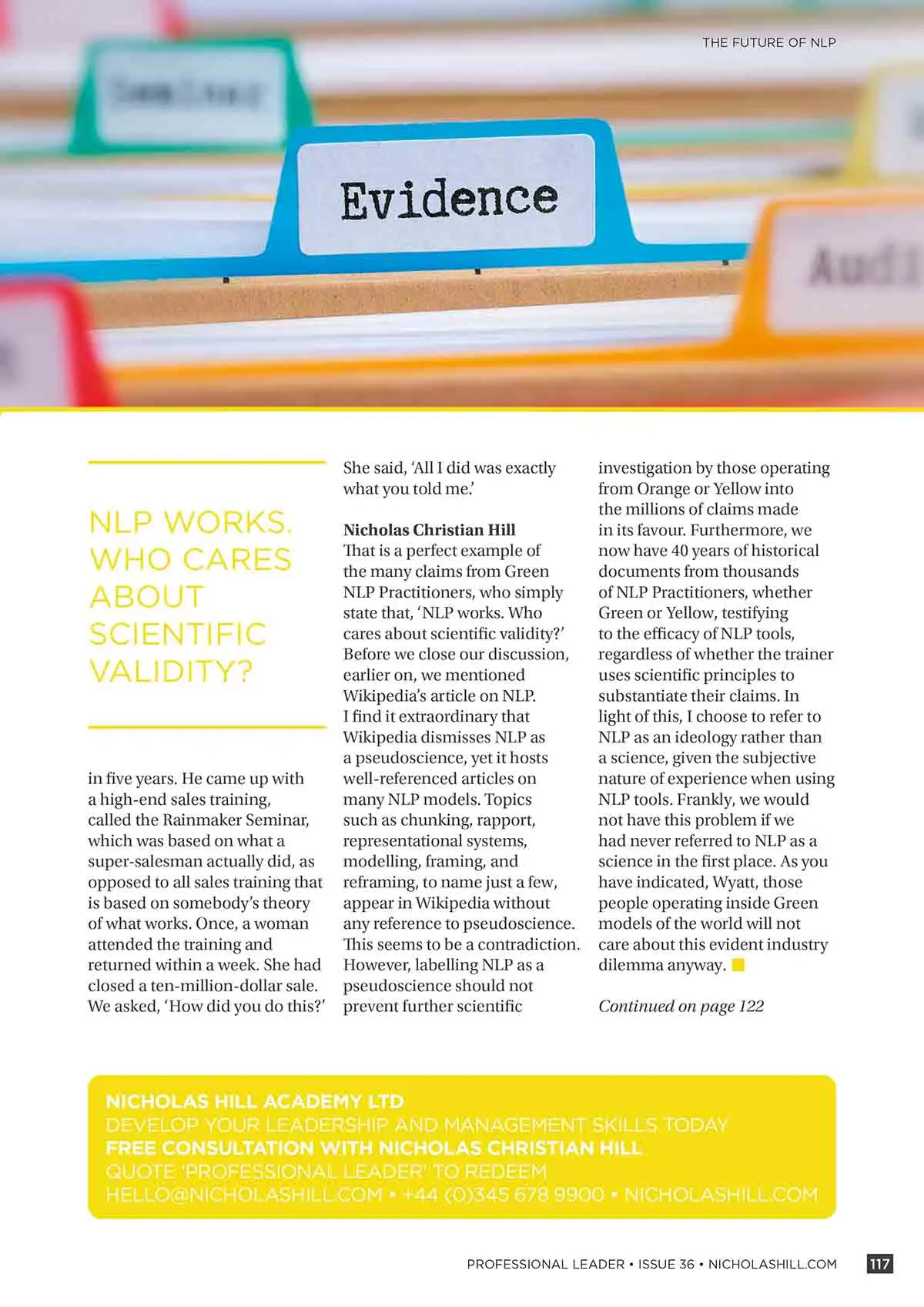
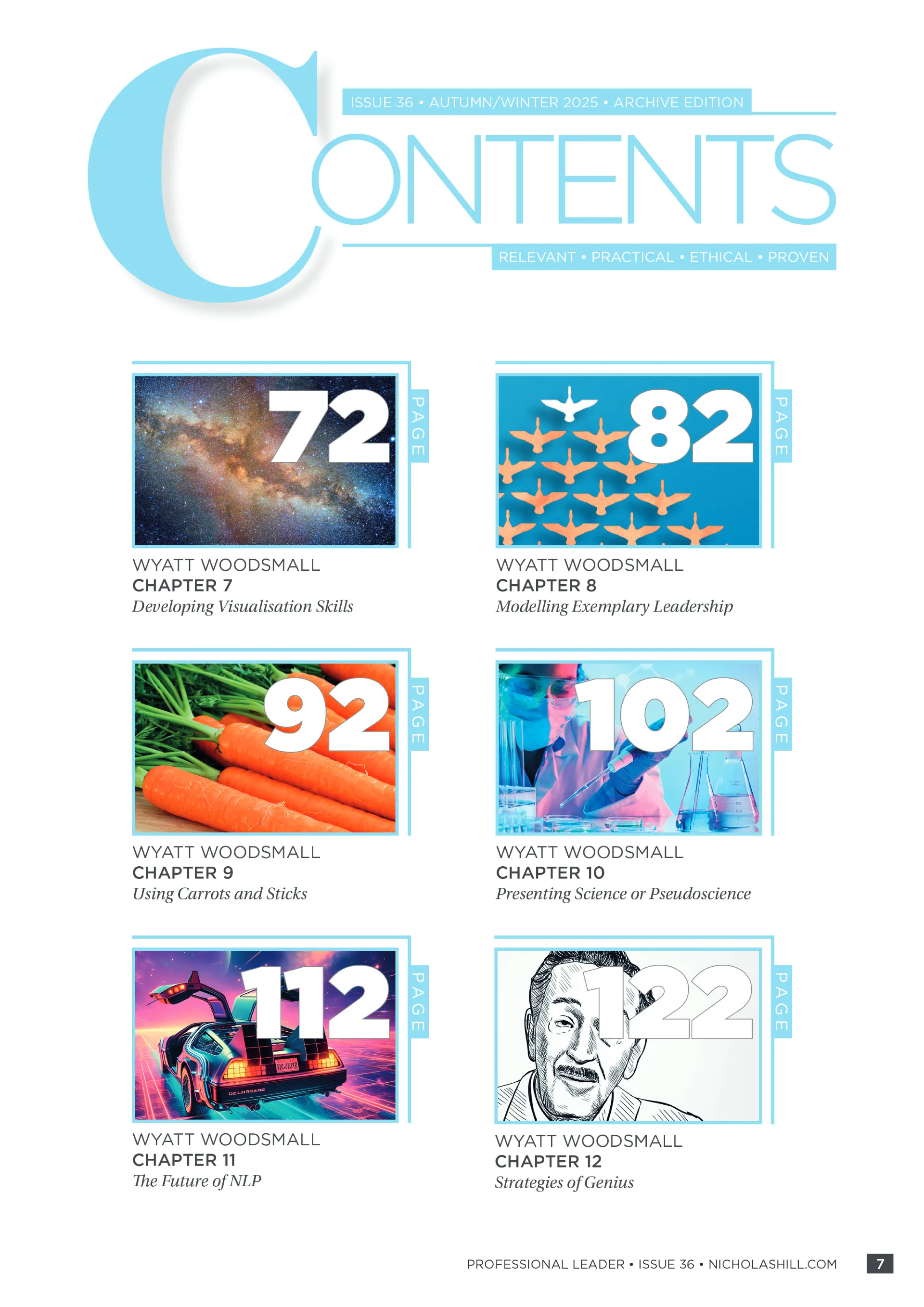
A telescope opening onto the cosmos makes internal vision almost literal, while later surreal imagery expands the idea into constructed experience. The visuals present visualisation as an active cognitive ability used to remember, imagine, rehearse and strengthen future performance.
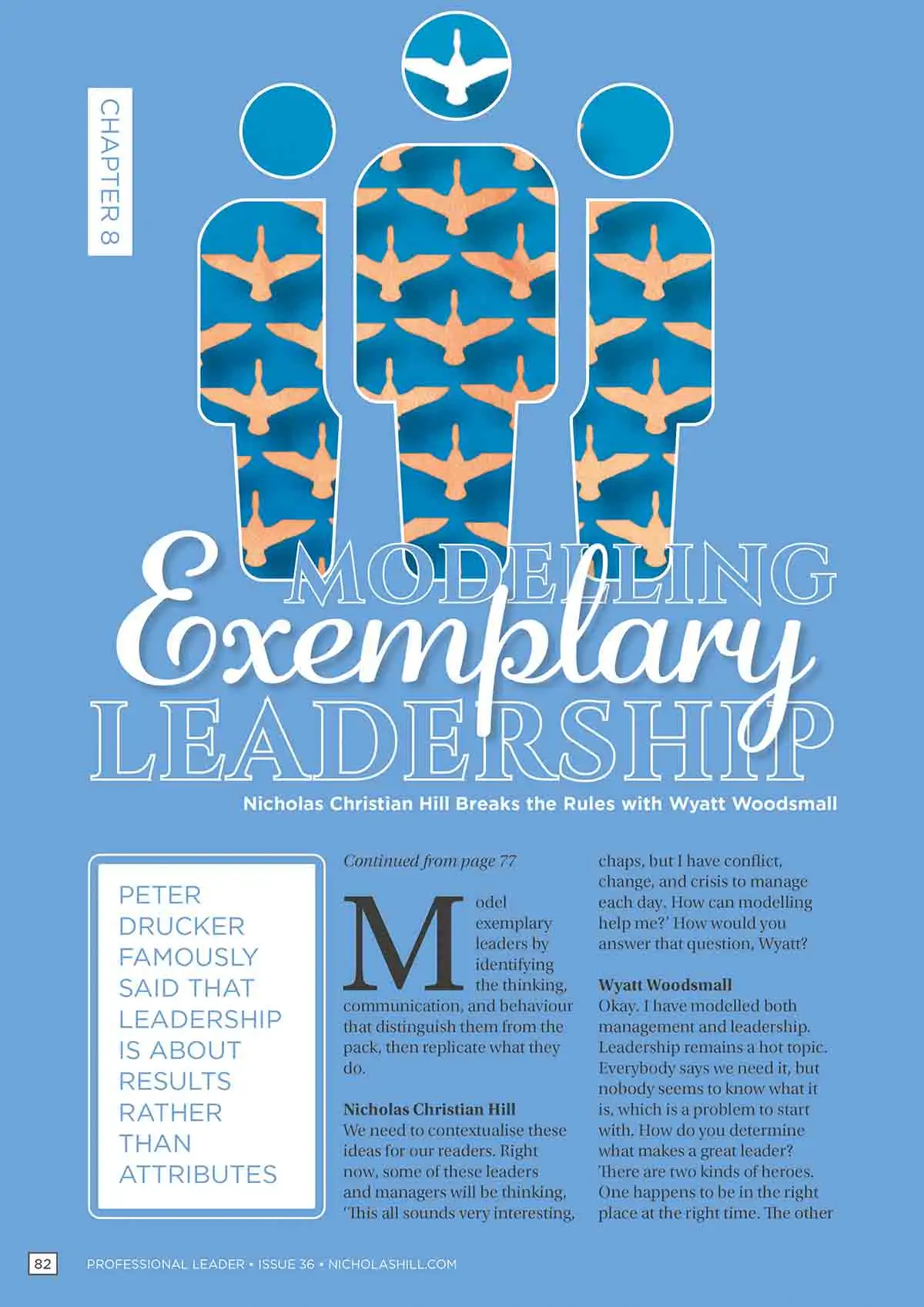
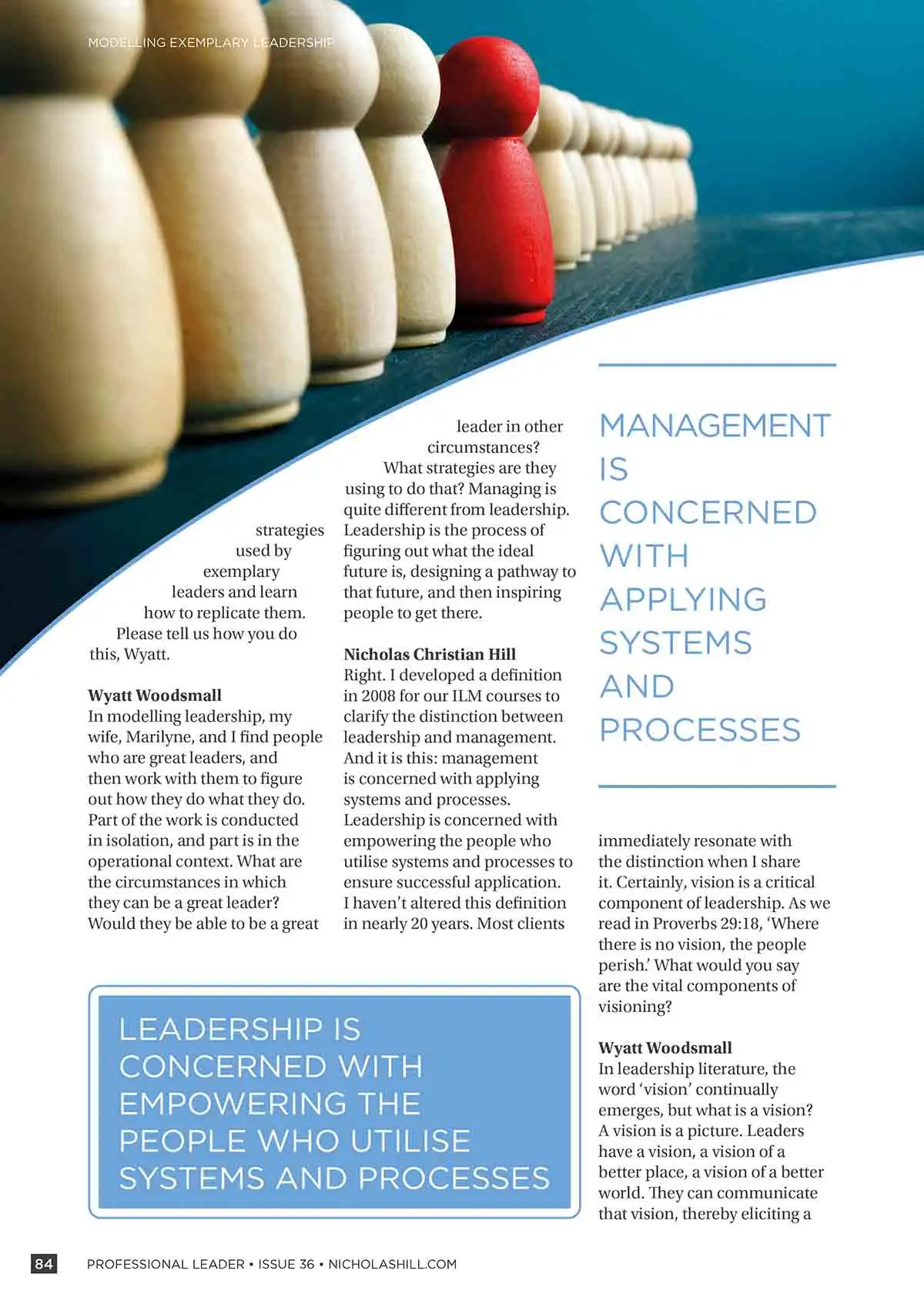
Human figures filled with aircraft imagery place one individual visibly ahead of the others, reflecting the search for what distinguishes exemplary leaders. The composition shifts attention away from titles and status towards the thinking, communication and behaviour that generate leadership results.
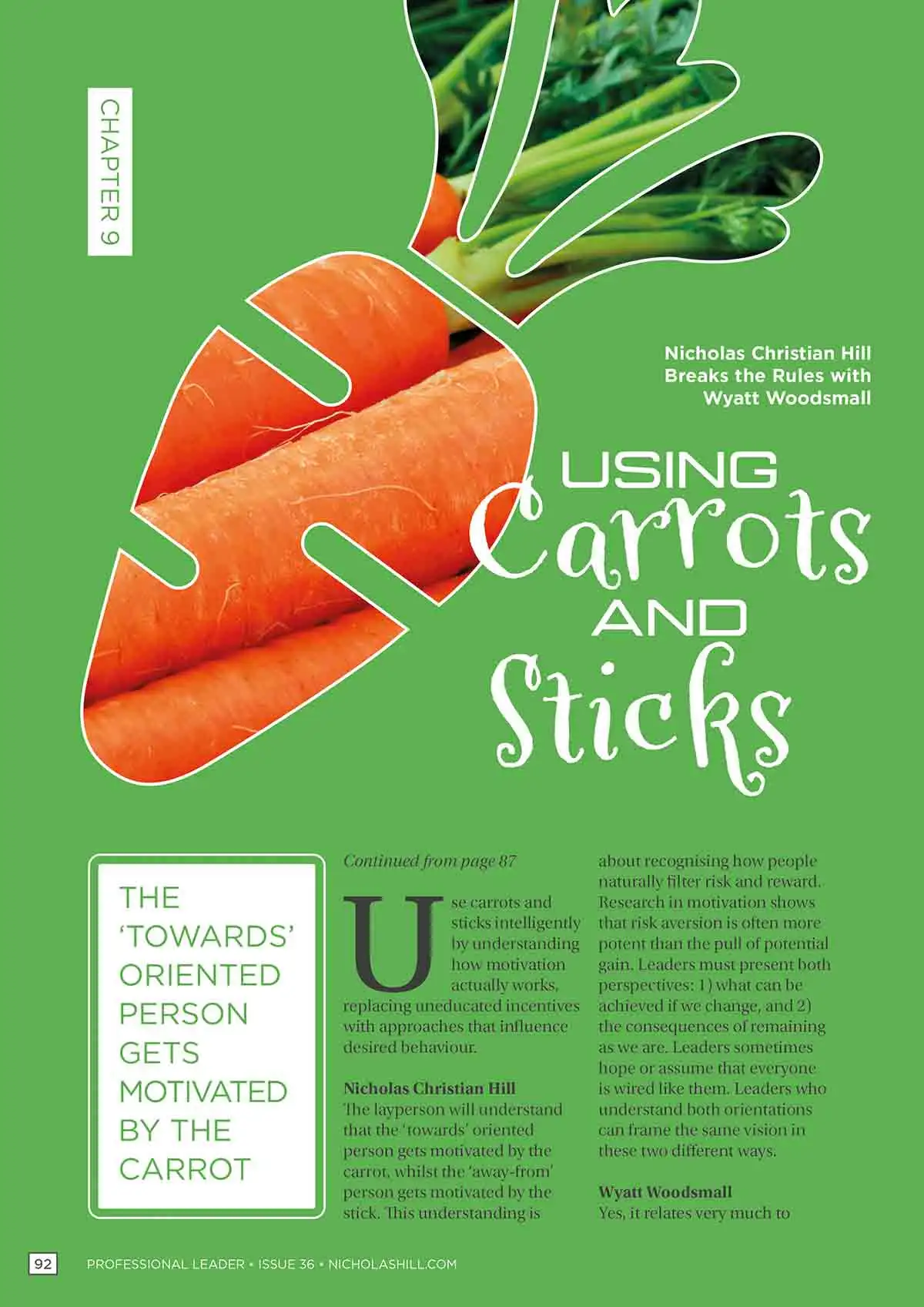
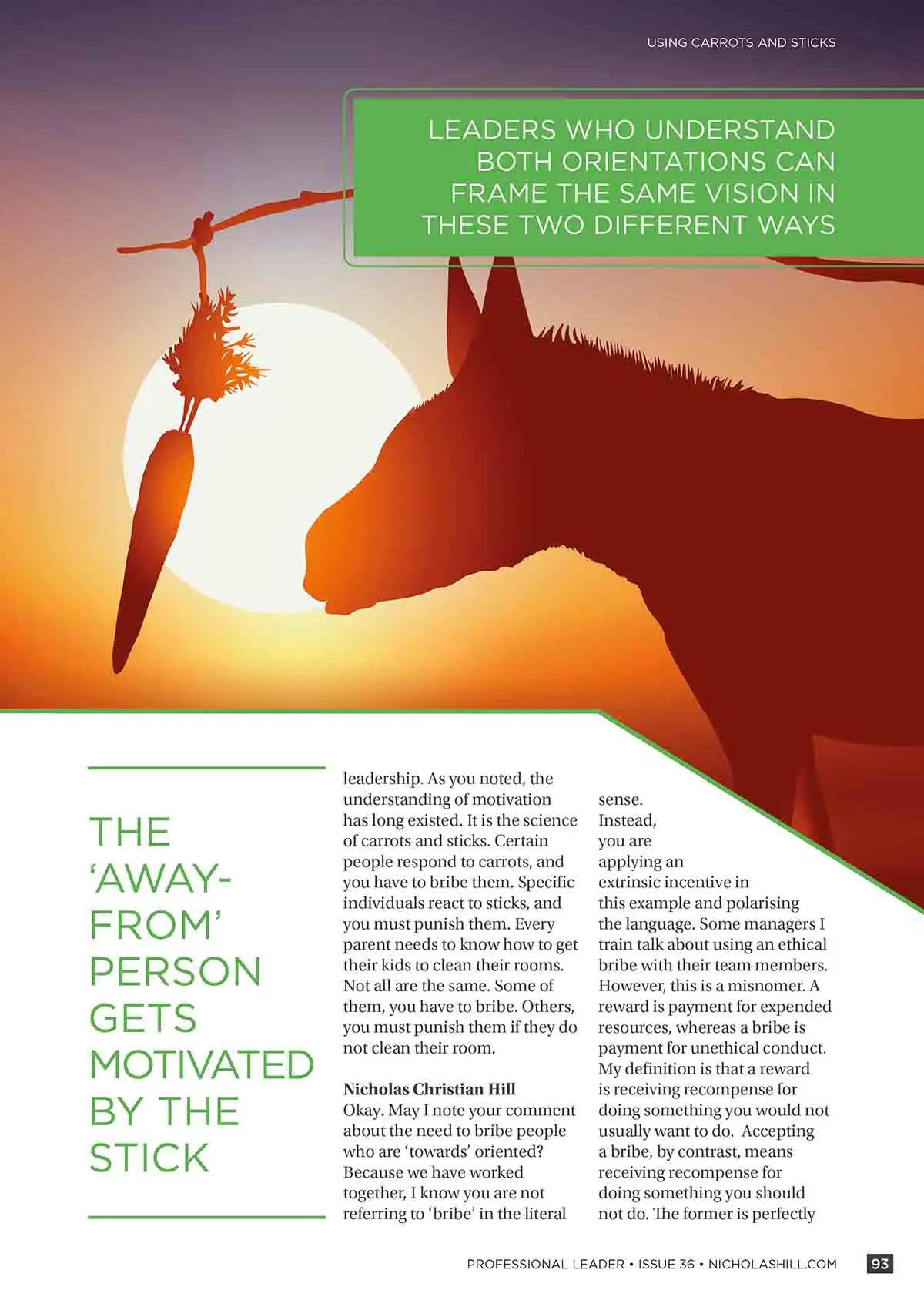
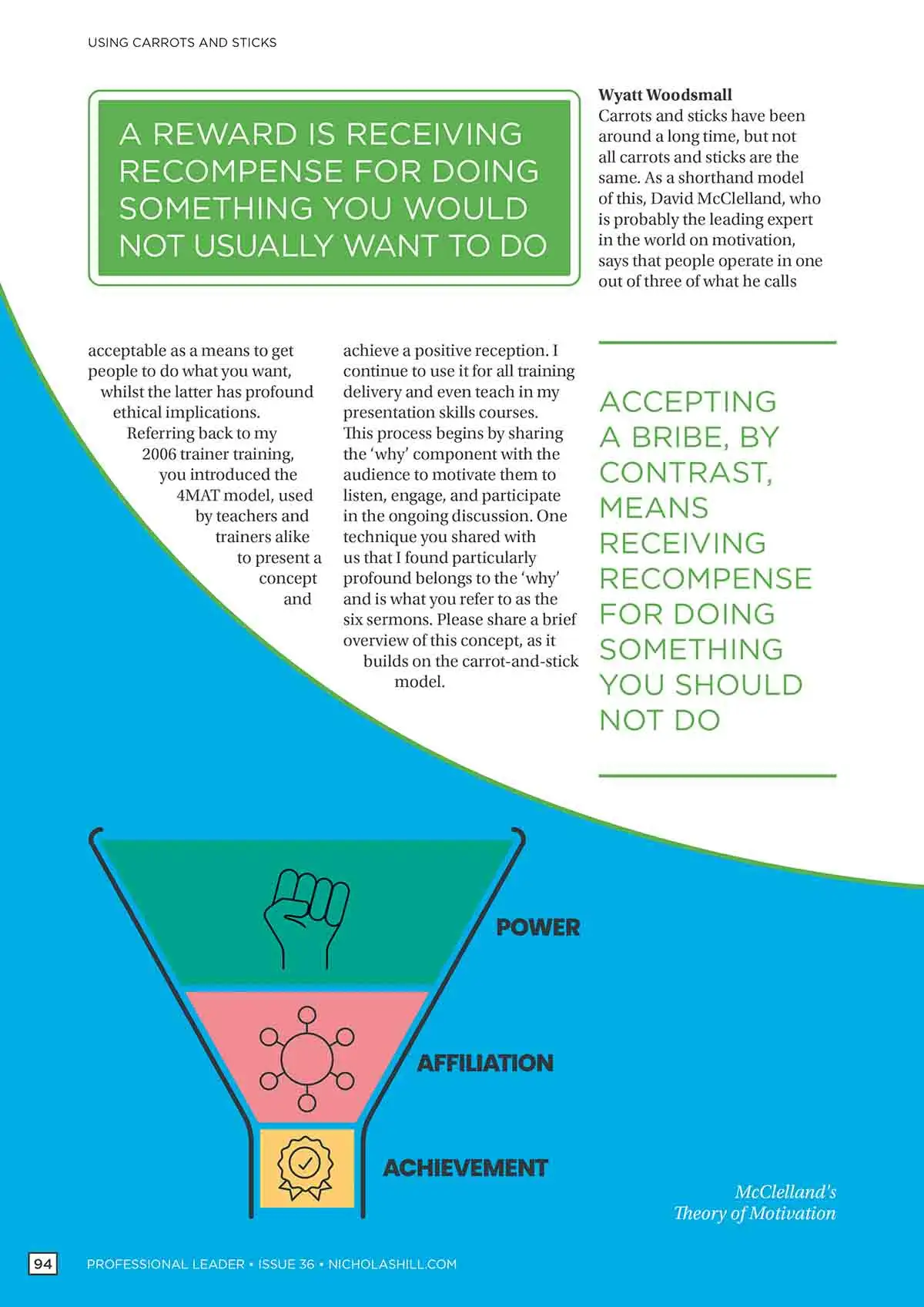
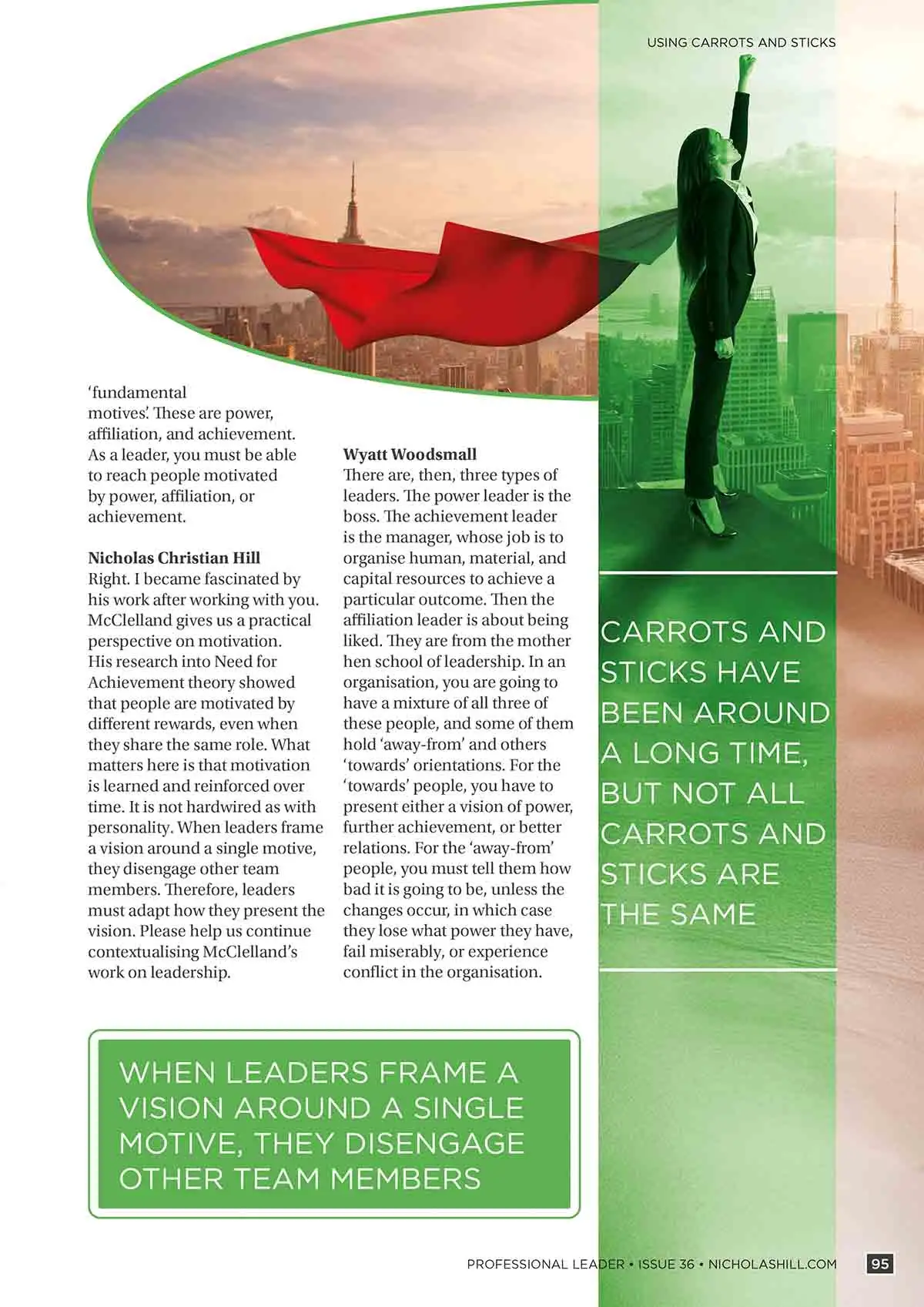
The familiar motivation metaphor is deliberately made literal through oversized carrots and later an animal pursuing a suspended reward. The imagery immediately introduces “towards” and “away-from” orientations before the interview develops the more complex relationship between reward, consequence and individual motivation.
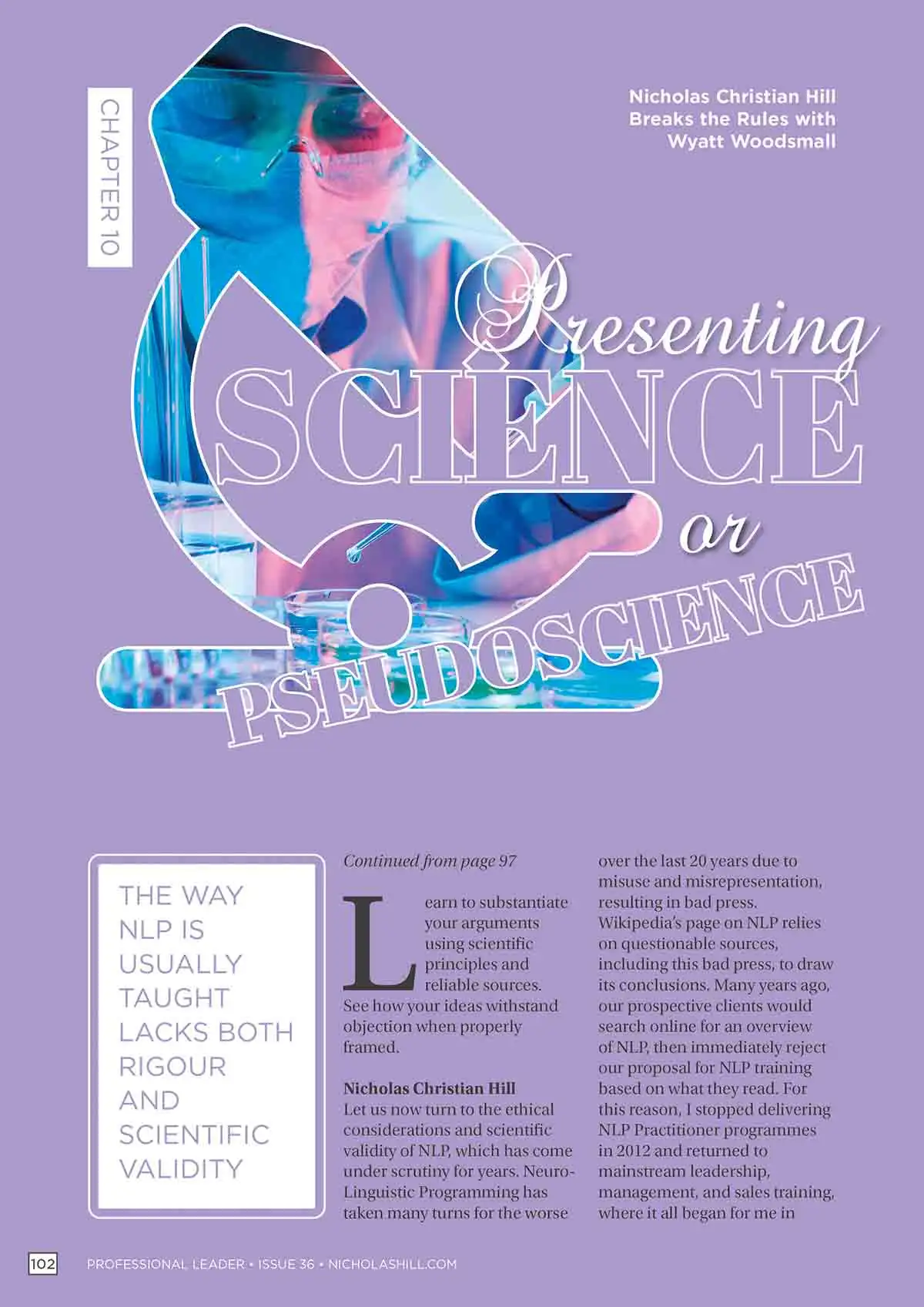
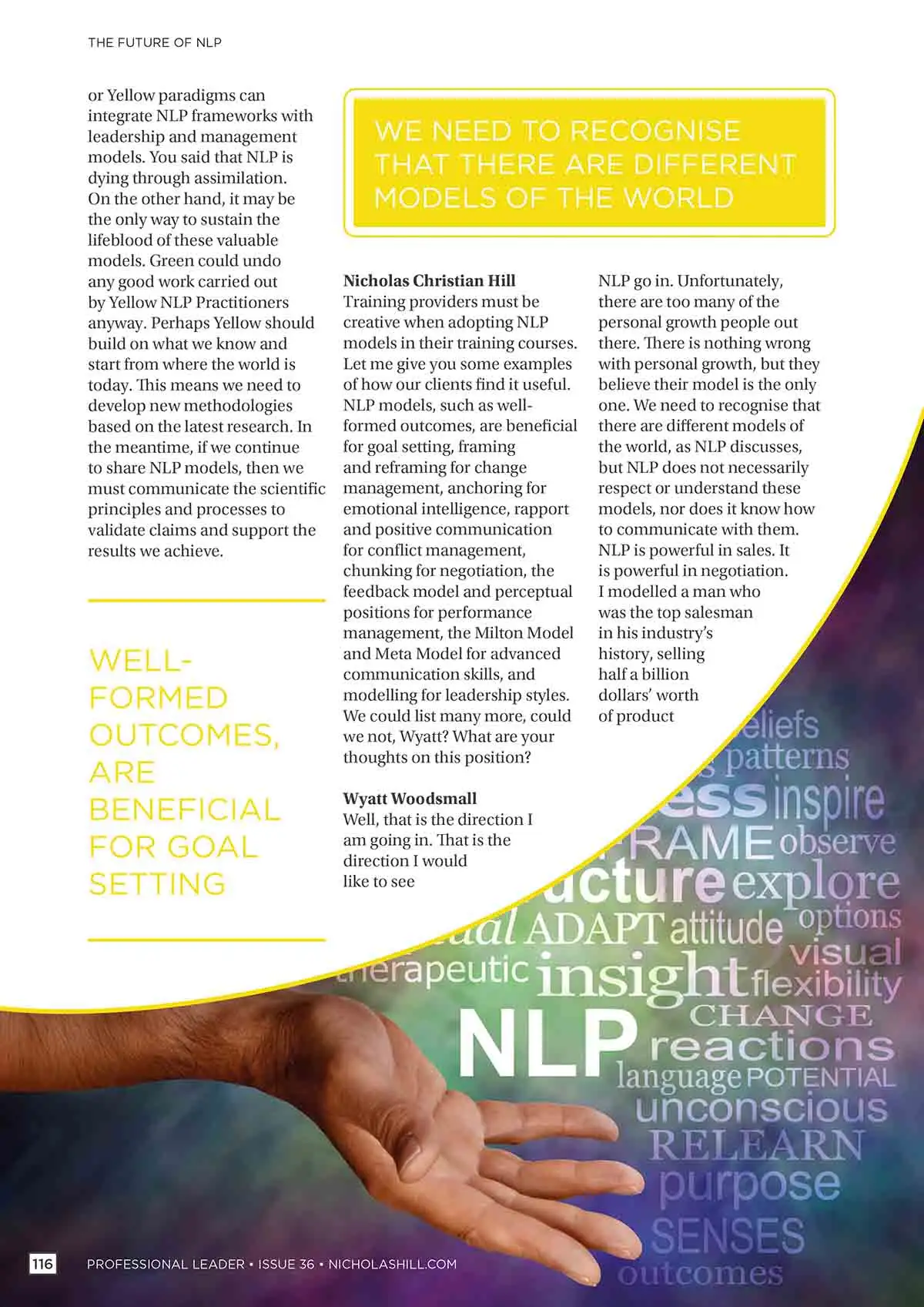
Scientific imagery contained within a large question-mark form frames the chapter’s central challenge: how should NLP claims be examined and substantiated? Combining symbols of research with a question visually reinforces the need to test ideas rather than automatically accept or dismiss them.
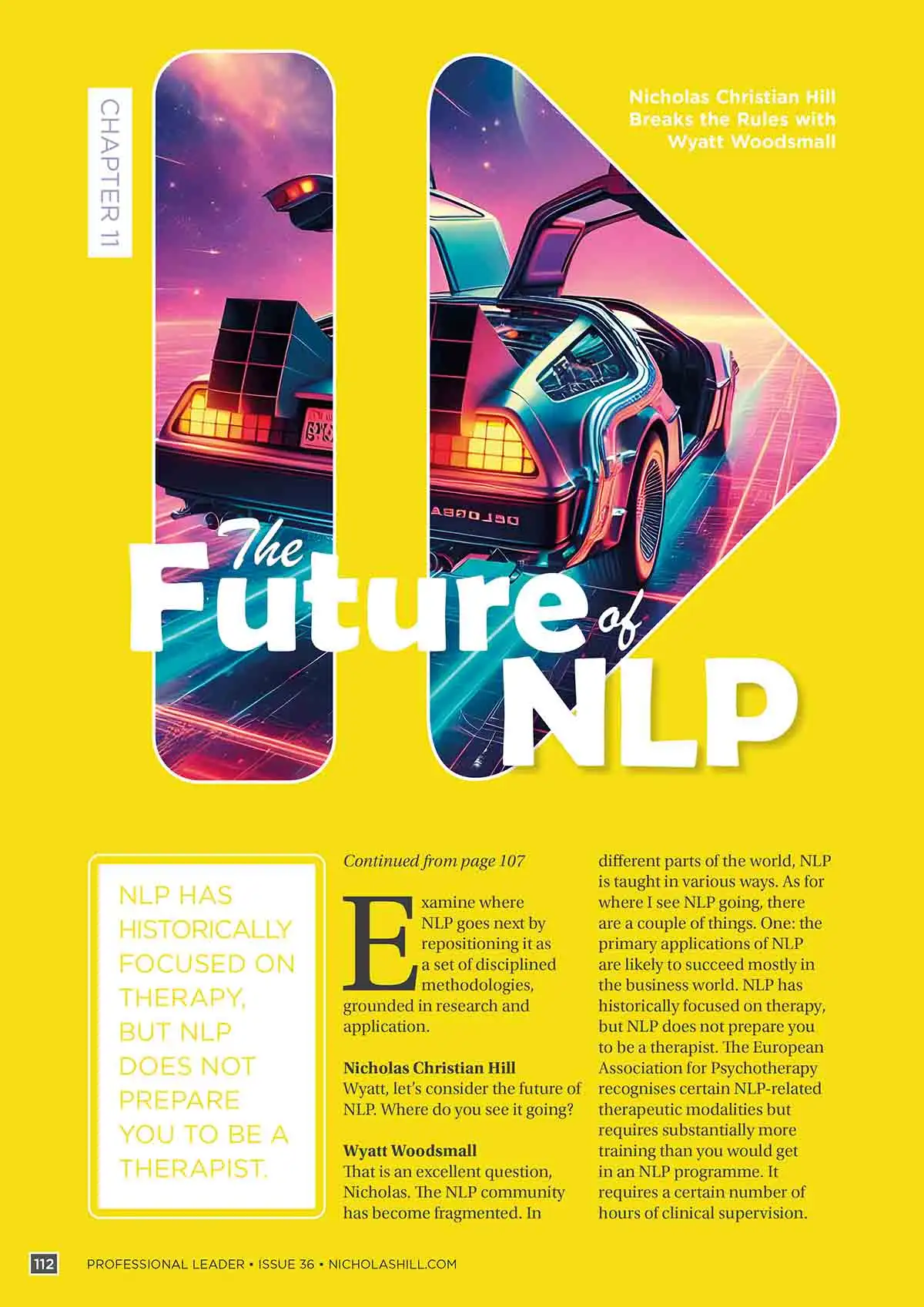
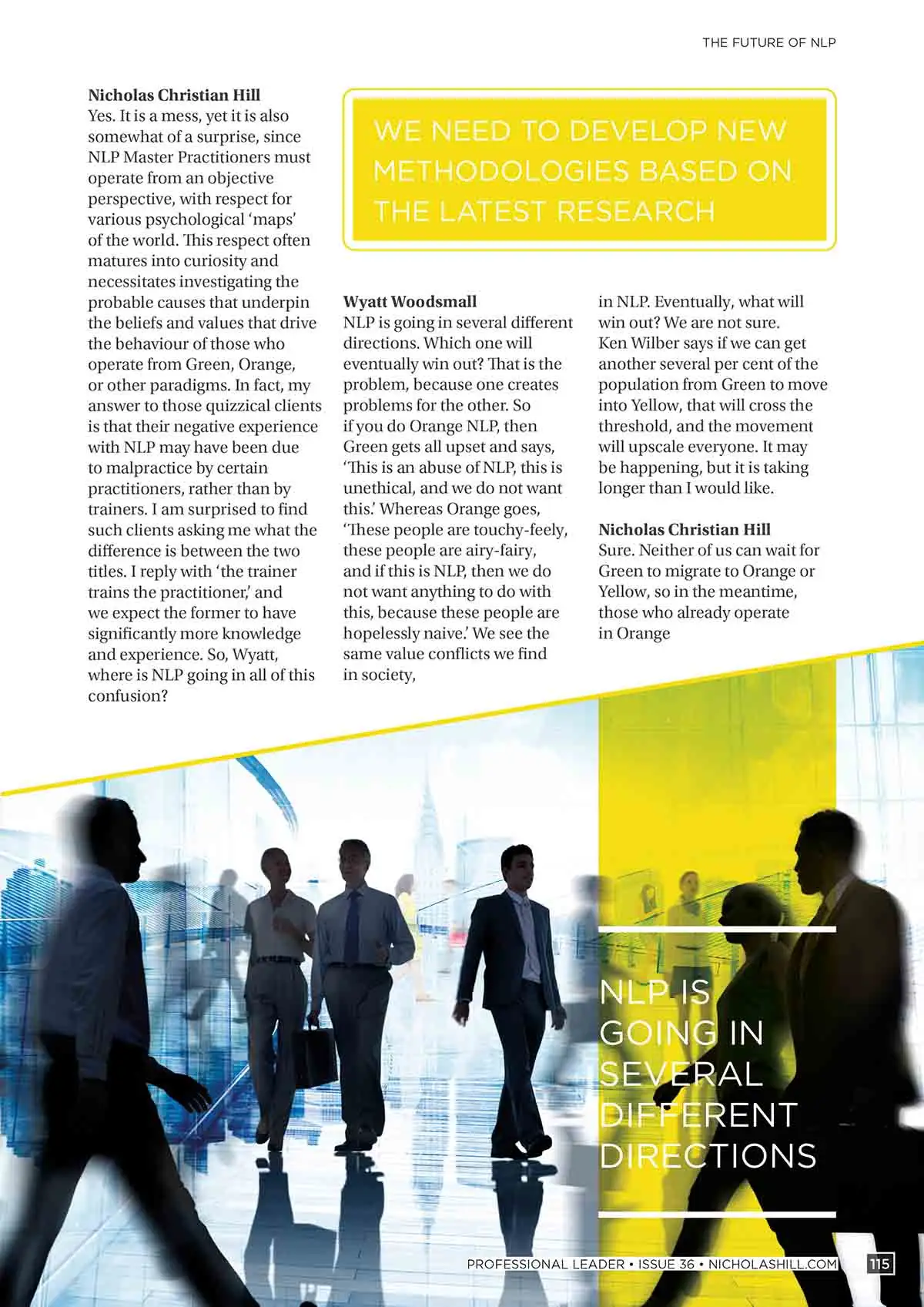
A back-to-the-future-style DeLorean sports car framed by forward-moving graphic forms gives the chapter an unmistakable sense of direction. Rather than looking backwards at NLP’s origins, the visual treatment supports a discussion concerned with where its methodologies might go next and how they could remain practically relevant.
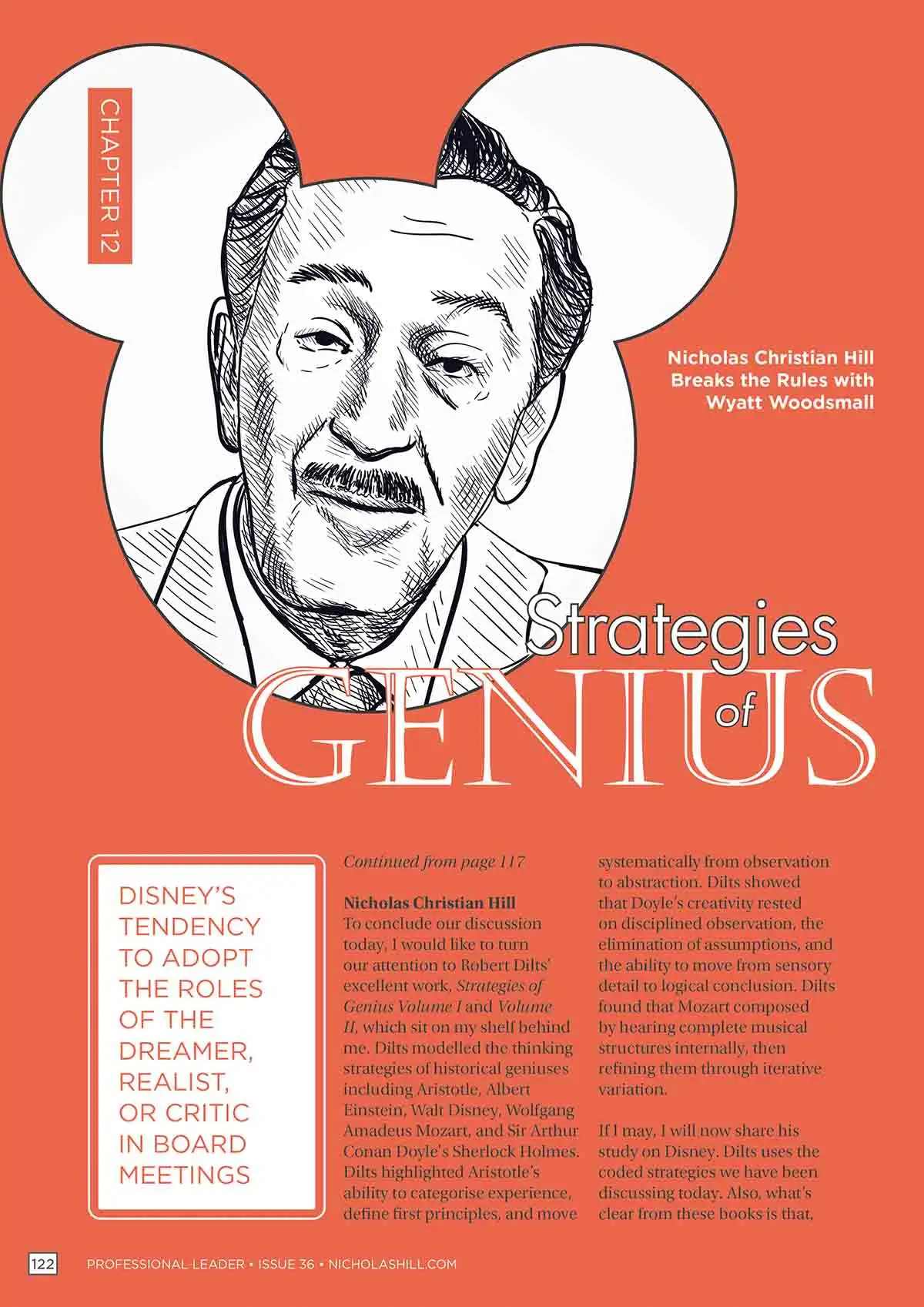
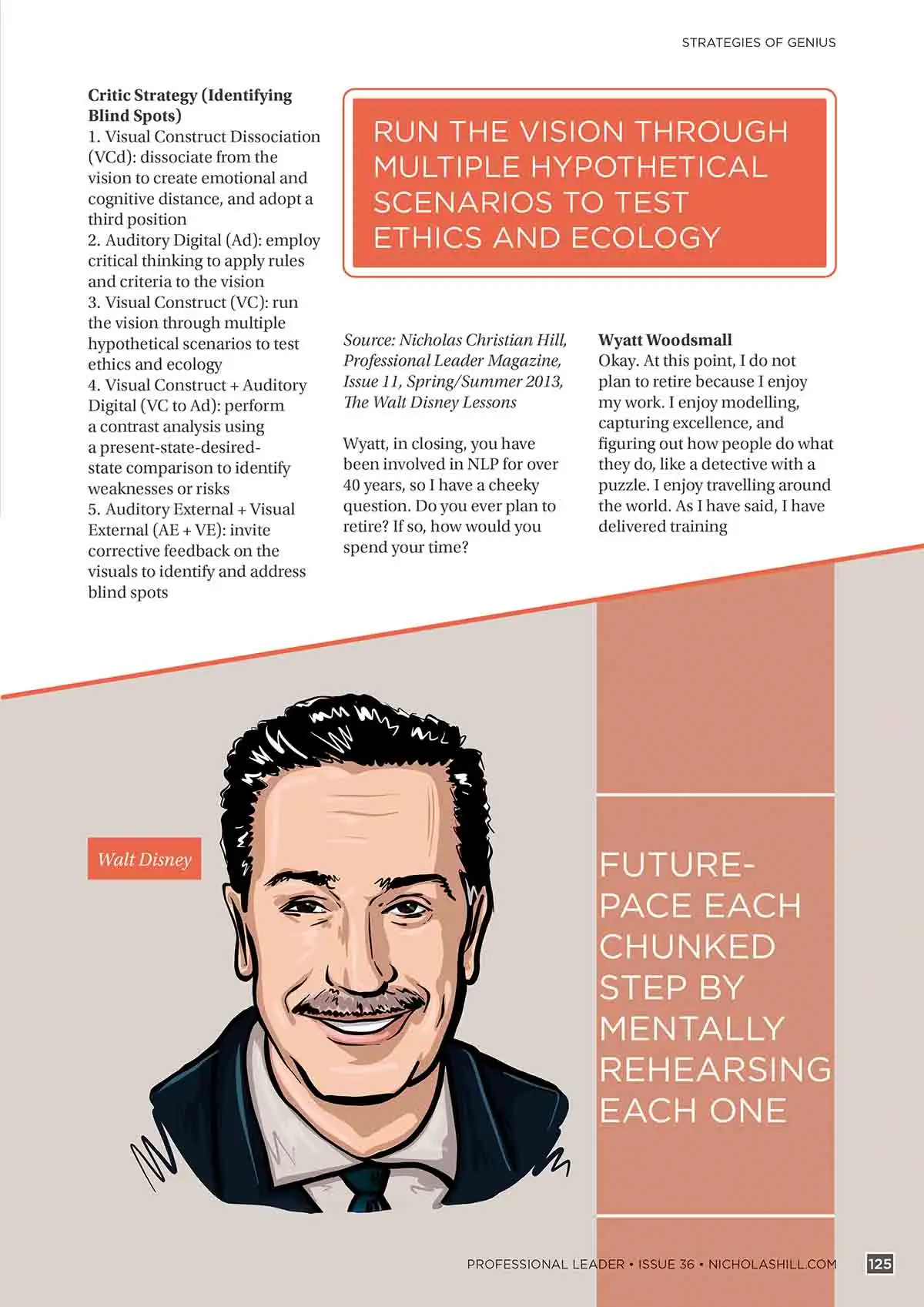
Walt Disney appears within the instantly recognisable silhouette of Mickey Mouse ears, connecting the creator with his creative legacy. The reference to Dreamer, Realist and Critic then redirects attention from Disney’s achievements towards the underlying thinking processes that the chapter seeks to model.