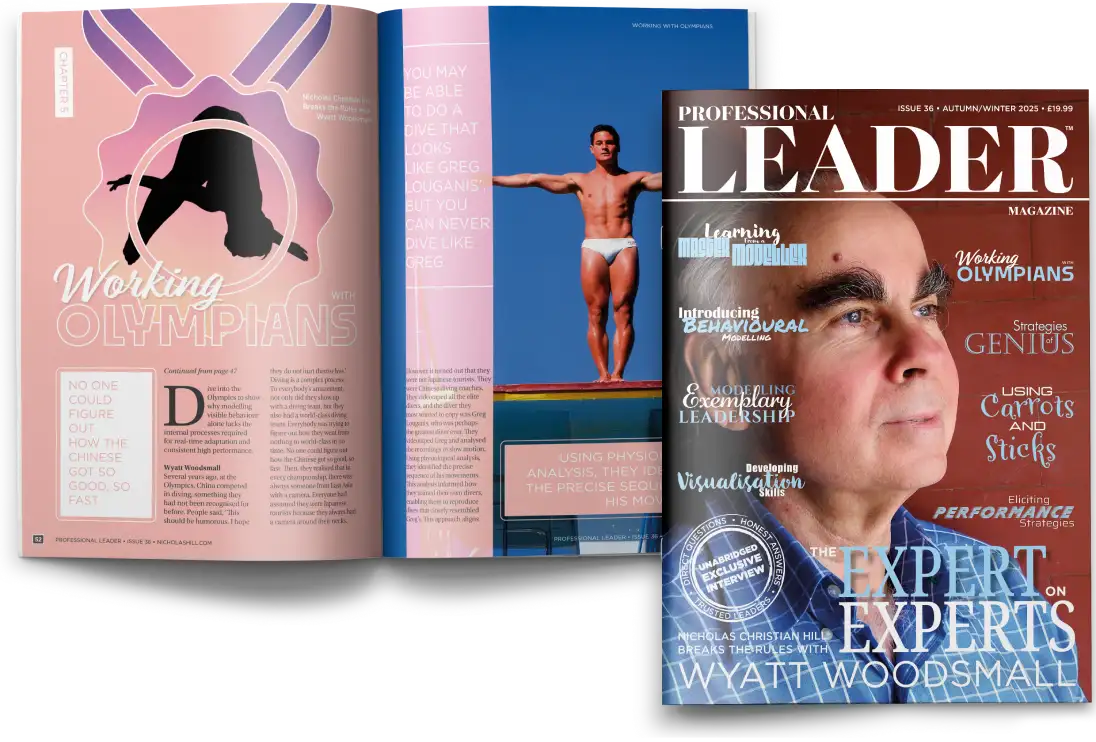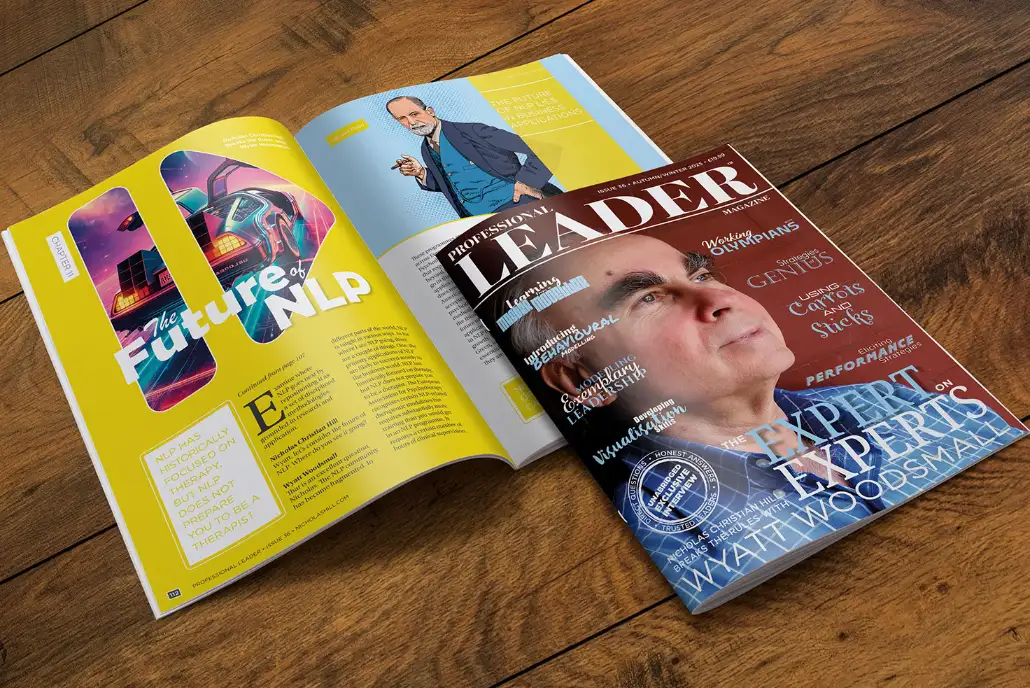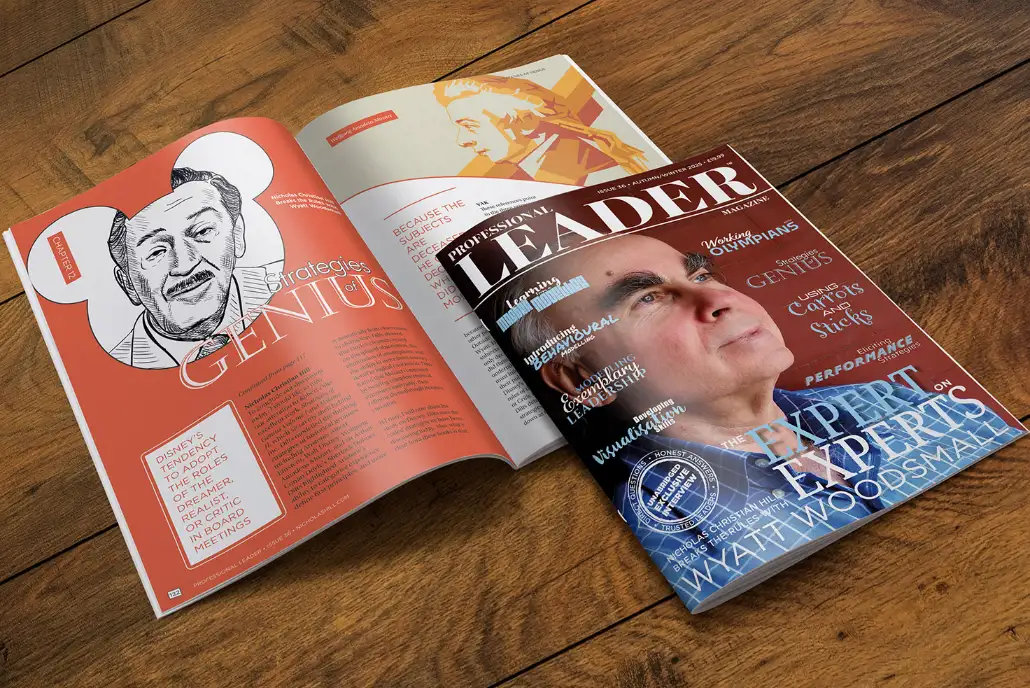
Wyatt Woodsmall Interview Transcript

Professional Leader Magazine Issues 36
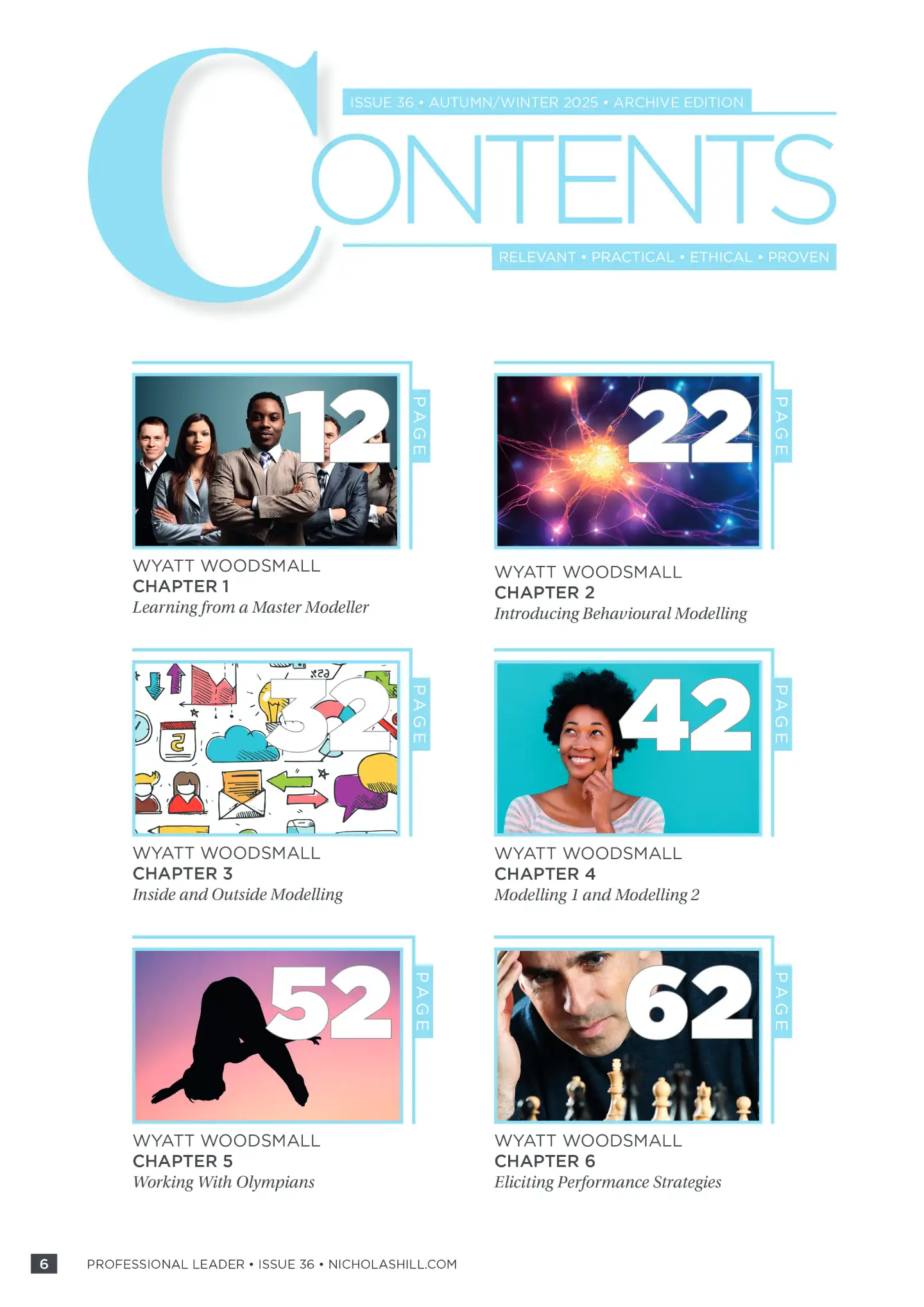
Explore all 12 chapters of Nicholas Christian Hill’s unabridged, exclusive interview with Dr Wyatt Woodsmall, covering behavioural modelling, performance strategies, leadership, motivation, visualisation, NLP and the transfer of expertise. Each chapter overview highlights the central theme, purpose and practical value of the discussion, helping you identify the topics most relevant to your development. Select any chapter to access the full transcript and examine the ideas, examples and applications in greater depth.

Trusted by Leading Organizations
Issue 32 Advertising Partners
Featured Brands
Exclusive Reader Offers
Learn More
FREE Bespoke Furniture Samples
Learn More
FREE Website Marketing Review
Learn More
GUARANTEED B2B Lead Generation
Learn More
ELEVATE Your Brand Design
Learn More
FREE Brand & Trademark Risk Review
Learn More
FREE Business Accounting Consultation
Learn More
SELL Your Spare Business Capacity
Learn More
FREE Business Growth Barrier Audit
Learn More
FREE Social Selling Success Audiobook
Learn More
FREE Business Financial Health Review
Learn More
FREE Protect Your Hearing Guide
Learn More
FREE AI Strategy Integration Consultation
In Conversation with Wyatt Woodsmall

Nicholas Christian Hill
Nicholas Christian Hill FCMI FIoL FIC Managing Director, Nicholas Hill Academy Ltd Leadership and Management Master Trainer Editor, Professional Leader Magazine

Dr Wyatt Woodsmall
Certified Master Modeller Co-Creator, Advanced Behavioural Modelling Co-Founder, International NLP Trainers Association Co-Author, Time Line Therapy and the Basis of Personality
Issue 32 Chapter Guide
Jump to Chapter
Wyatt Woodsmall Interview Contents
Wyatt Woodsmall Interview Chapters
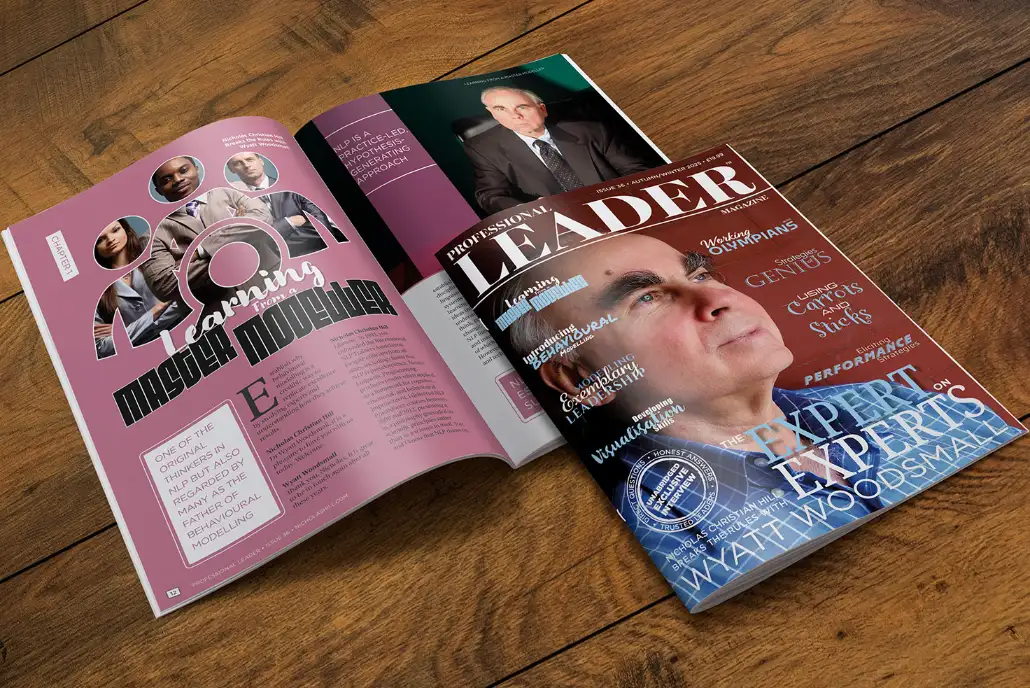
Chapter 1
Learning from a Master Modeller
Chapter One introduces behavioural modelling as a practical approach to identifying how exceptional performers achieve results. Dr Wyatt Woodsmall explains what distinguishes professional modelling from superficial observation and how transferable behavioural strategies can enhance performance in changing workplace conditions.
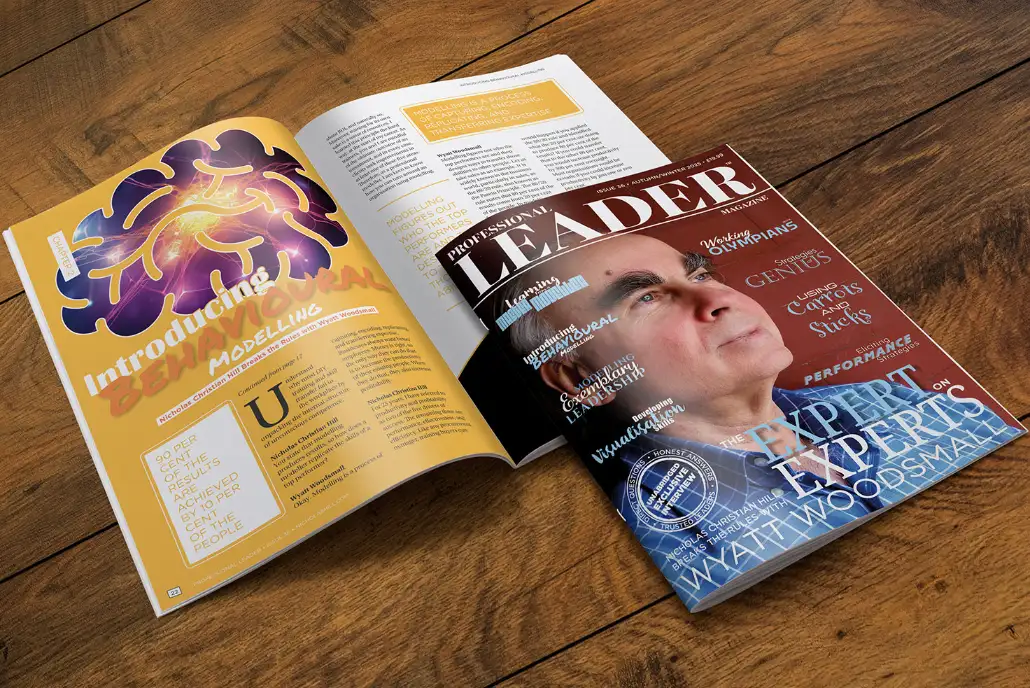
Chapter 2
Introducing Behavioural Modelling
Chapter Two explains how behavioural modelling captures and transfers expertise. Dr Wyatt Woodsmall explores why conventional training often fails, how unconscious competence constrains expert teaching, and how modelling reveals the hidden strategies that drive improved productivity, profitability and performance.
Chapter 3
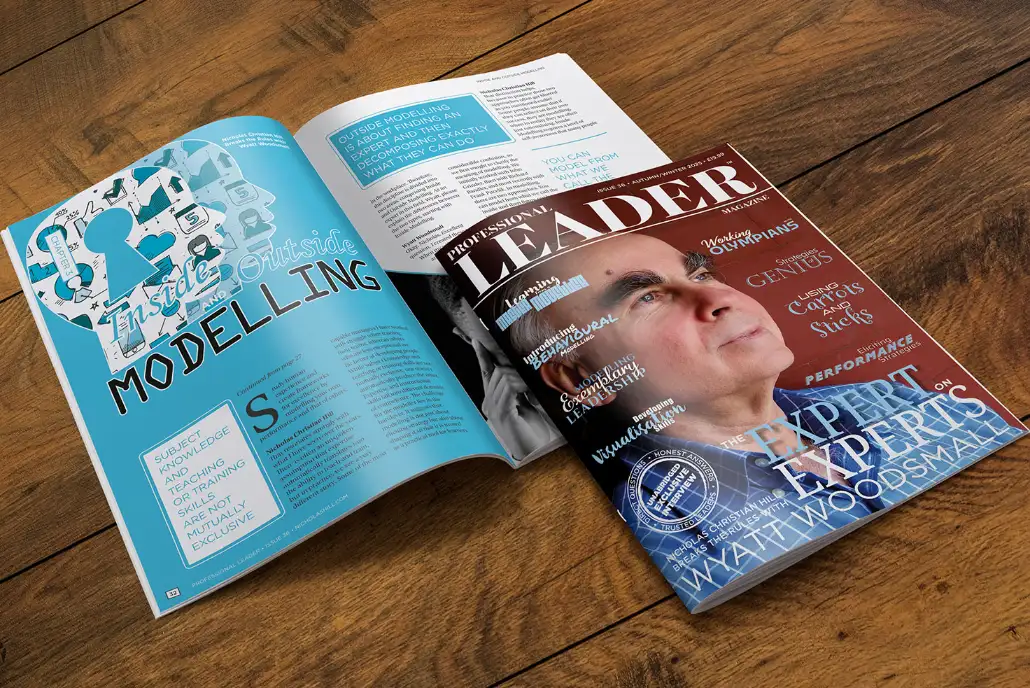
Inside and Outside Modelling
Chapter Three distinguishes Inside from Outside Modelling, showing how each reveals different aspects of expertise. Dr Wyatt Woodsmall explains phenomenology, structuralism and the modeller’s role in decoding internal processes to enable successful performance to be understood, replicated and transferred.
Chapter 4
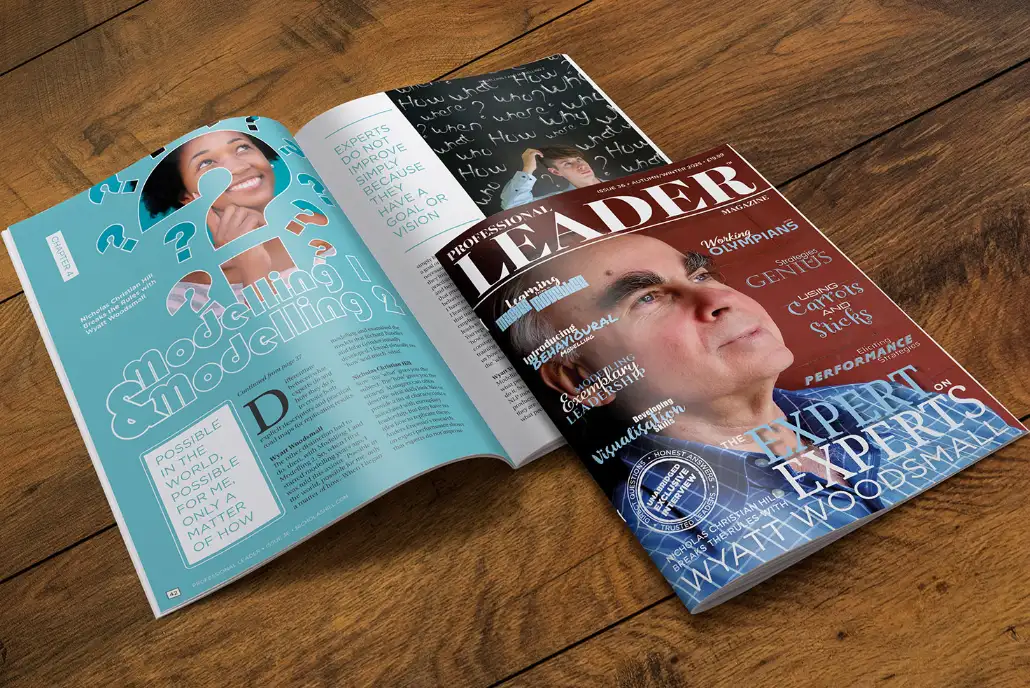
Modelling 1 and Modelling 2
Chapter Four distinguishes Modelling 1 from Modelling 2, showing that knowing what experts do is not enough. Dr Wyatt Woodsmall explains how uncovering the ‘how’ yields practical strategies that can be transferred to improve performance and training.
Chapter 5
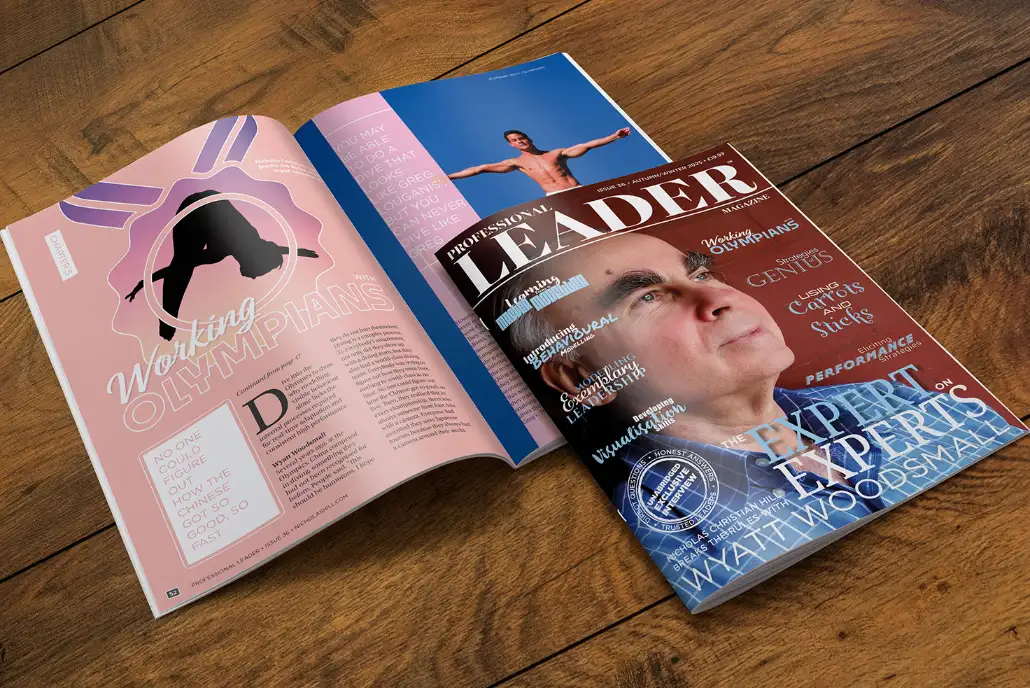
Working With Olympians
Chapter Five explores why copying visible behaviour cannot replicate exceptional performance. Dr Wyatt Woodsmall uses Olympic diving to explain how internal cognitive processes and Meta Programs shape adaptability, showing that effective modelling must uncover more than outward actions.
Chapter 6
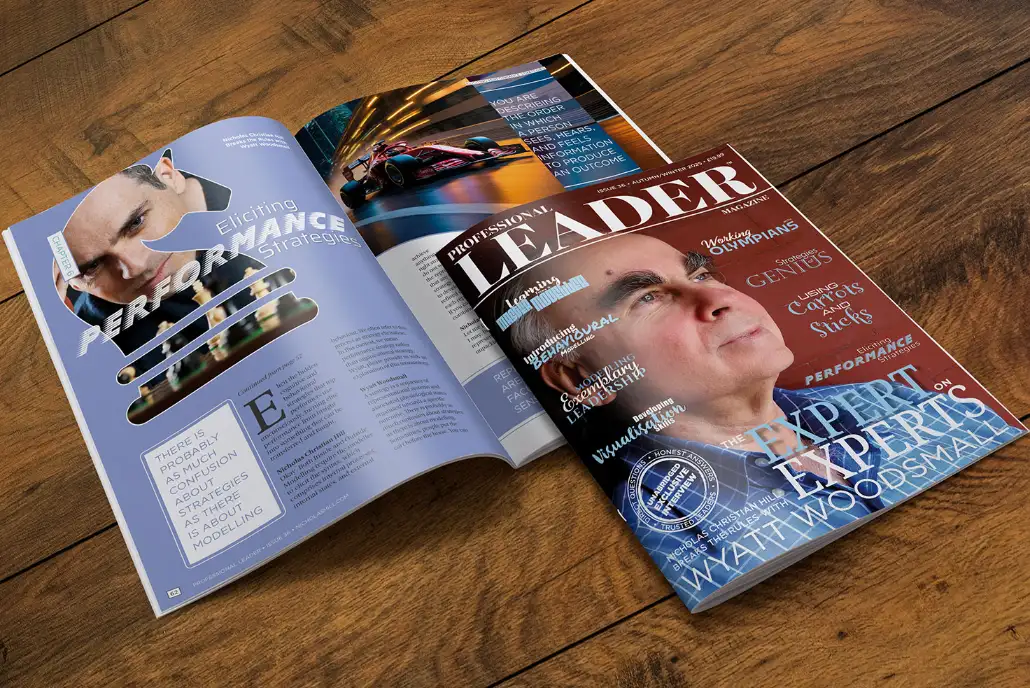
Eliciting Performance Strategies
Chapter Six examines how performance strategies are built on representational systems, sensory acuity and sequencing. Dr Wyatt Woodsmall uses examples from spelling, driving and chess to show how hidden cognitive patterns can be identified, developed and transferred.
Chapter 7
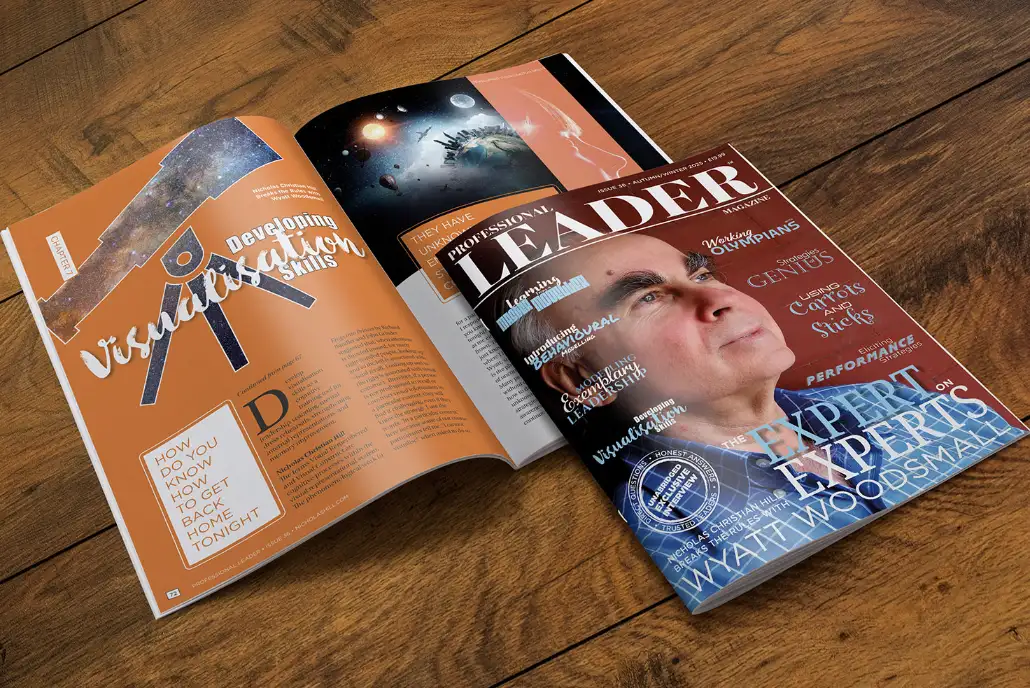
Developing Visualisation Skills
Chapter Seven examines how visualisation and representational systems influence learning and performance. Dr Wyatt Woodsmall explains why strategies depend on sensory distinctions and how cognitive preferences, pre-selection and mental imagery affect whether skills can be developed and applied.
Chapter 8
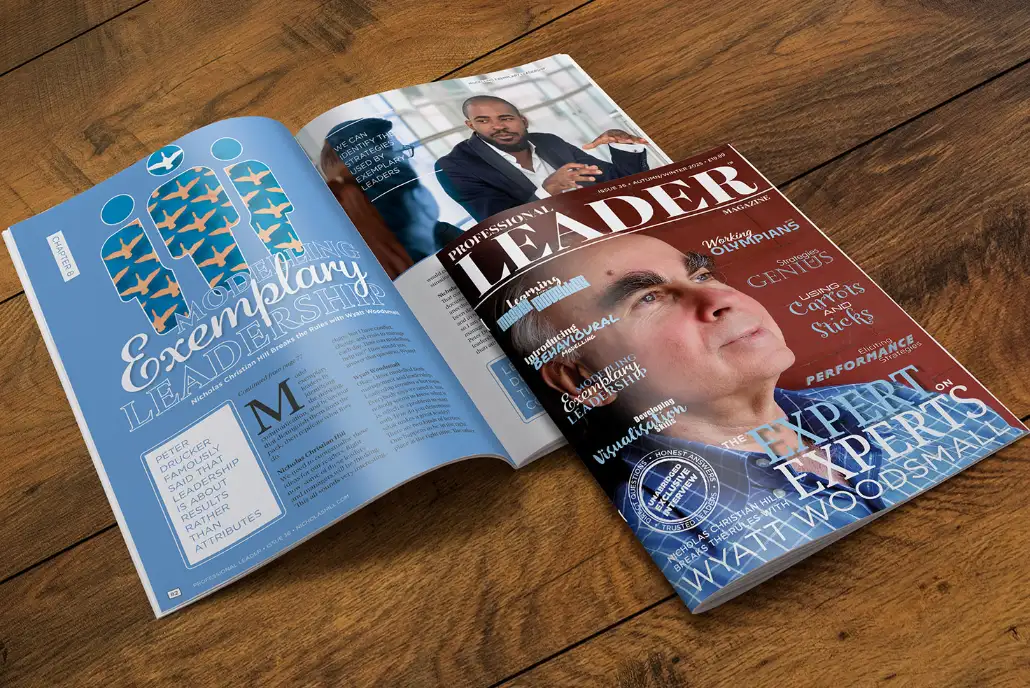
Modelling Exemplary Leadership
Chapter Eight examines how behavioural modelling can reveal the thinking, communication and motivational strategies of exemplary leaders. Dr Wyatt Woodsmall explores vision, emotional engagement and motivational patterns, demonstrating how leaders can adapt their communication to inspire broader commitment.

Chapter 9
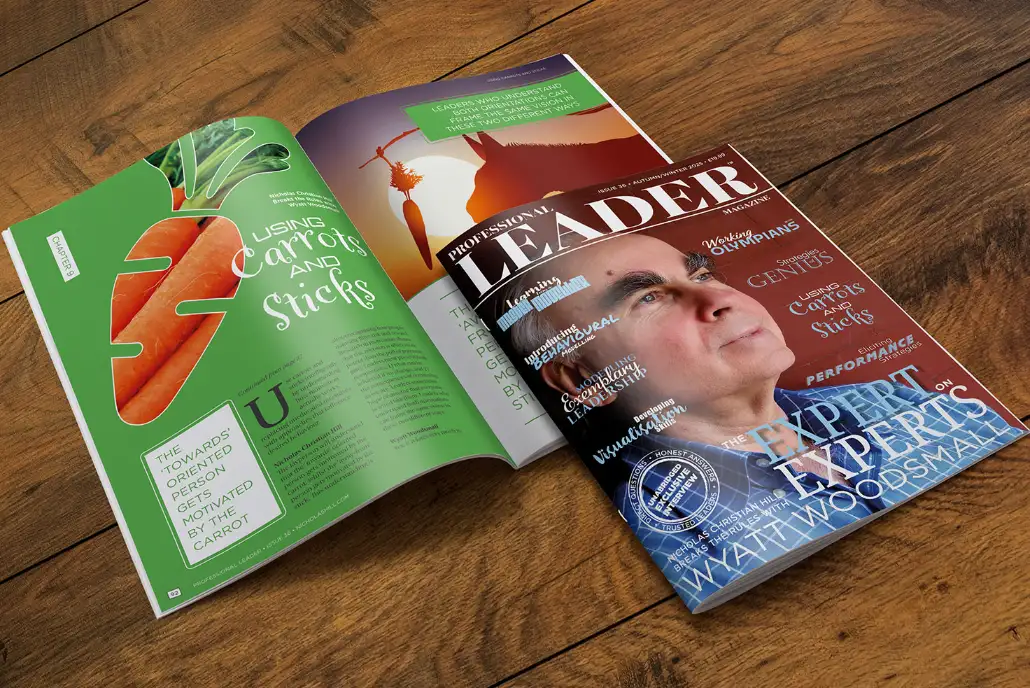
Using Carrots and Sticks
Chapter Nine examines how leaders can motivate people by recognising different responses to reward, risk and persuasion. Dr Wyatt Woodsmall explores approach and avoidance orientations, McClelland’s motives and the six sermons, showing how adaptable communication improves influence.

Chapter 10
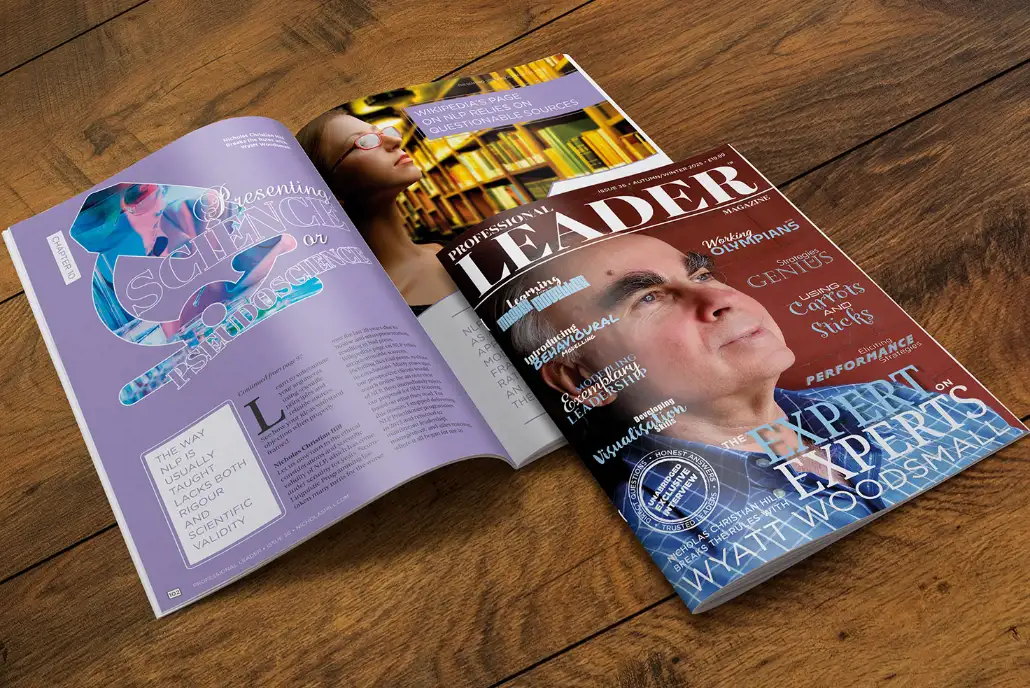
Presenting Science or Pseudoscience
Chapter Ten examines how scientific principles, evidence and ethical reasoning can strengthen credibility. Dr Wyatt Woodsmall explores NLP’s reputation, the need to explain why methods work, and the distinction between ethics and ecology in evaluating behaviour and consequences.
Chapter 11
The Future of NLP
Chapter Eleven examines where NLP may go next and how its methods can be adapted for business. Dr Wyatt Woodsmall explores Spiral Dynamics, its scientific grounding and practical application, showing how useful frameworks can support leadership, management, sales and negotiation.
Chapter 12
Strategies of Genius
Chapter Twelve examines how behavioural modelling can reveal the thinking strategies underpinning exceptional creativity and problem-solving. Dr Wyatt Woodsmall explores Walt Disney’s Dreamer, Realist and Critic strategies, demonstrating how visualisation, planning, critical evaluation and feedback can strengthen decision-making.