



Working With Olympians








































































Nicholas Christian Hill
Nicholas Christian Hill FCMI FIoL FIC Managing Director, Nicholas Hill Academy Ltd Leadership and Management Master Trainer Founding Editor, Professional Leader Magazine

Dr Wyatt Woodsmall
Certified Master Modeller Co-Creator, Advanced Behavioural Modelling Co-Founder, International NLP Trainers Association Co-Author, Time Line Therapy and the Basis of Personality

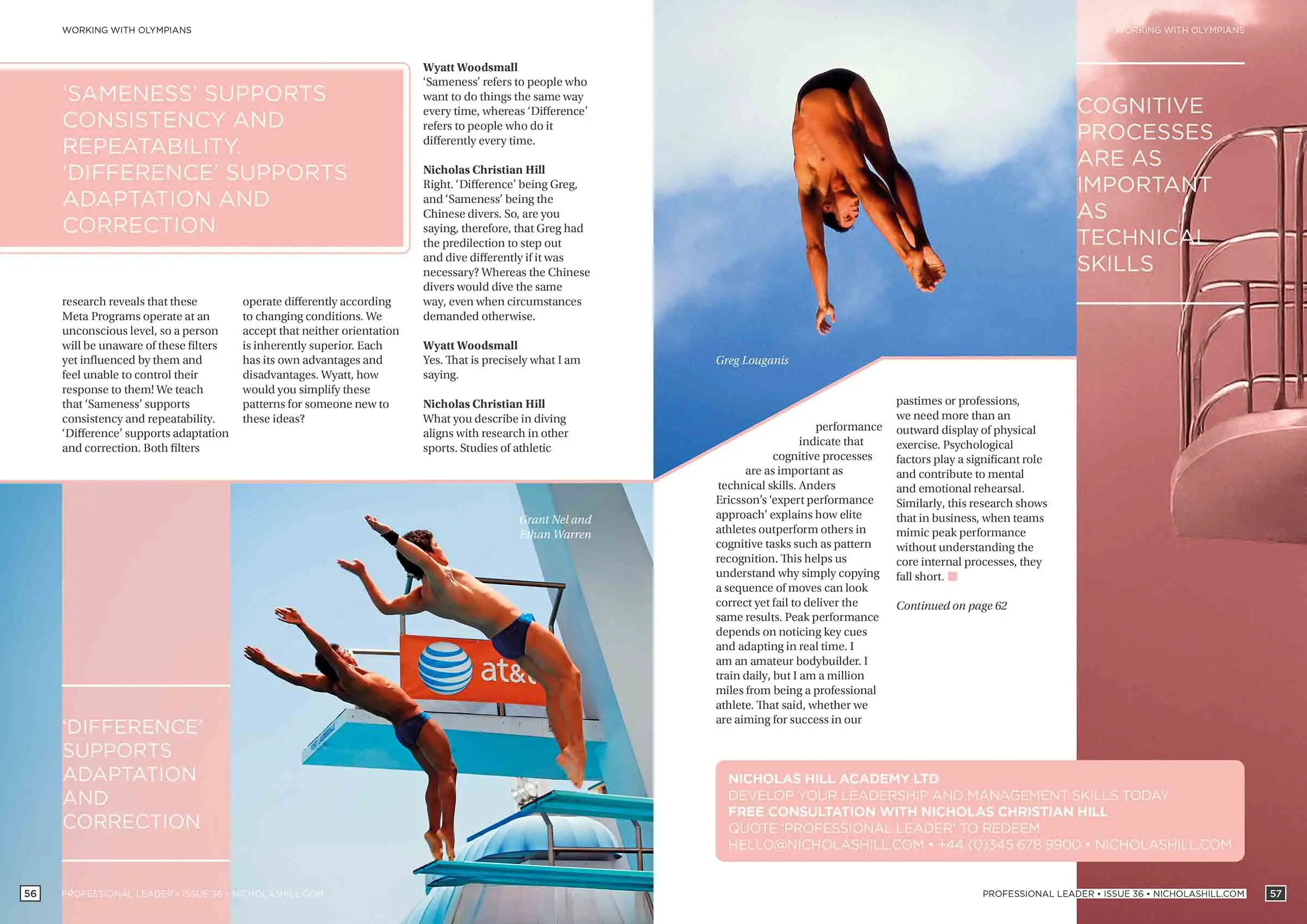
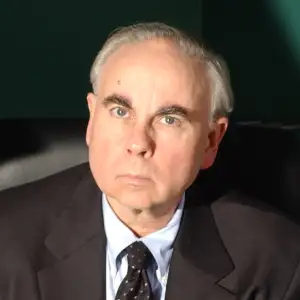
Wyatt Woodsmall
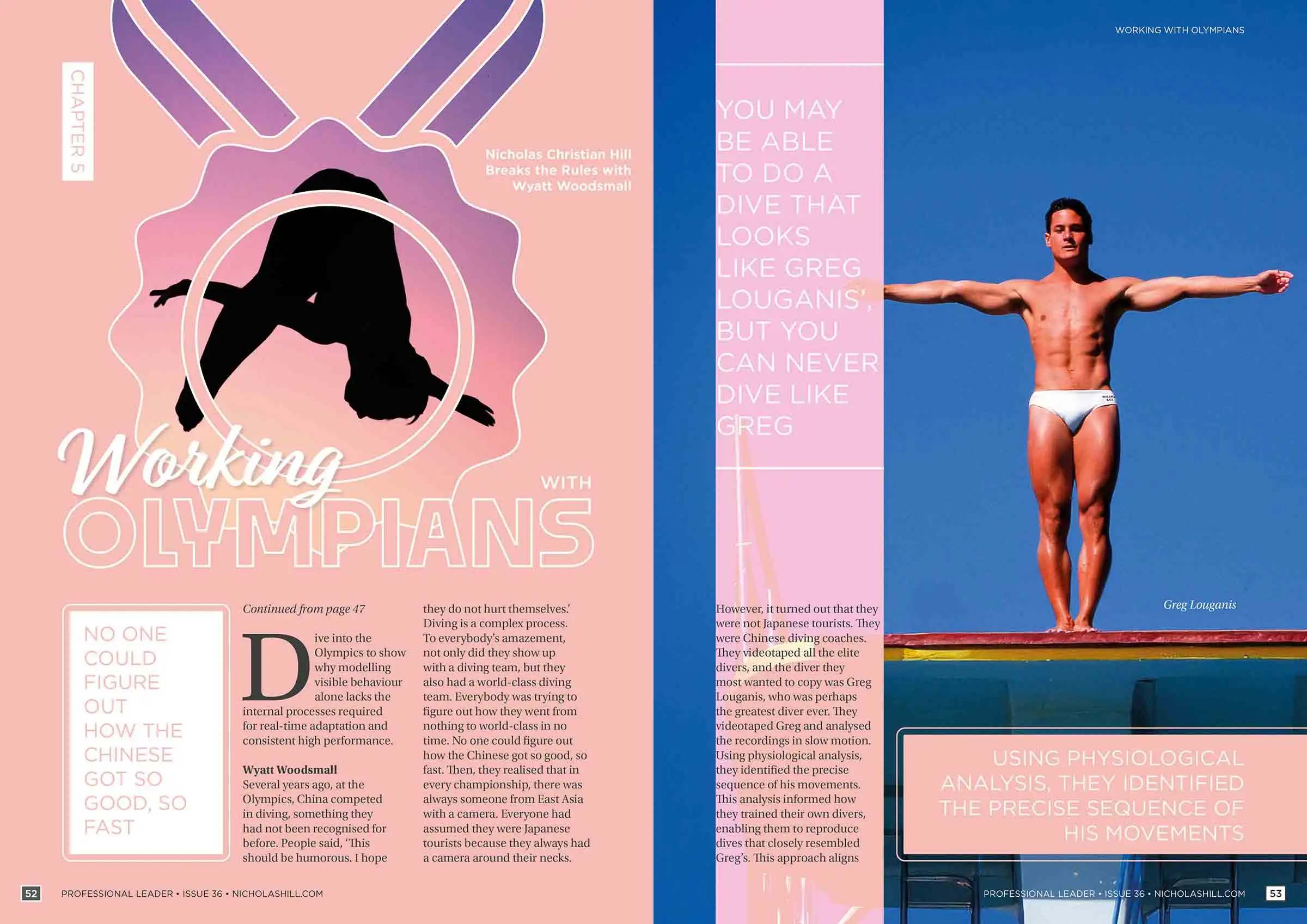
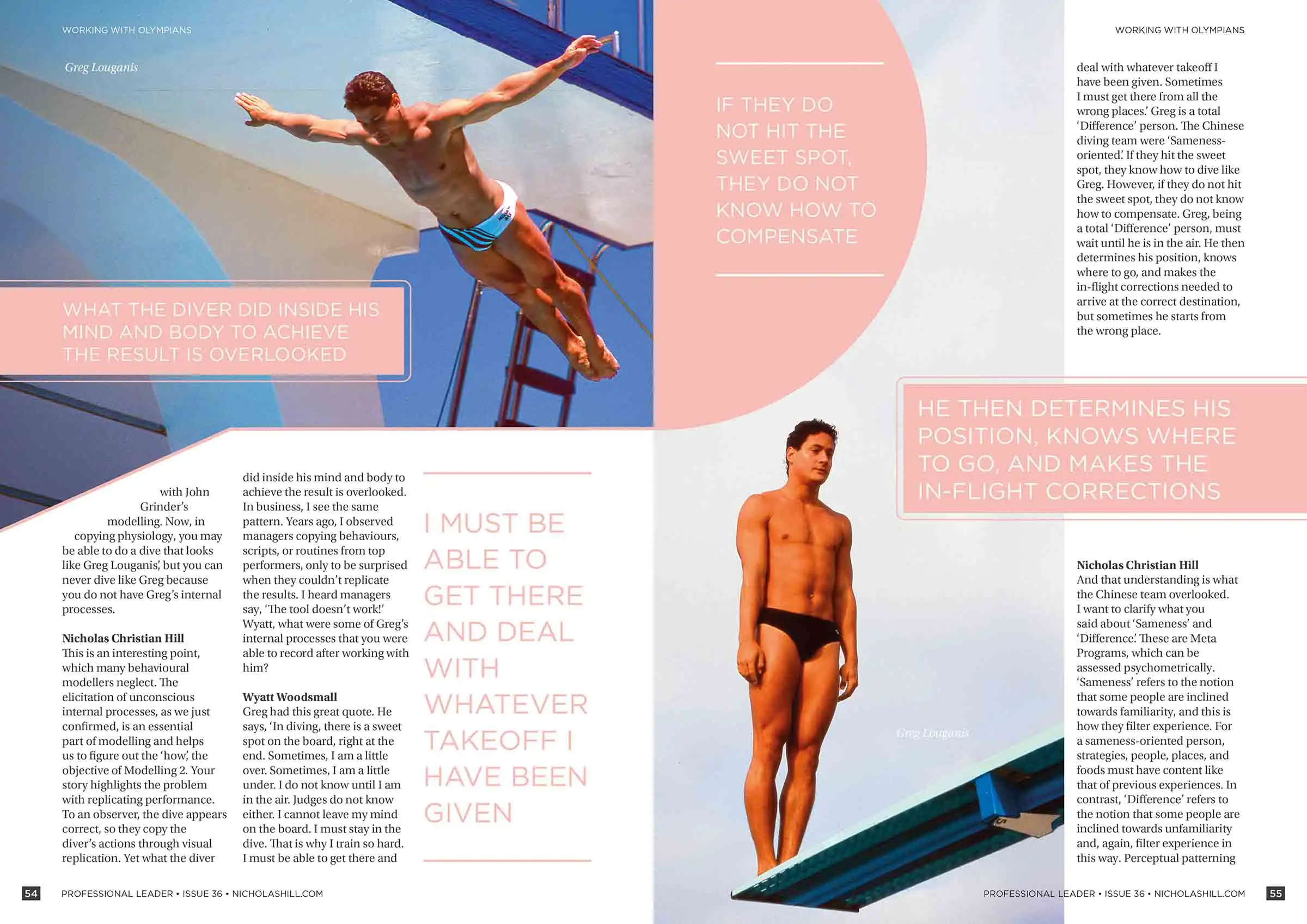
Several years ago, at the Olympics, China competed in diving, something they had not been recognised for before. People said, ‘This should be humorous. I hope they do not hurt themselves.’ Diving is a complex process. To everybody’s amazement, not only did they show up with a diving team, but they also had a world-class diving team. Everybody was trying to figure out how they went from nothing to world-class in no time. No one could figure out how the Chinese got so good, so fast. Then, they realised that in every championship, there was always someone from East Asia with a camera. Everyone had assumed they were Japanese tourists because they always had a camera around their necks. However, it turned out that they were not Japanese tourists. They were Chinese diving coaches. They videotaped all the elite divers, and the diver they most wanted to copy was Greg Louganis, who was perhaps the greatest diver ever. They videotaped Greg and analysed the recordings in slow motion. Using physiological analysis, they identified the precise sequence of his movements. This analysis informed how they trained their own divers, enabling them to reproduce dives that closely resembled Greg’s. This approach aligns with John Grinder’s modelling. Now, in copying physiology, you may be able to do a dive that looks like Greg Louganis’, but you can never dive like Greg because you do not have Greg’s internal processes.

Nicholas Christian Hill
This is an interesting point, which many behavioural modellers neglect. The elicitation of unconscious internal processes, as we just confirmed, is an essential part of modelling and helps us to figure out the ‘how’, the objective of Modelling 2. Your story highlights the problem with replicating performance. To an observer, the dive appears correct, so they copy the diver’s actions through visual replication. Yet what the diver did inside his mind and body to achieve the result is overlooked. In business, I see the same pattern. Years ago, I observed managers copying behaviours, scripts, or routines from top performers, only to be surprised when they couldn’t replicate the results. I heard managers say, ‘The tool doesn’t work!’ Wyatt, what were some of Greg’s internal processes that you were able to record after working with him?
Wyatt Woodsmall
Greg had this great quote. He says, ‘In diving, there is a sweet spot on the board, right at the end. Sometimes, I am a little over. Sometimes, I am a little under. I do not know until I am in the air. Judges do not know either. I cannot leave my mind on the board. I must stay in the dive. That is why I train so hard. I must be able to get there and deal with whatever takeoff I have been given. Sometimes I must get there from all the wrong places.’ Greg is a total ‘Difference’ person. The Chinese diving team were ‘Sameness-oriented’. If they hit the sweet spot, they know how to dive like Greg. However, if they do not hit the sweet spot, they do not know how to compensate. Greg, being a total ‘Difference’ person, must wait until he is in the air. He then determines his position, knows where to go, and makes the in-flight corrections needed to arrive at the correct destination, but sometimes he starts from the wrong place.
Nicholas Christian Hill
And that understanding is what the Chinese team overlooked. I want to clarify what you said about ‘Sameness’ and ‘Difference’. These are Meta Programs, which can be assessed psychometrically. ‘Sameness’ refers to the notion that some people are inclined towards familiarity, and this is how they filter experience. For a sameness-oriented person, strategies, people, places, and foods must have content like that of previous experiences. In contrast, ‘Difference’ refers to the notion that some people are inclined towards unfamiliarity and, again, filter experience in this way. Perceptual patterning research reveals that these Meta Programs operate at an unconscious level, so a person will be unaware of these filters yet influenced by them and feel unable to control their response to them! We teach that ‘Sameness’ supports consistency and repeatability. ‘Difference’ supports adaptation and correction. Both filters operate differently according to changing conditions. We accept that neither orientation is inherently superior. Each has its own advantages and disadvantages. Wyatt, how would you simplify these patterns for someone new to these ideas?
Wyatt Woodsmall
‘Sameness’ refers to people who want to do things the same way every time, whereas ‘Difference’ refers to people who do it differently every time.
Nicholas Christian Hill
Right. ‘Difference’ being Greg, and ‘Sameness’ being the Chinese divers. So, are you saying, therefore, that Greg had the predilection to step out and dive differently if it was necessary? Whereas the Chinese divers would dive the same way, even when circumstances demanded otherwise.
Wyatt Woodsmall
Yes. That is precisely what I am saying.
Nicholas Christian Hill
What you describe in diving aligns with research in other sports. Studies of athletic performance indicate that cognitive processes are as important as technical skills. Anders Ericsson’s ‘expert performance approach’ explains how elite athletes outperform others in cognitive tasks such as pattern recognition. This helps us understand why simply copying a sequence of moves can look correct yet fail to deliver the same results. Peak performance depends on noticing key cues and adapting in real time. I am an amateur bodybuilder. I train daily, but I am a million miles from being a professional athlete. That said, whether we are aiming for success in our pastimes or professions, we need more than an outward display of physical exercise. Psychological factors play a significant role and contribute to mental and emotional rehearsal. Similarly, this research shows that in business, when teams mimic peak performance without understanding the core internal processes, they fall short.