

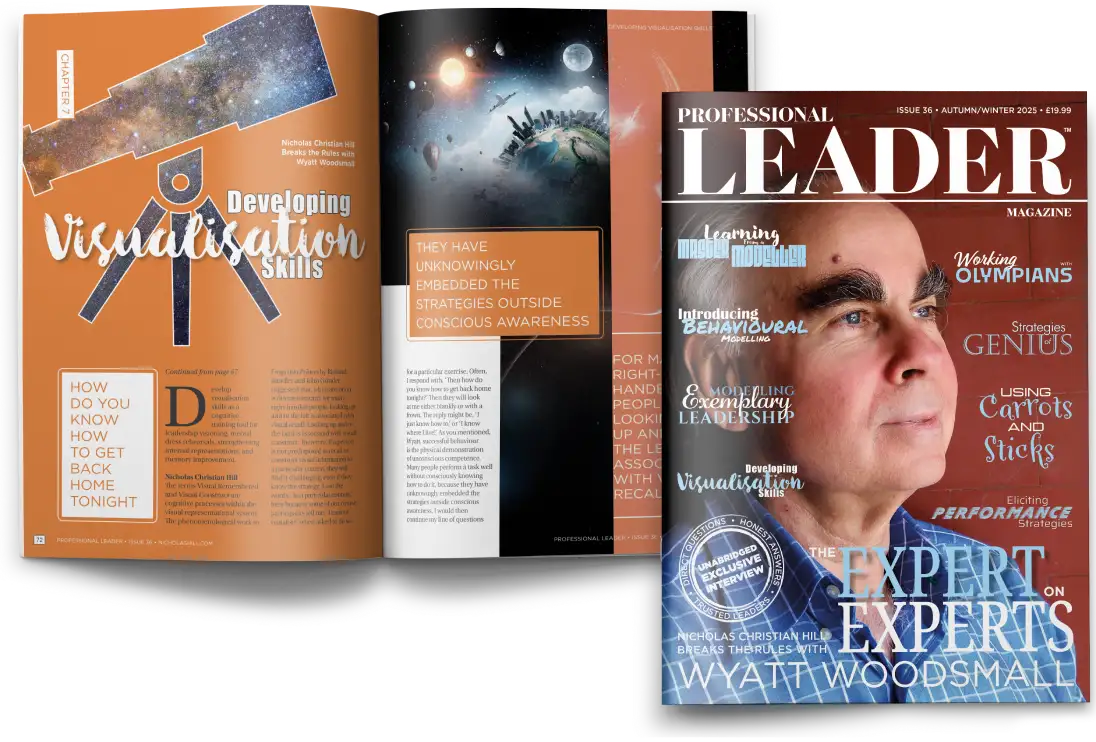
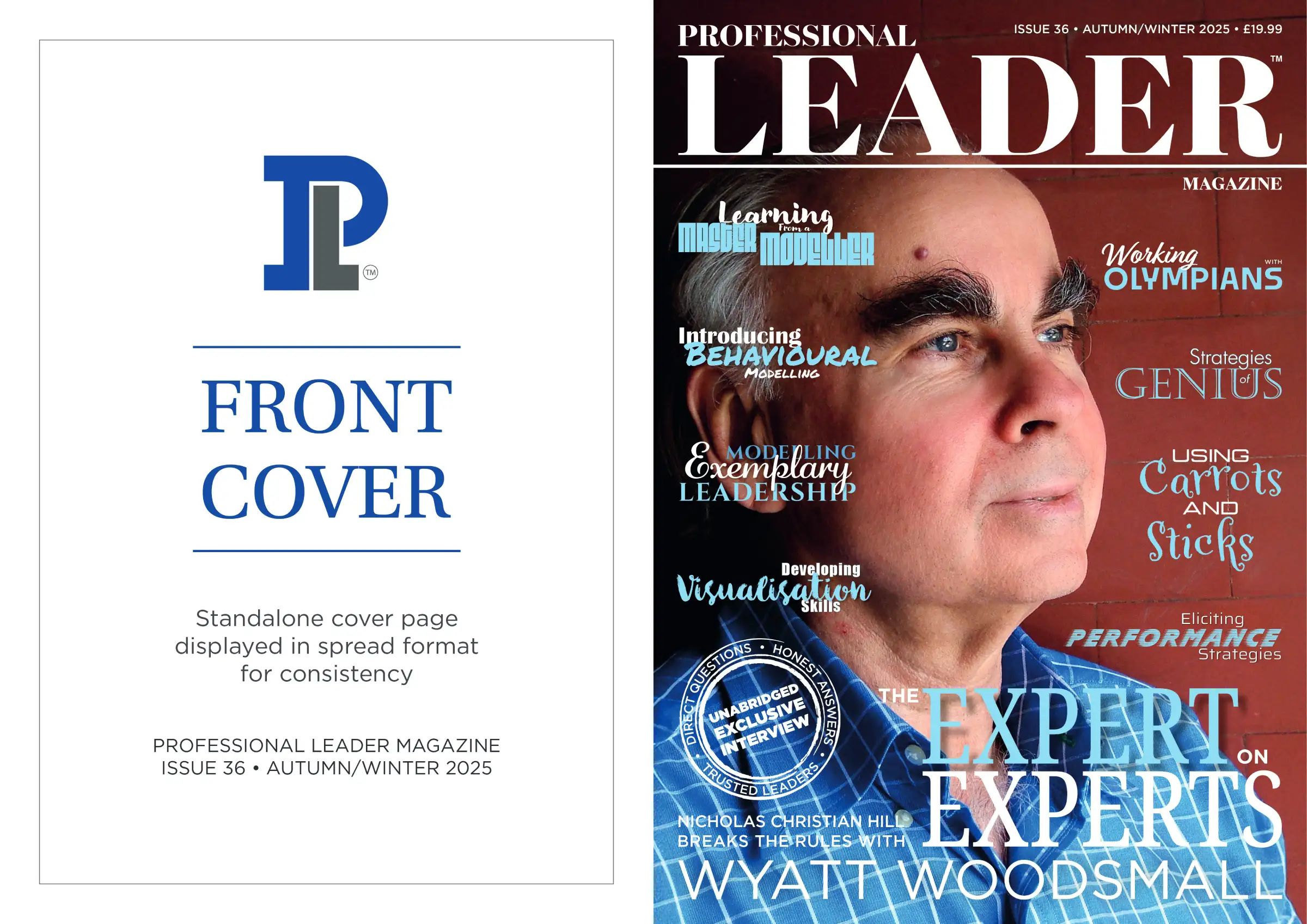
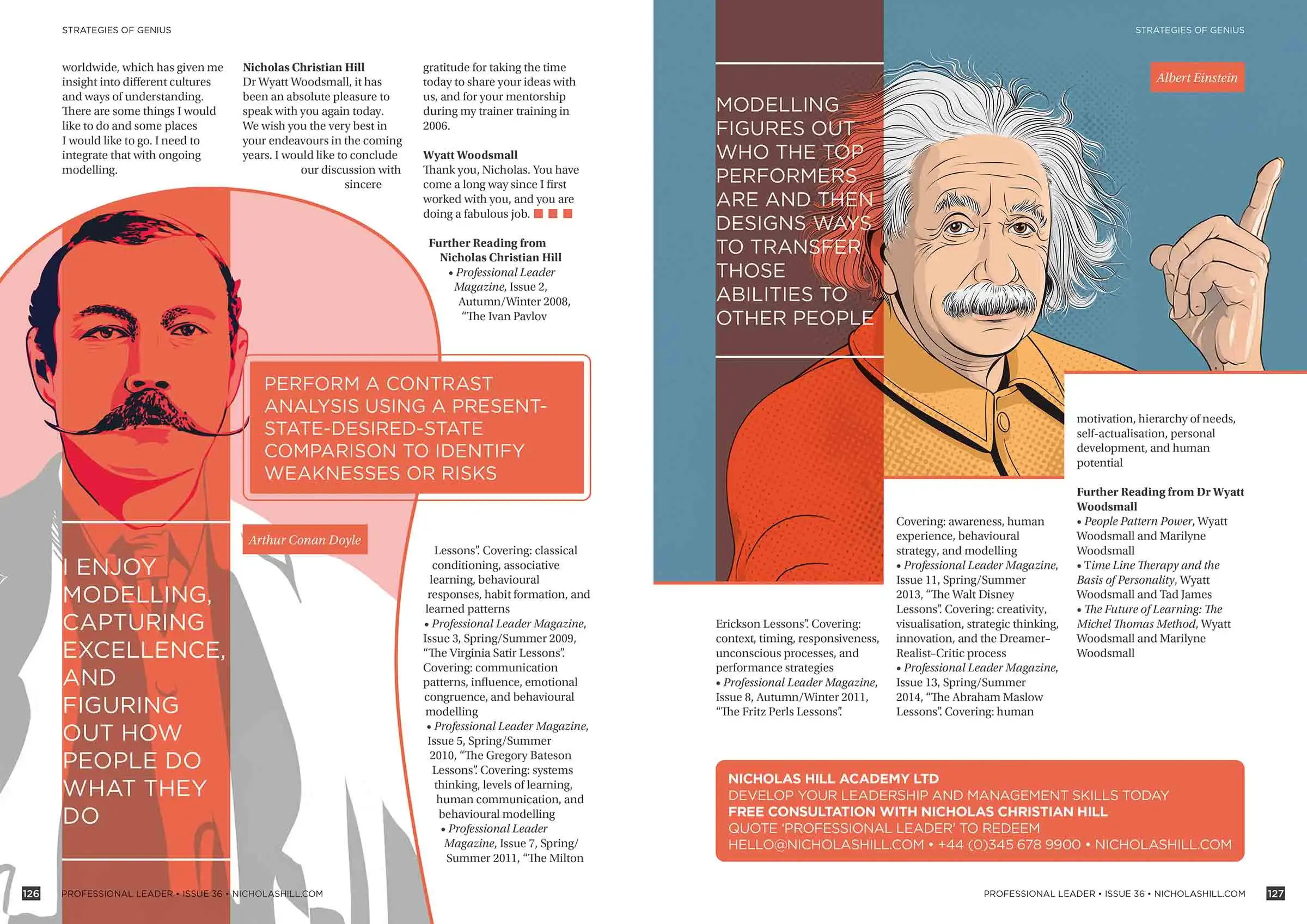
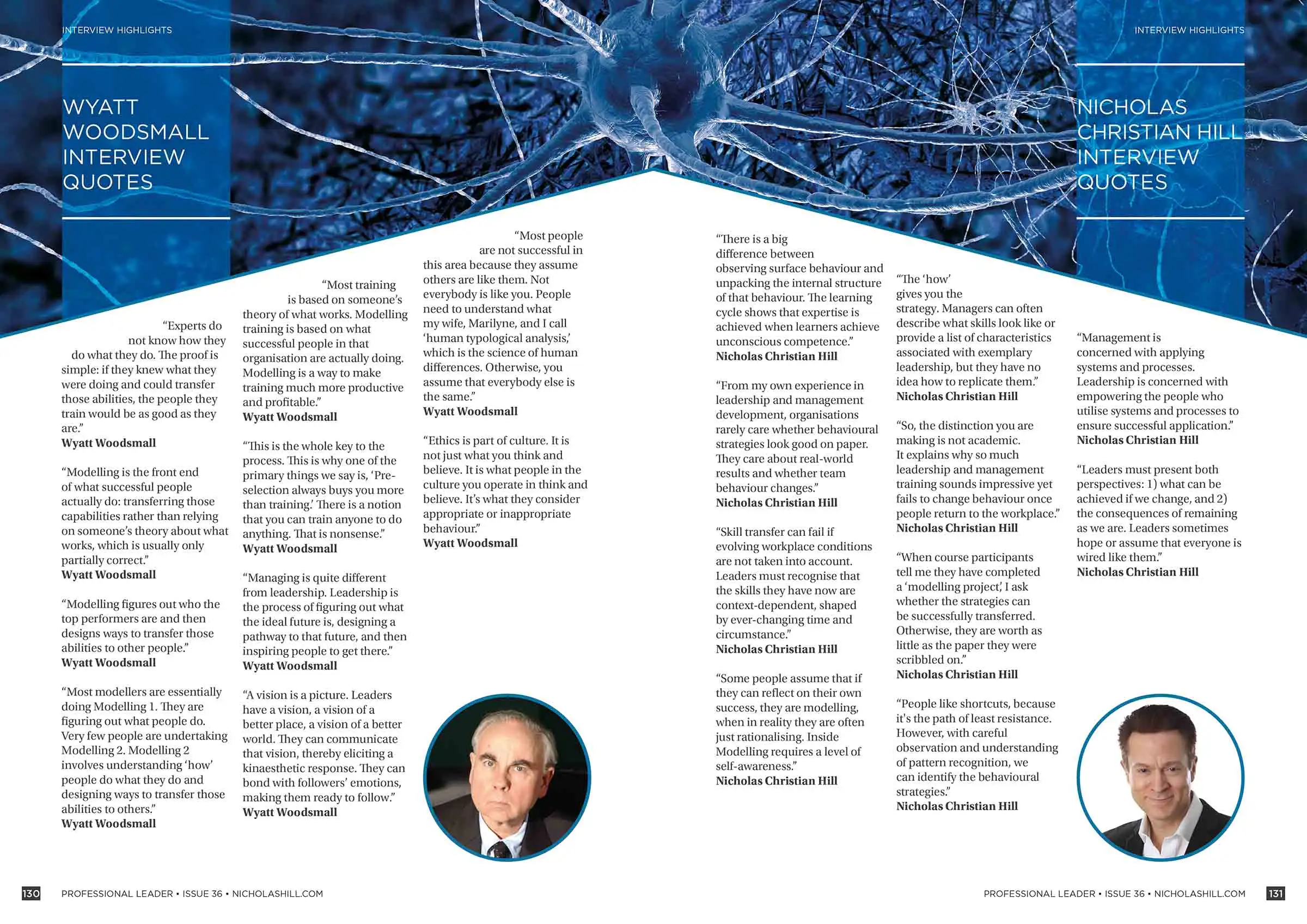
Wyatt Woodsmall Spread Layouts



























































































Exclusive Reader Offers
FREE Bespoke Furniture Samples
FREE Website Marketing Review
GUARANTEED B2B Lead Generation
ELEVATE Your Brand Design
FREE Brand & Trademark Risk Review
FREE Business Accounting Consultation
SELL Your Spare Business Capacity
FREE Business Growth Barrier Audit
FREE Social Selling Success Audiobook
FREE Business Financial Health Review
FREE Protect Your Hearing Guide
FREE AI Strategy Integration Consultation
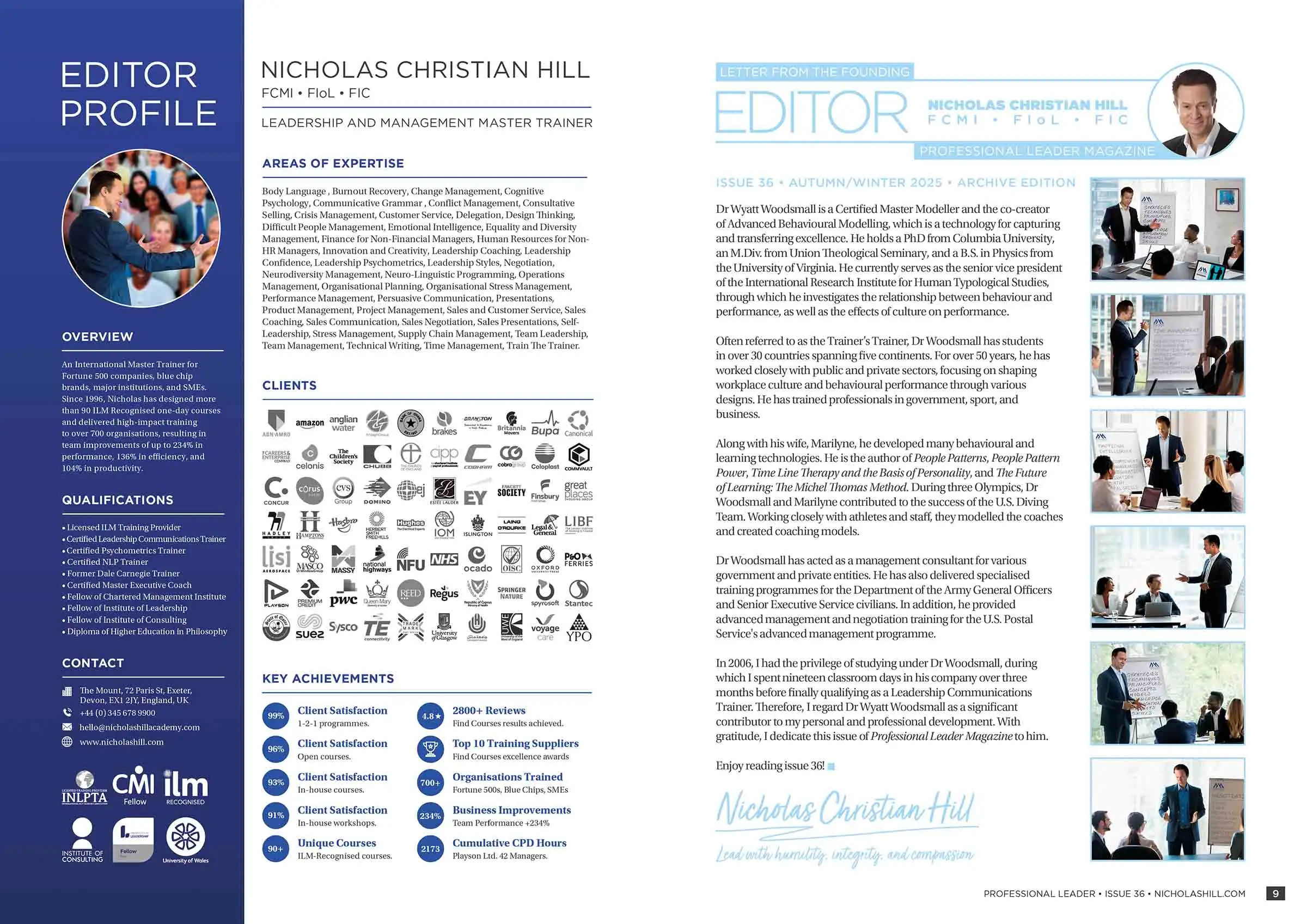
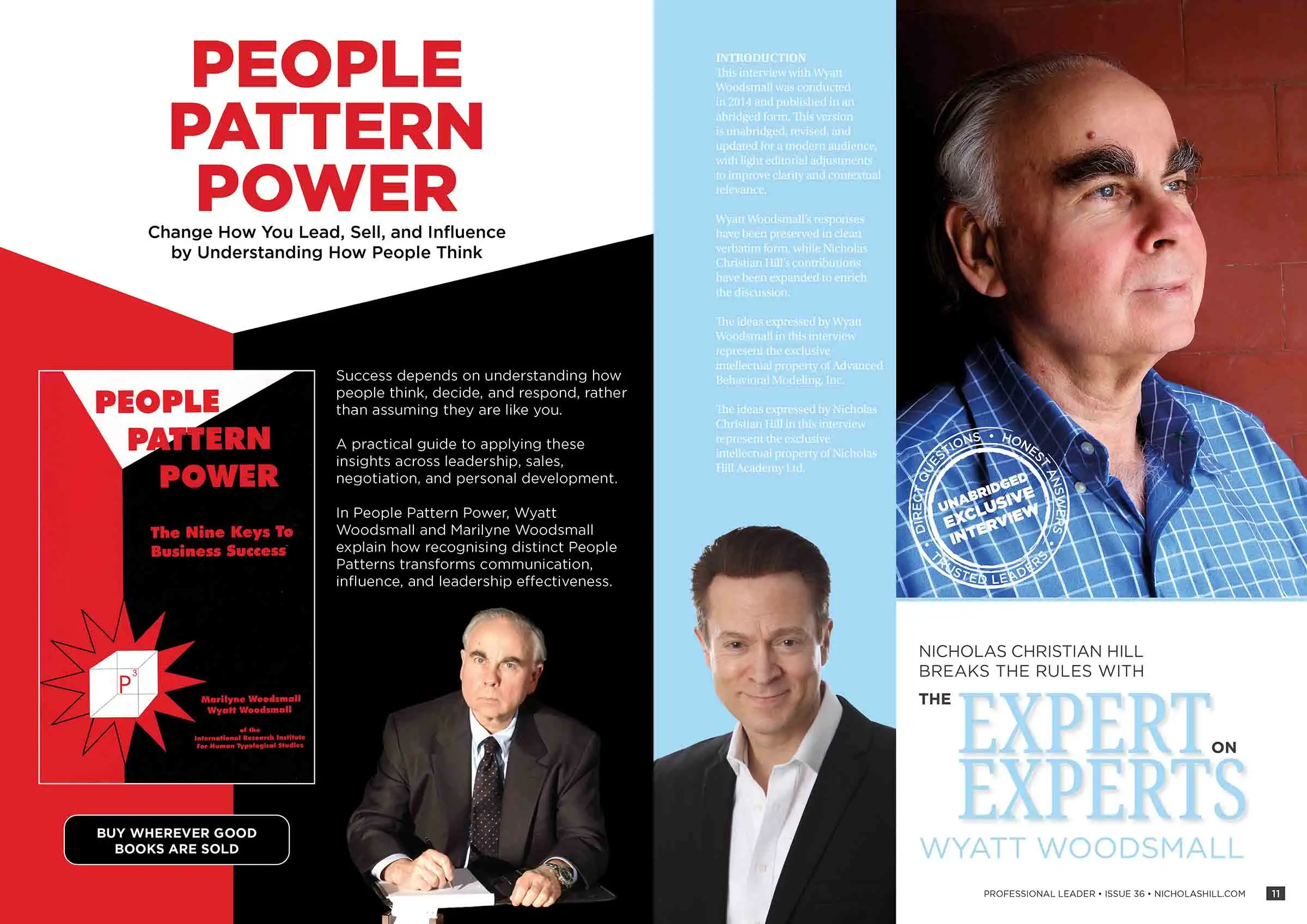
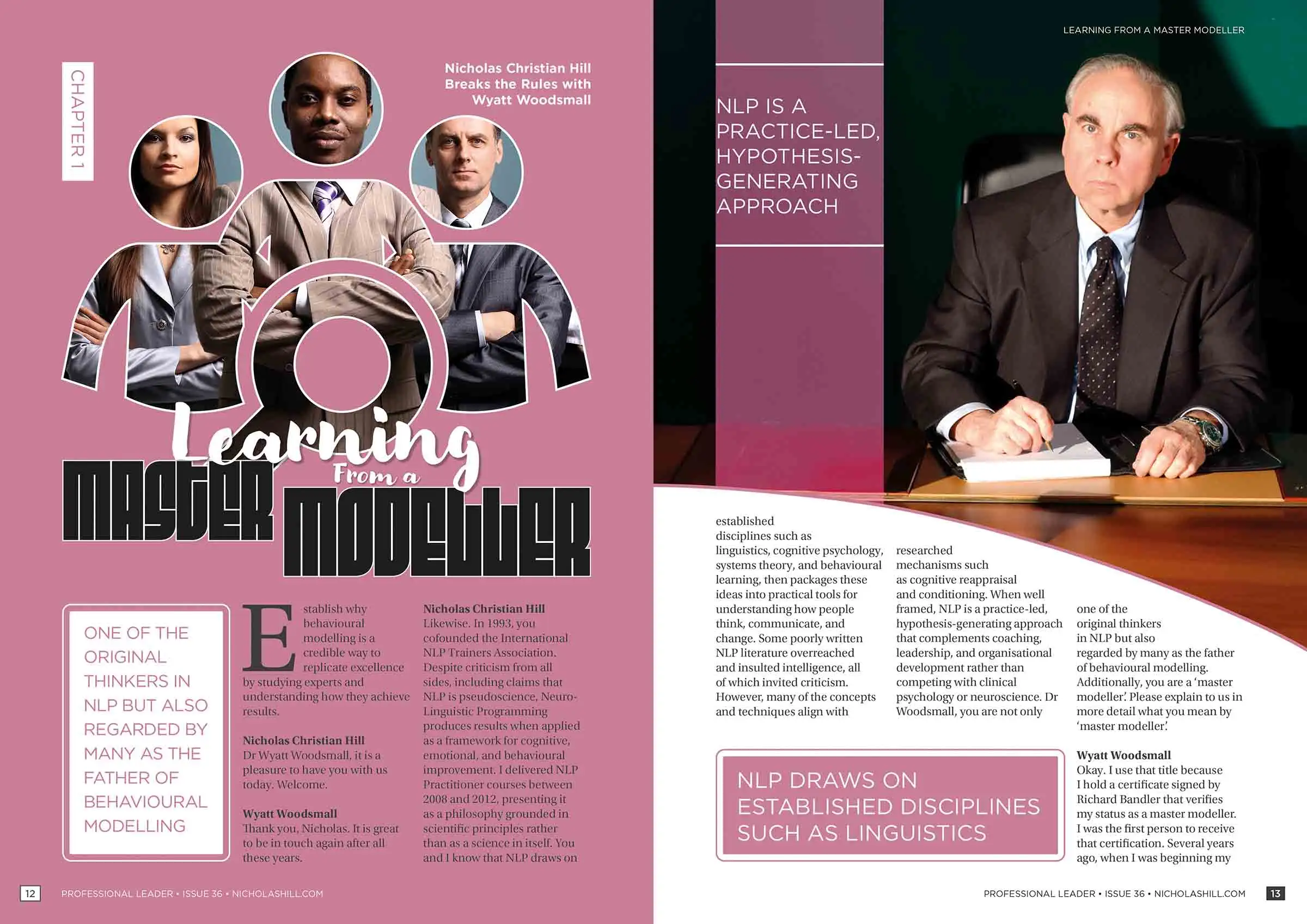
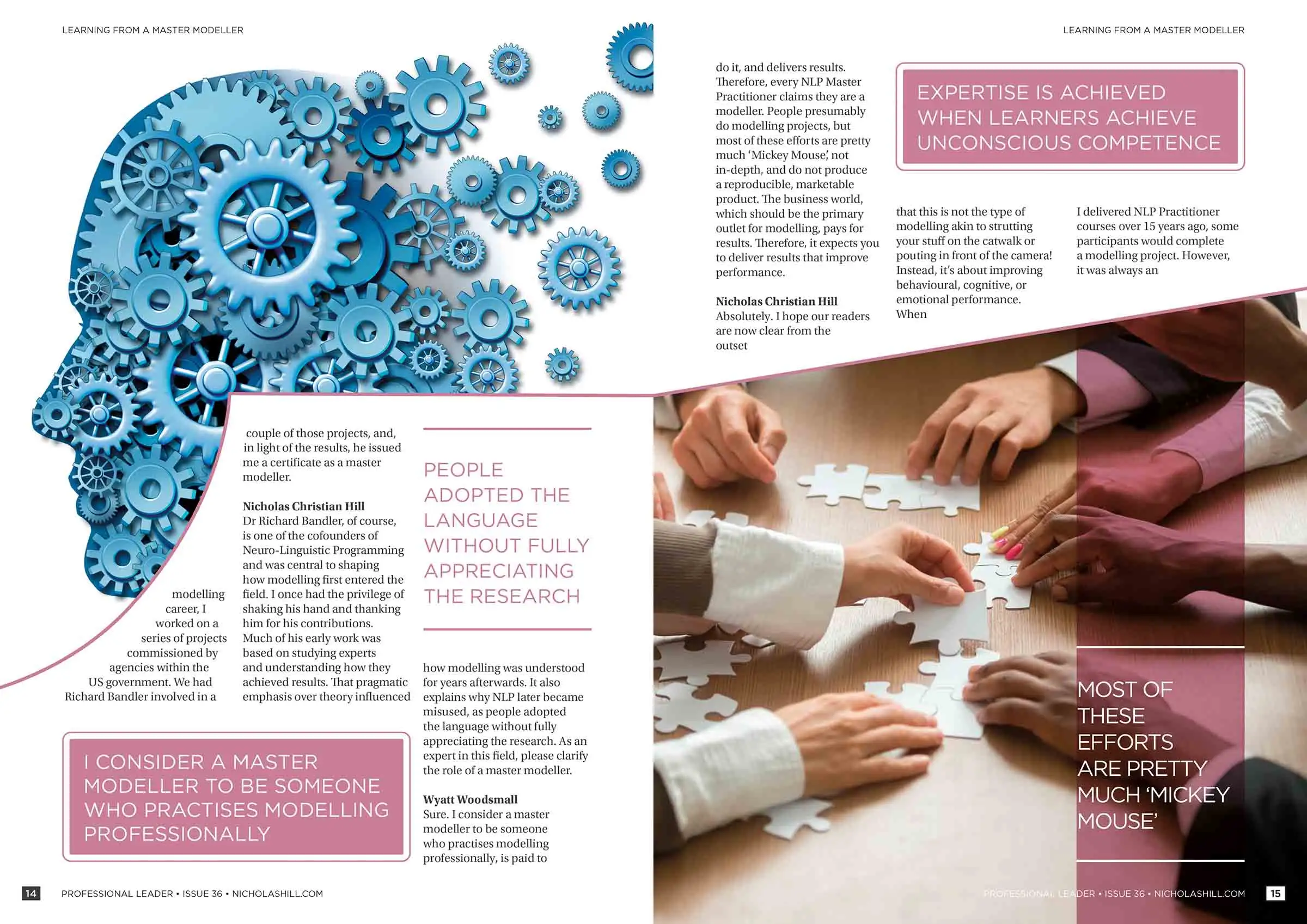
Wyatt Woodsmall Double-Page Spread Layouts
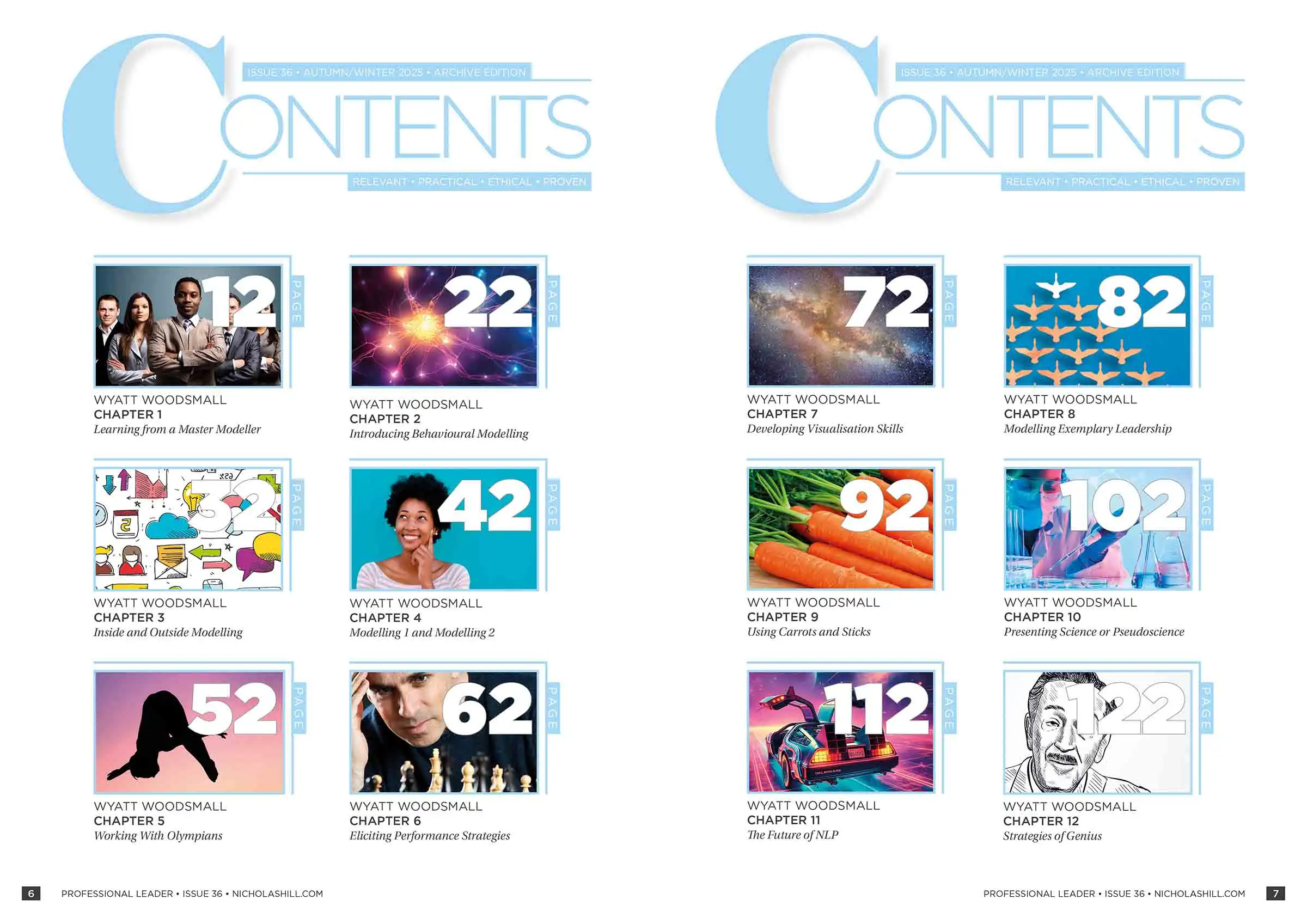
The chapter begins by establishing behavioural modelling and Woodsmall’s credentials, then moves beneath visible expertise towards the mechanisms that make exceptional performance reproducible. Its final spread broadens the discussion into major government and Olympic assignments, completing the journey from definition to professional application.
The opening spread connects exceptional performance with the disproportionate contribution of top performers. The next asks why those experts cannot simply teach others what they know. The final spread moves beneath conscious explanation into pattern recognition and unconscious competence, revealing what modelling must uncover before expertise can be transferred.
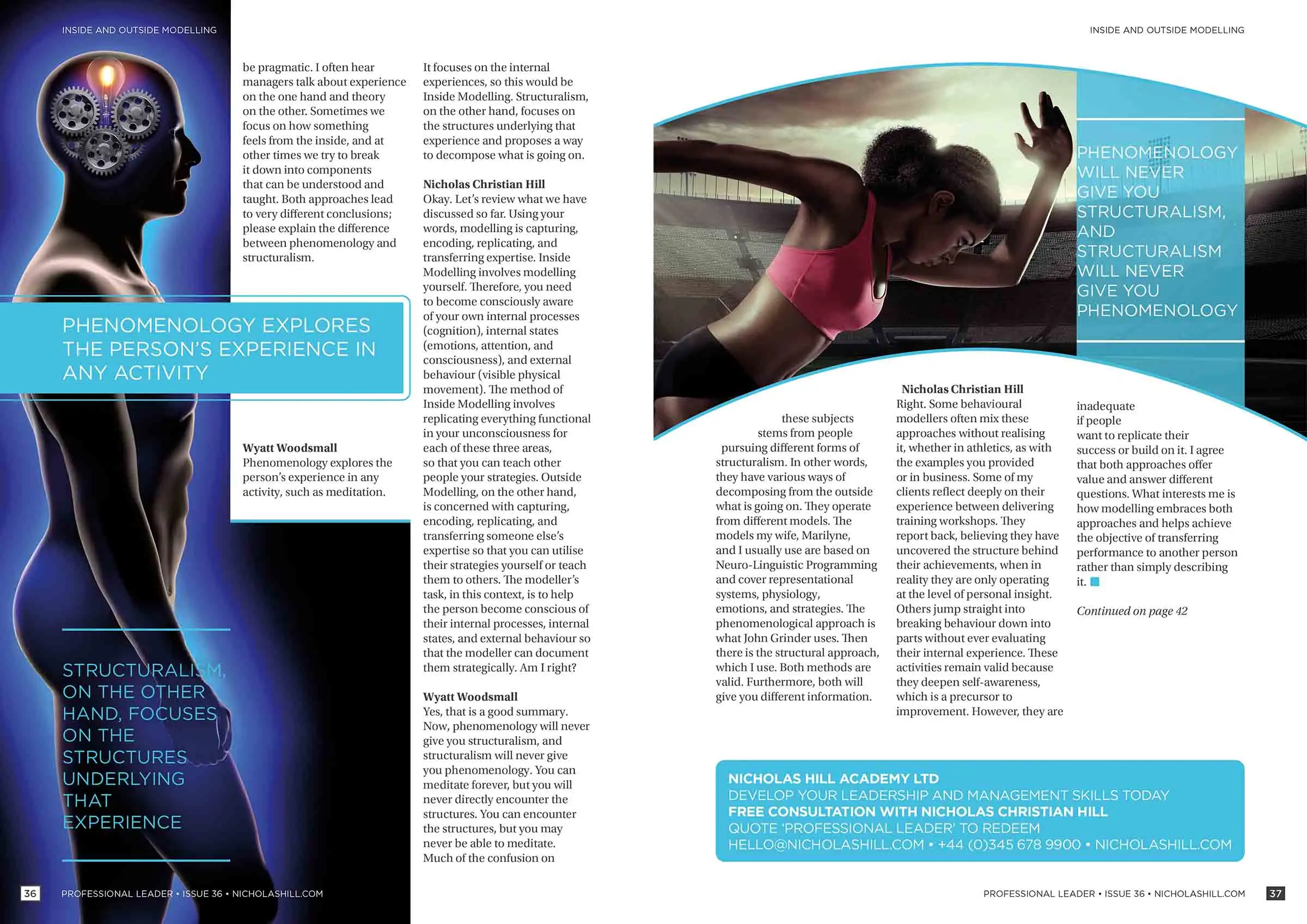
The first spread establishes the distinction between examining personal experience and analysing someone else. The second applies that contrast to business and athletic performance, while the final spread develops phenomenology and structuralism. Together, the three spreads progress from definition to application and then to the deeper methodologies behind each approach.
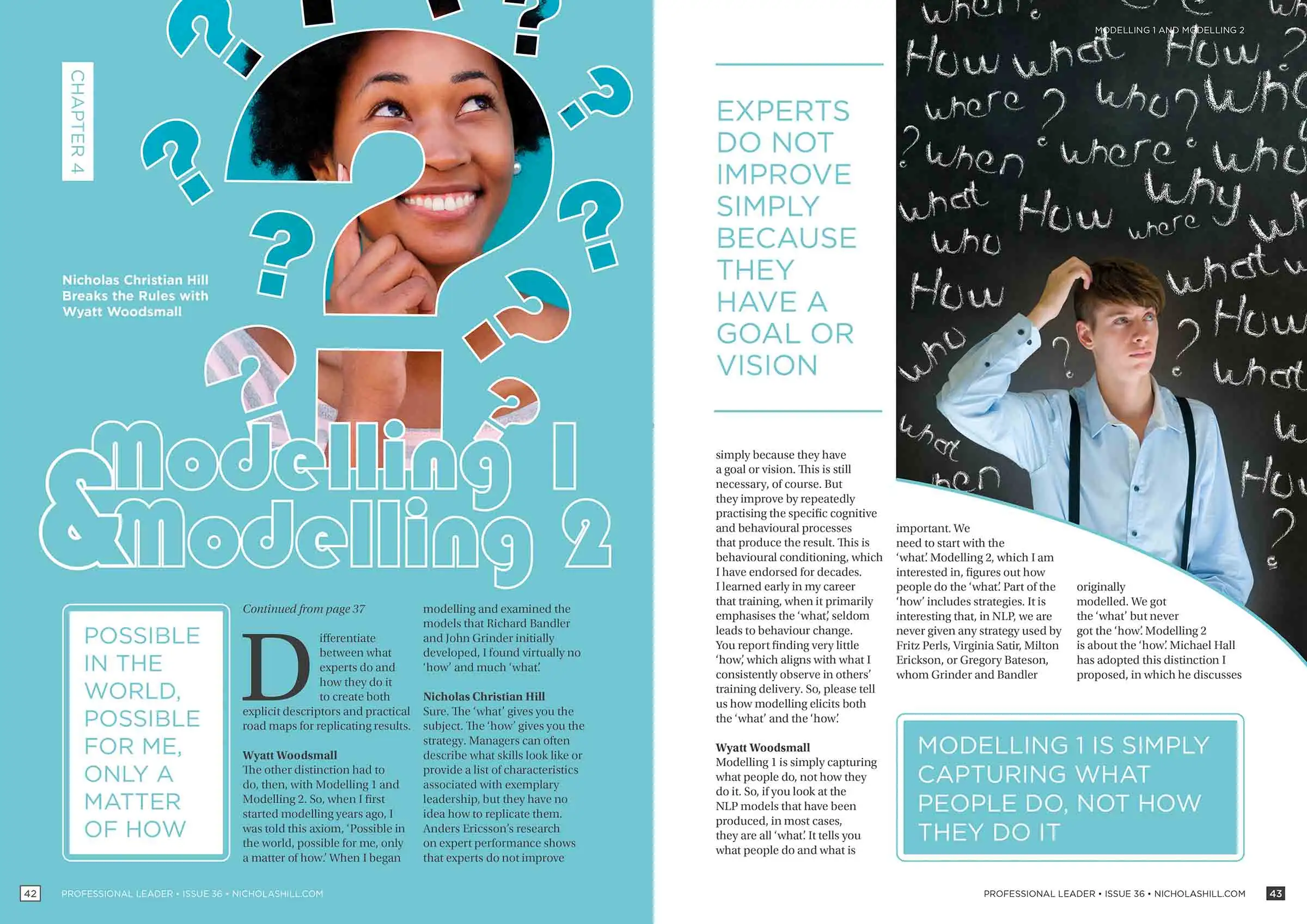
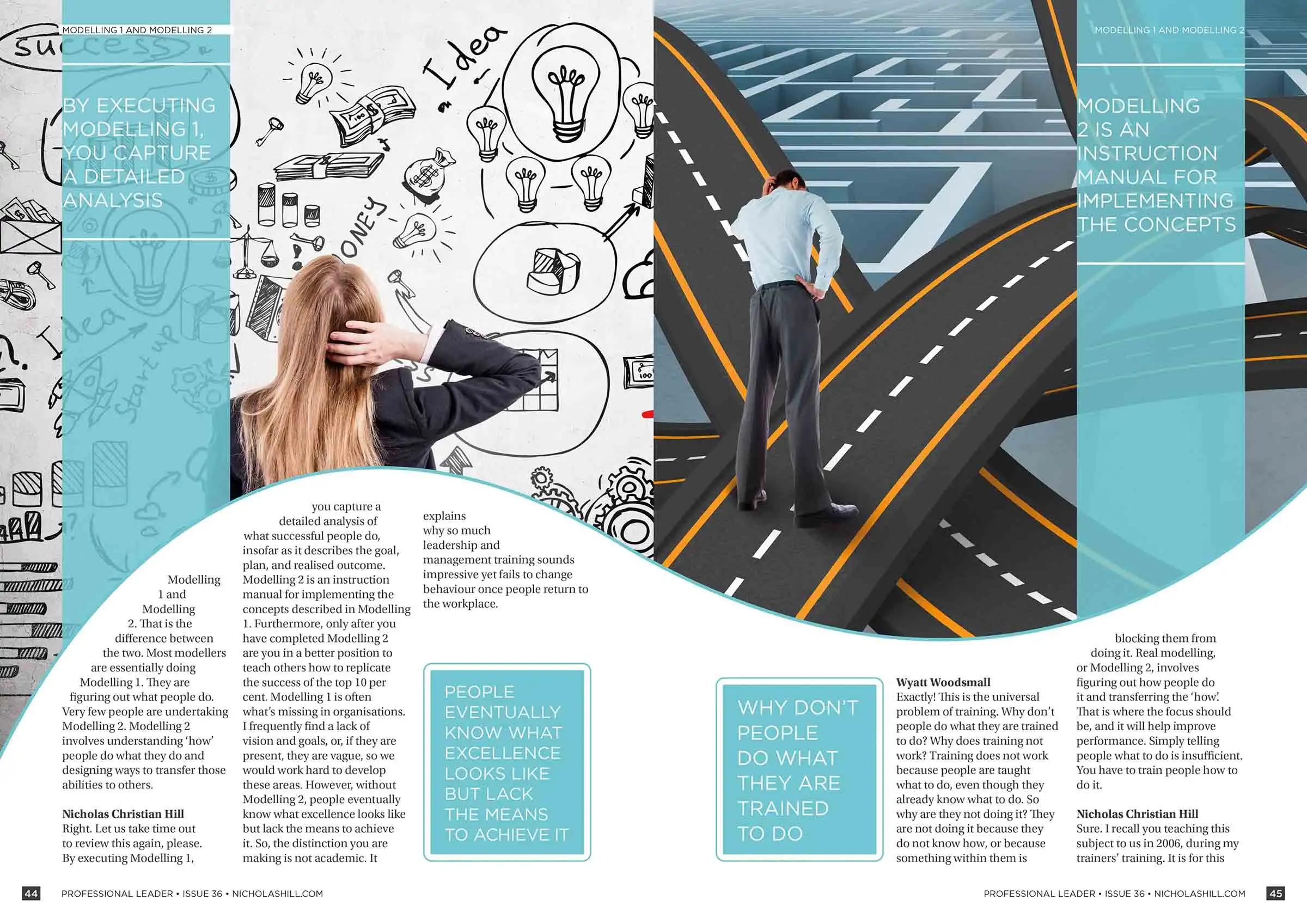
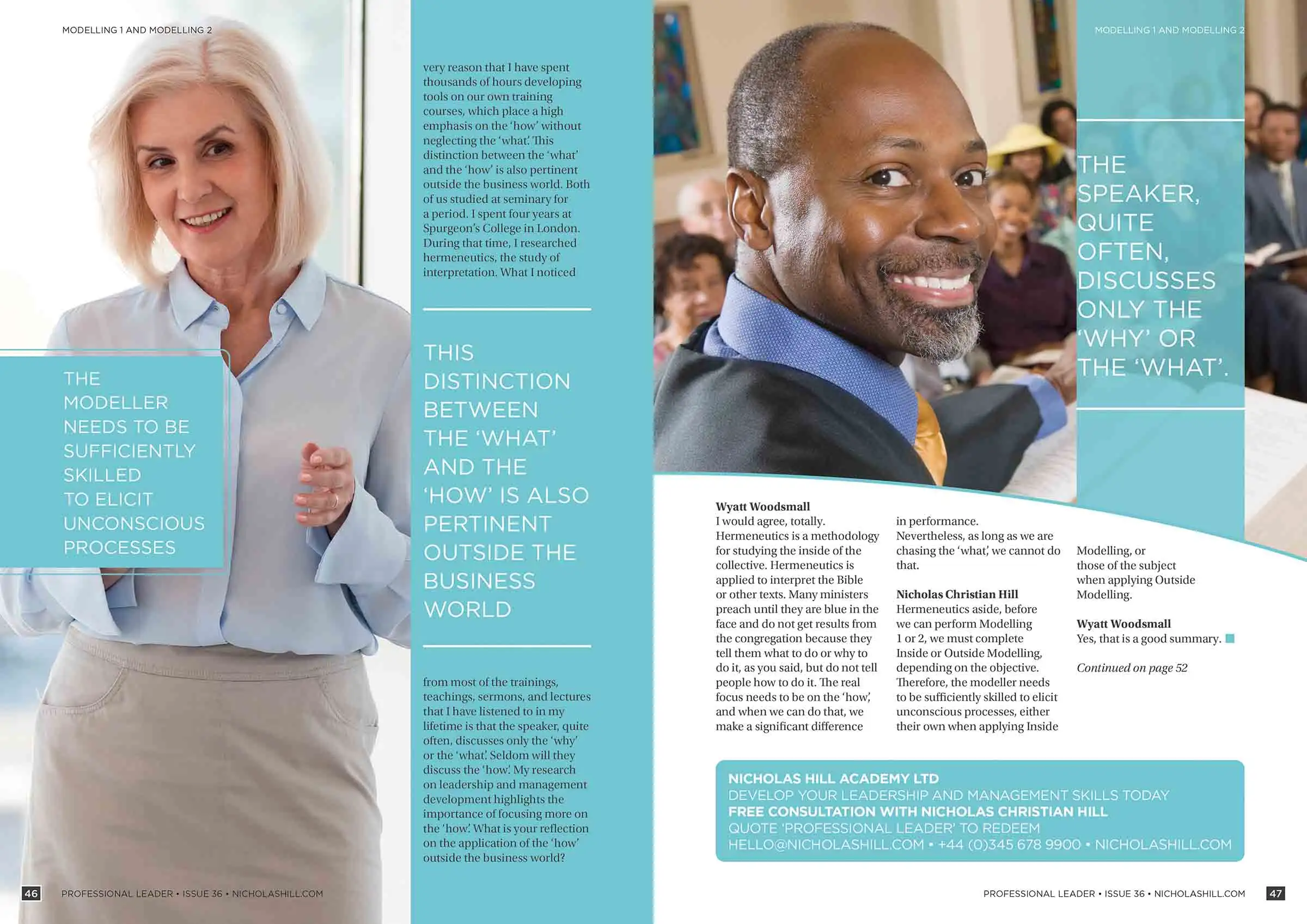
The chapter opens by separating what experts do from how they achieve it. The second spread demonstrates why describing goals or excellence does not provide a route to replication. The final spread applies the distinction to teaching and training, showing why transferring the “how” is essential for behavioural change.
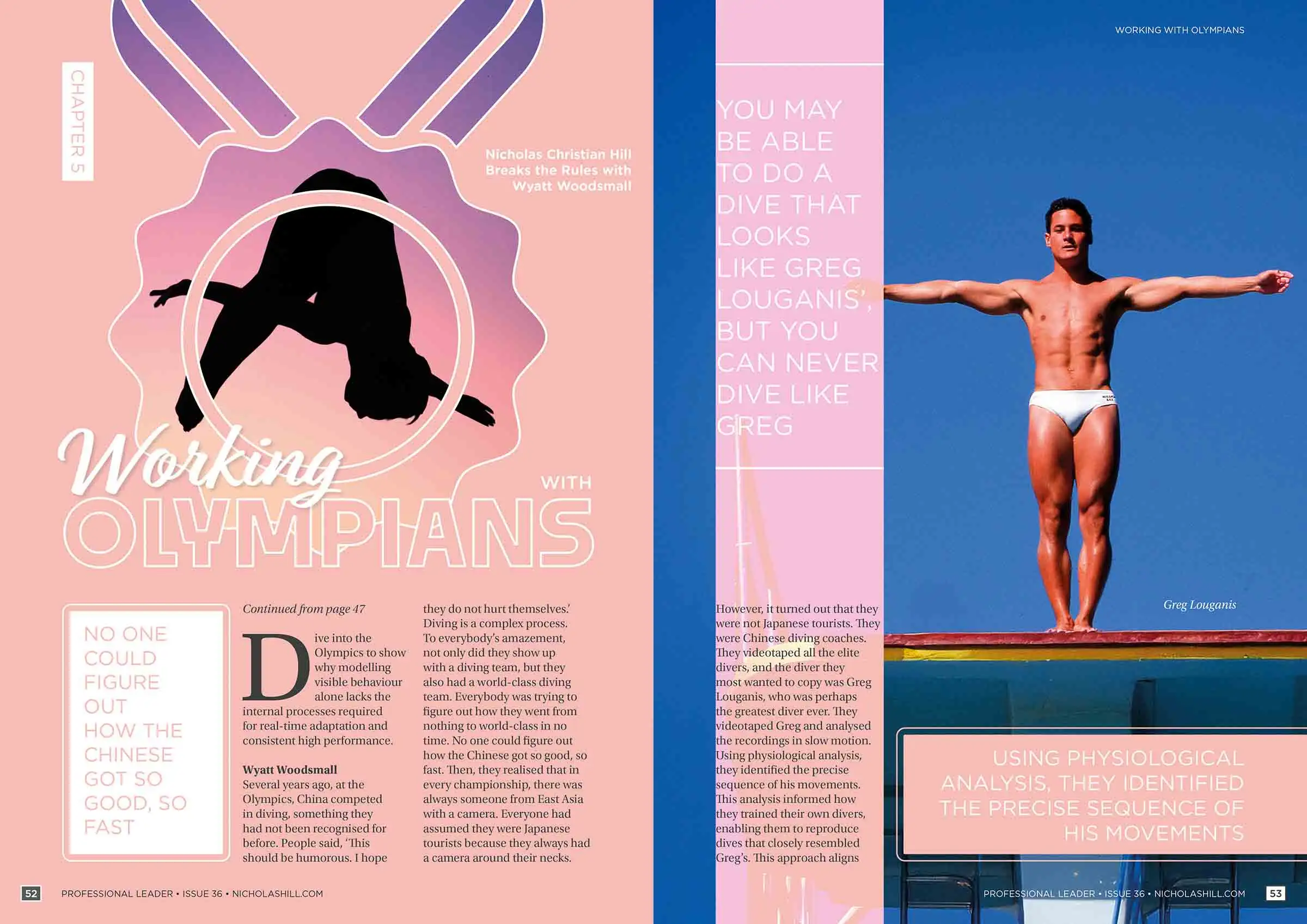
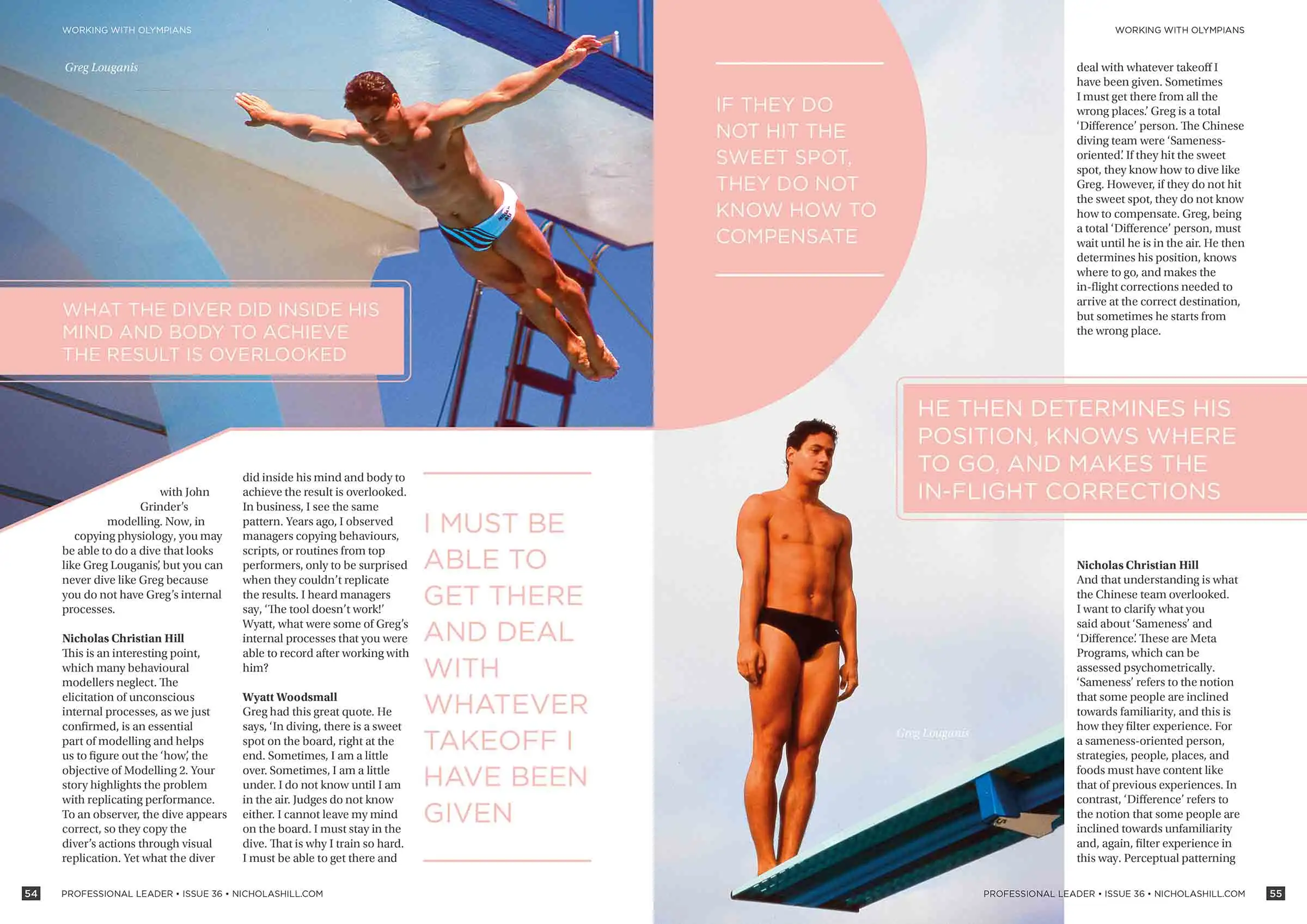
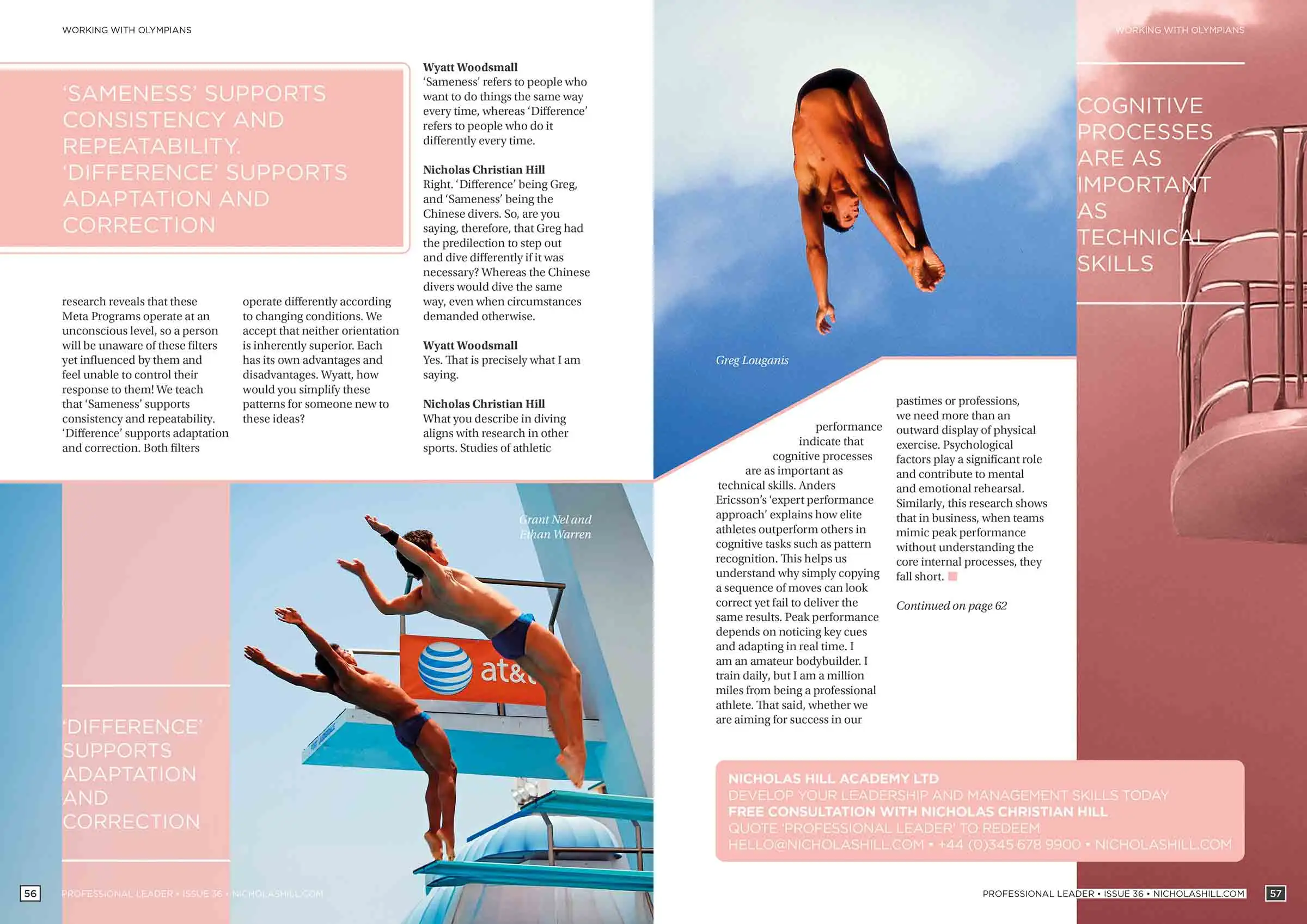
The opening spread introduces China’s rapid improvement in Olympic diving and its study of Greg Louganis. The next reveals why copying his physical technique was insufficient, concentrating on adaptation during performance. The final spread contrasts consistency with correction, expanding the lesson from technical imitation to cognitive flexibility.
The first spread defines strategy as an ordered sequence underlying performance. The second moves from simple examples towards the difficulty of capturing complex human behaviour. The concluding spread explores chess expertise, showing how anticipation, pattern recognition and internal visualisation turn apparently extraordinary performance into processes that can be examined.
The chapter begins with everyday visualisation and the recognition that much internal imagery operates outside conscious awareness. The second spread examines differences in sensory ability and preference. The final spread shifts into application, connecting mental rehearsal with athletic performance and showing how visualisation can support effective physical execution.
The opening spread asks what actually distinguishes exemplary leaders. The second develops vision as a practical leadership capability involving both direction and emotional engagement. The final spread introduces motivation, showing that communicating a compelling future is insufficient unless leaders also understand the different ways people respond to it.
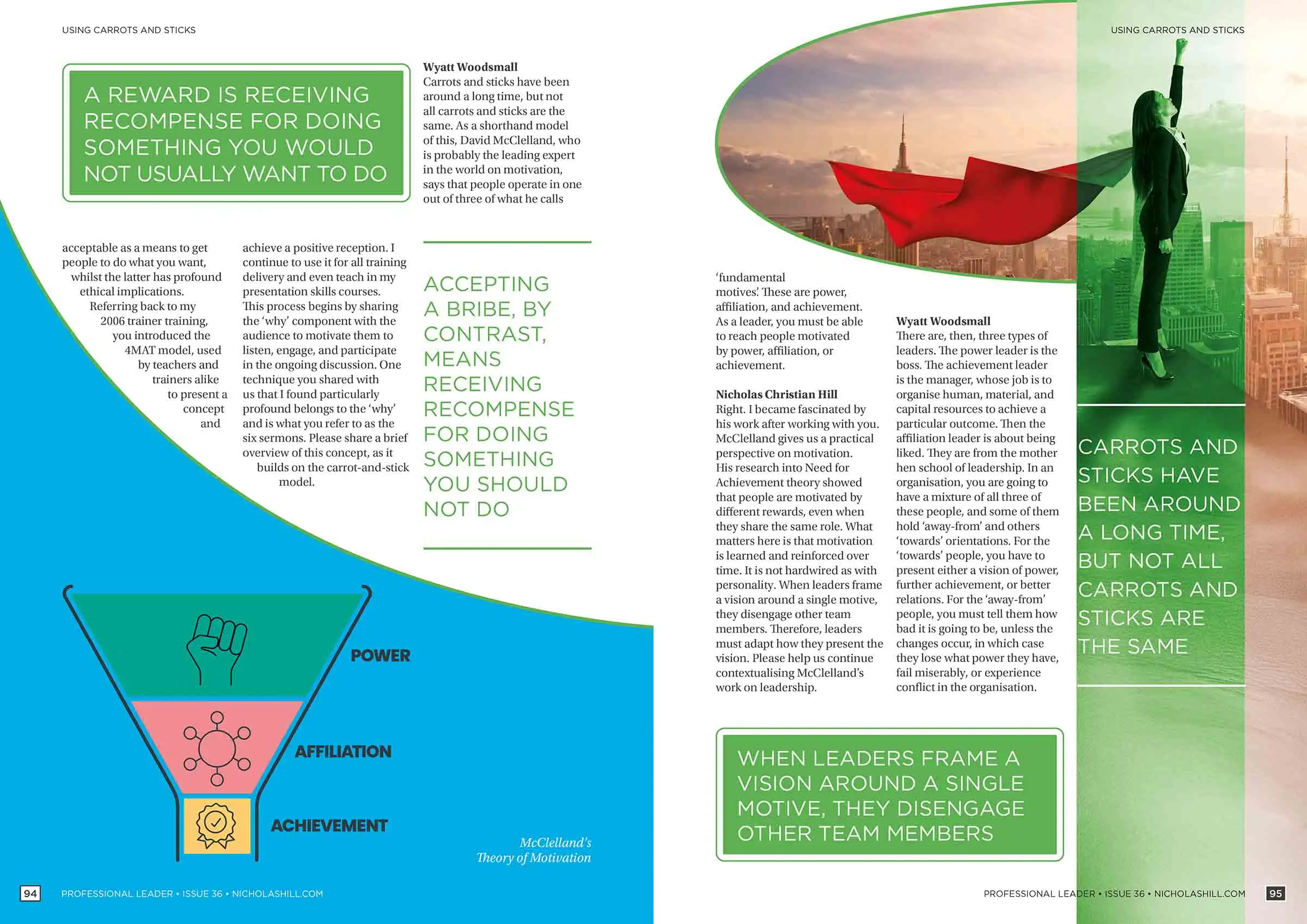
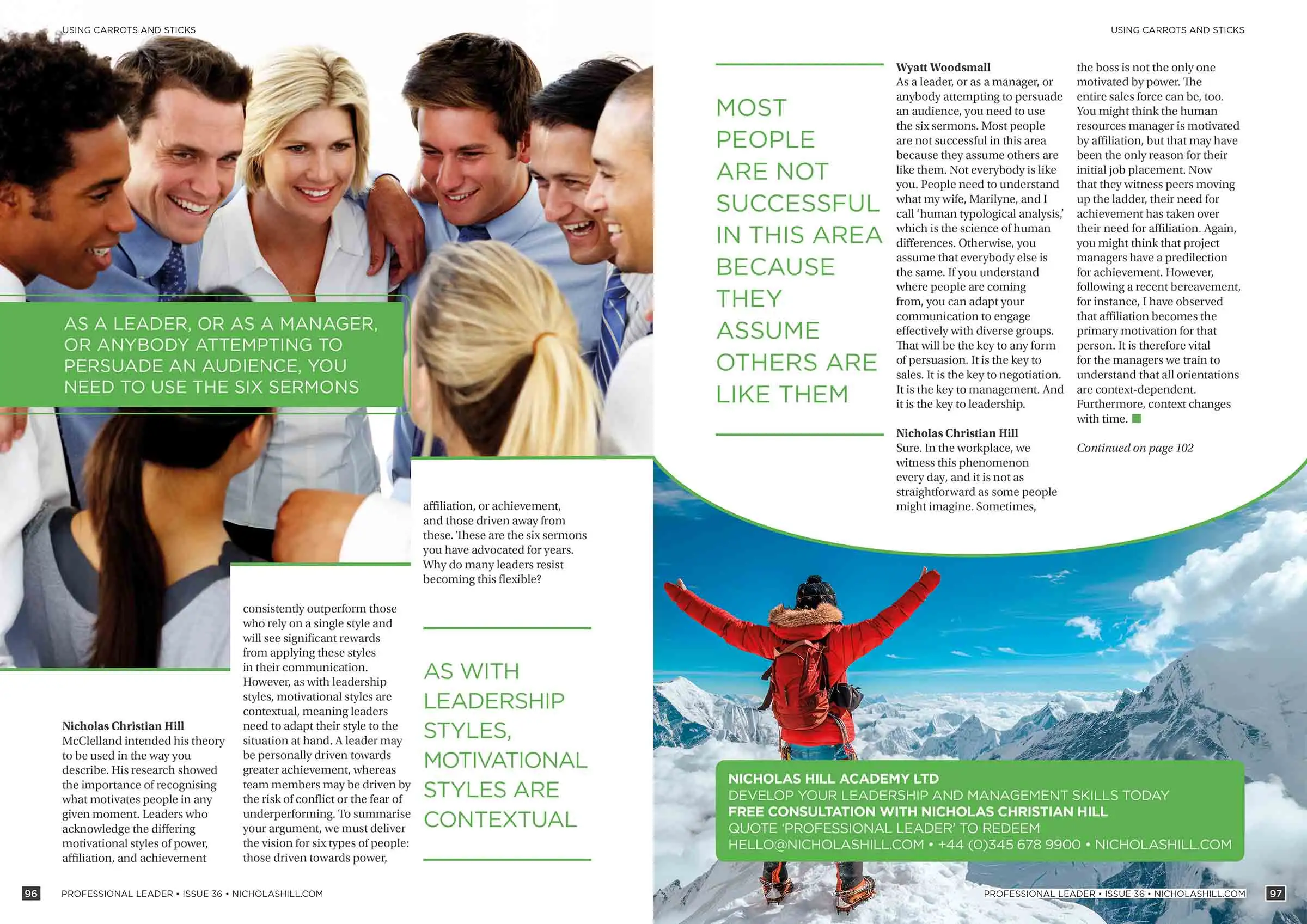
The first spread introduces “towards” and “away-from” motivation through reward and consequence. The second broadens the discussion through McClelland’s power, affiliation and achievement motives. The final spread turns these ideas into communication practice, showing why leaders must adapt persuasion to different people and changing circumstances.
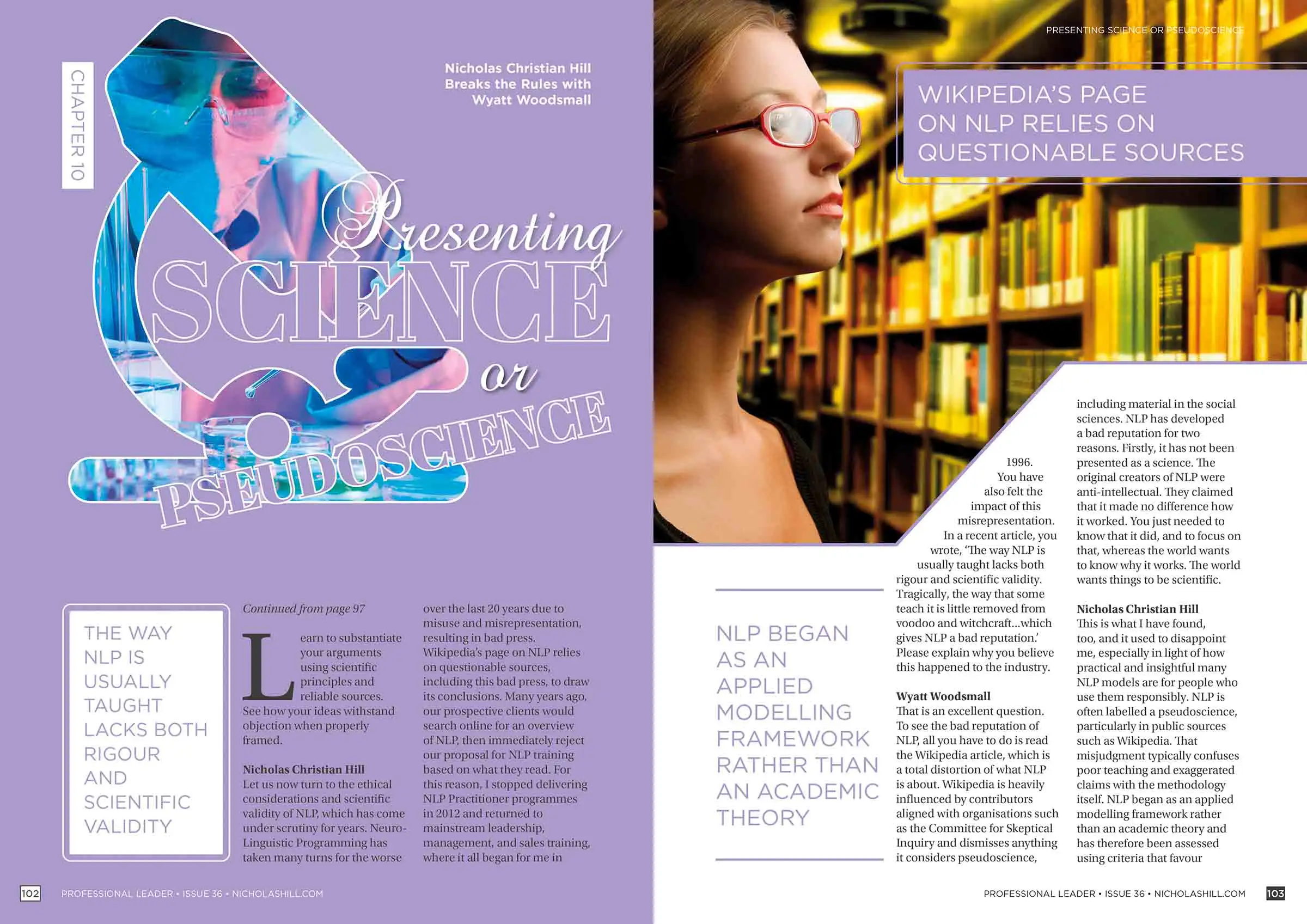
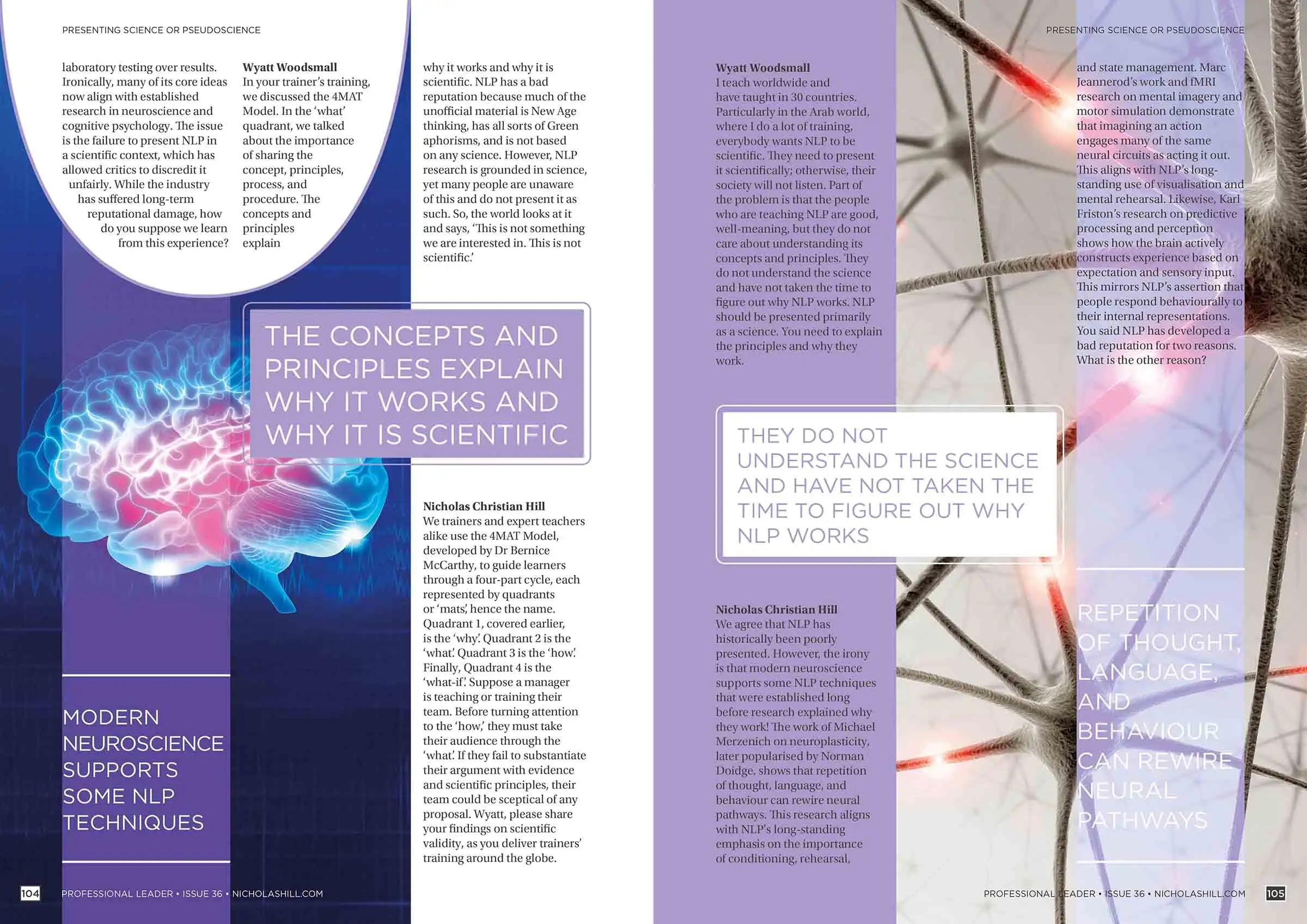
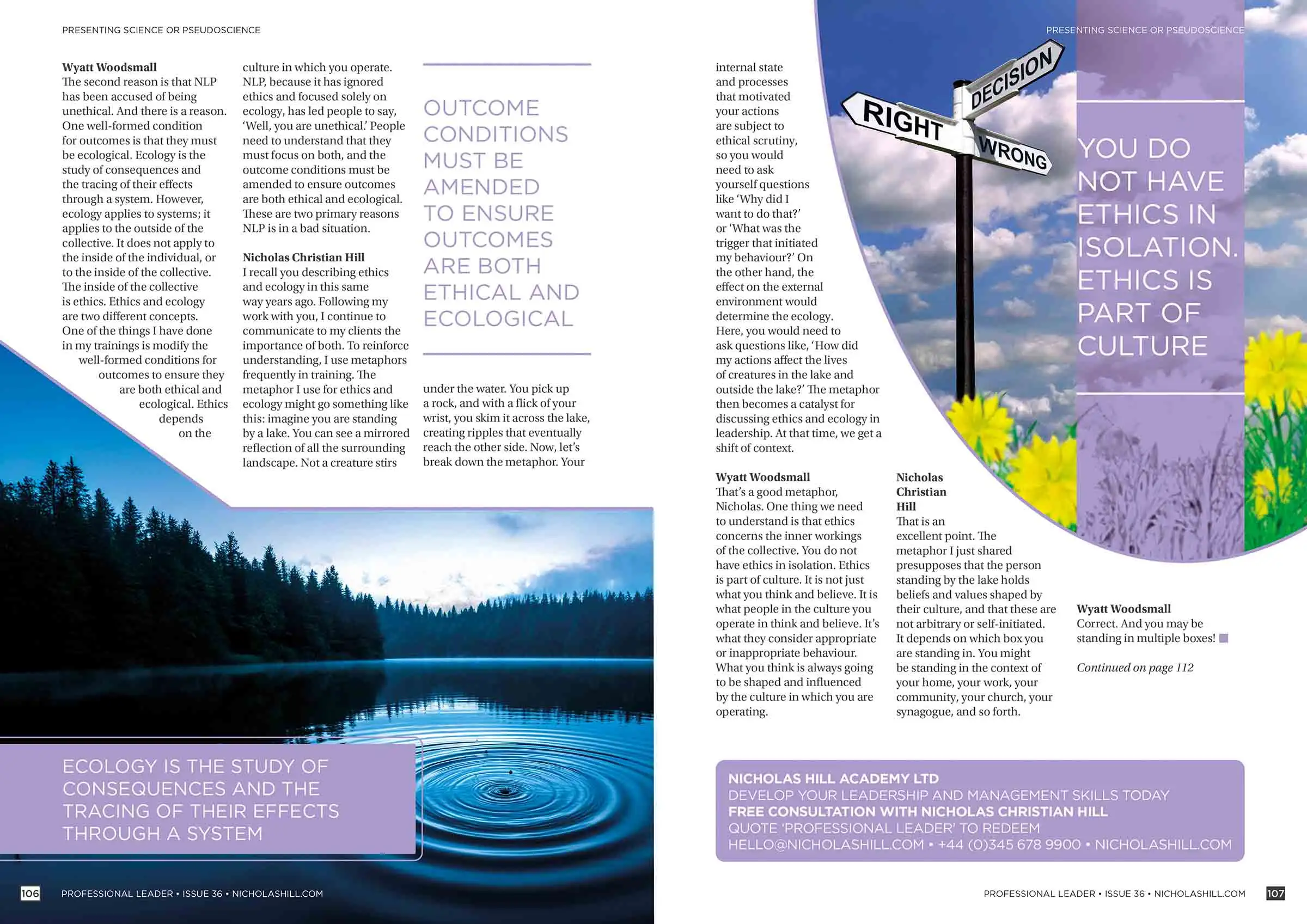
The chapter opens with the controversy surrounding NLP’s scientific credibility. The second spread moves into evidence, research and the need to substantiate claims. The final spread extends the discussion beyond validity into ethics and ecology, asking not only whether an approach works, but also what consequences its application creates.
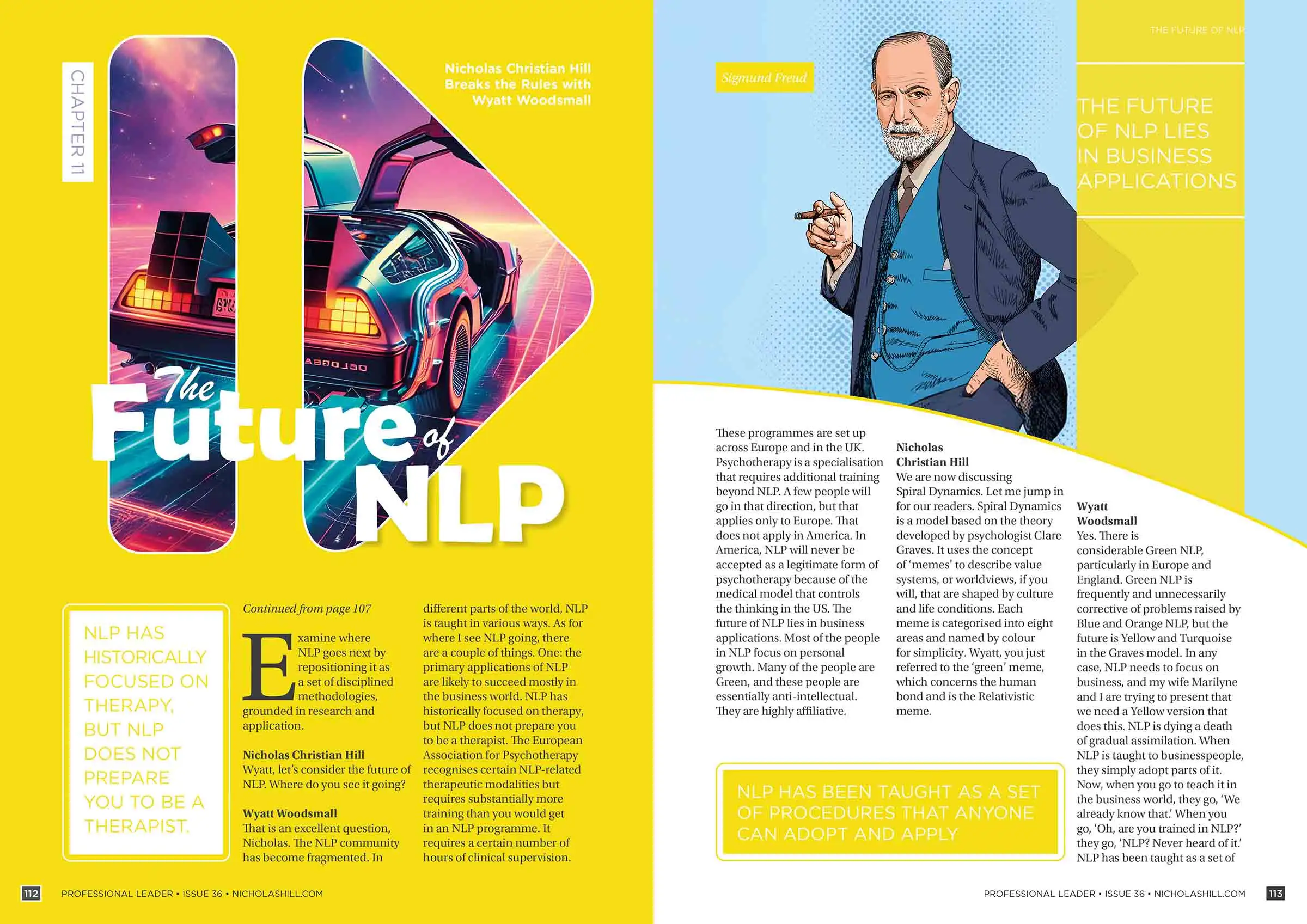
The first spread considers NLP’s movement away from its therapeutic associations towards business application. The next examines competing worldviews and the fragmentation of the field. The final spread brings the argument towards practical integration, research and evidence, asking how useful methodologies might evolve without repeating earlier credibility problems.
The opening spread introduces the challenge of reconstructing the thinking of historical geniuses. The second develops Disney’s Dreamer, Realist and Critic strategies as a structured process. The final spread broadens the discussion through other celebrated thinkers, returning to the issue’s central theme of identifying and transferring exceptional cognitive strategies.