



Modelling 1 and Modelling 2








































































Nicholas Christian Hill
Nicholas Christian Hill FCMI FIoL FIC Managing Director, Nicholas Hill Academy Ltd Leadership and Management Master Trainer Founding Editor, Professional Leader Magazine
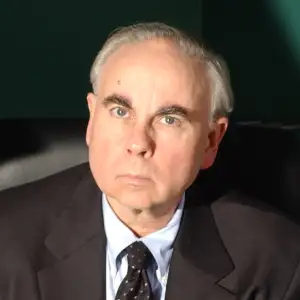
Dr Wyatt Woodsmall
Certified Master Modeller Co-Creator, Advanced Behavioural Modelling Co-Founder, International NLP Trainers Association Co-Author, Time Line Therapy and the Basis of Personality
Wyatt Woodsmall
The other distinction had to do, then, with Modelling 1 and Modelling 2. So, when I first started modelling years ago, I was told this axiom, ‘Possible in the world, possible for me, only a matter of how.’ When I began modelling and examined the models that Richard Bandler and John Grinder initially developed, I found virtually no ‘how’ and much ‘what’.

Nicholas Christian Hill
Sure. The ‘what’ gives you the subject. The ‘how’ gives you the strategy. Managers can often describe what skills look like or provide a list of characteristics associated with exemplary leadership, but they have no idea how to replicate them. Anders Ericsson’s research on expert performance shows that experts do not improve simply because they have a goal or vision. This is still necessary, of course. But they improve by repeatedly practising the specific cognitive and behavioural processes that produce the result. This is behavioural conditioning, which I have endorsed for decades. I learned early in my career that training, when it primarily emphasises the ‘what’, seldom leads to behaviour change. You report finding very little ‘how’, which aligns with what I consistently observe in others’ training delivery. So, please tell us how modelling elicits both the ‘what’ and the ‘how’.
Wyatt Woodsmall
Modelling 1 is simply capturing what people do, not how they do it. So, if you look at the NLP models that have been produced, in most cases, they are all ‘what’. It tells you what people do and what is important. We need to start with the ‘what’. Modelling 2, which I am interested in, figures out how people do the ‘what’. Part of the ‘how’ includes strategies. It is interesting that, in NLP, we are never given any strategy used by Fritz Perls, Virginia Satir, Milton Erickson, or Gregory Bateson, whom Grinder and Bandler originally modelled. We got the ‘what’ but never got the ‘how’. Modelling 2 is about the ‘how’. Michael Hall has adopted this distinction I proposed, in which he discusses Modelling 1 and Modelling 2. That is the difference between the two. Most modellers are essentially doing Modelling 1. They are figuring out what people do. Very few people are undertaking Modelling 2. Modelling 2 involves understanding ‘how’ people do what they do and designing ways to transfer those abilities to others.
Nicholas Christian Hill
Right. Let us take time out to review this again, please. By executing Modelling 1, you capture a detailed analysis of what successful people do, insofar as it describes the goal, plan, and realised outcome. Modelling 2 is an instruction manual for implementing the concepts described in Modelling 1. Furthermore, only after you have completed Modelling 2 are you in a better position to teach others how to replicate the success of the top 10 per cent. Modelling 1 is often what’s missing in organisations. I frequently find a lack of vision and goals, or, if they are present, they are vague, so we would work hard to develop these areas. However, without Modelling 2, people eventually know what excellence looks like but lack the means to achieve it. So, the distinction you are making is not academic. It explains why so much leadership and management training sounds impressive yet fails to change behaviour once people return to the workplace.
Wyatt Woodsmall
Exactly! This is the universal problem of training. Why don’t people do what they are trained to do? Why does training not work? Training does not work because people are taught what to do, even though they already know what to do. So why are they not doing it? They are not doing it because they do not know how, or because something within them is blocking them from doing it. Real modelling, or Modelling 2, involves figuring out how people do it and transferring the ‘how’. That is where the focus should be, and it will help improve performance. Simply telling people what to do is insufficient. You have to train people how to do it.
Nicholas Christian Hill
Sure. I recall you teaching this subject to us in 2006, during my trainers’ training. It is for this very reason that I have spent thousands of hours developing tools on our own training courses, which place a high emphasis on the ‘how’ without neglecting the ‘what’. This distinction between the ‘what’ and the ‘how’ is also pertinent outside the business world. Both of us studied at seminary for a period. I spent four years at Spurgeon’s College in London. During that time, I researched hermeneutics, the study of interpretation. What I noticed from most of the trainings, teachings, sermons, and lectures that I have listened to in my lifetime is that the speaker, quite often, discusses only the ‘why’ or the ‘what’. Seldom will they discuss the ‘how’. My research on leadership and management development highlights the importance of focusing more on the ‘how’. What is your reflection on the application of the ‘how’ outside the business world?
Wyatt Woodsmall
I would agree, totally. Hermeneutics is a methodology for studying the inside of the collective. Hermeneutics is applied to interpret the Bible or other texts. Many ministers preach until they are blue in the face and do not get results from the congregation because they tell them what to do or why to do it, as you said, but do not tell people how to do it. The real focus needs to be on the ‘how’, and when we can do that, we make a significant difference in performance. Nevertheless, as long as we are chasing the ‘what’, we cannot do that.
Nicholas Christian Hill
Hermeneutics aside, before we can perform Modelling 1 or 2, we must complete Inside or Outside Modelling, depending on the objective. Therefore, the modeller needs to be sufficiently skilled to elicit unconscious processes, either their own when applying Inside Modelling, or those of the subject when applying Outside Modelling.
Wyatt Woodsmall
Yes, that is a good summary.